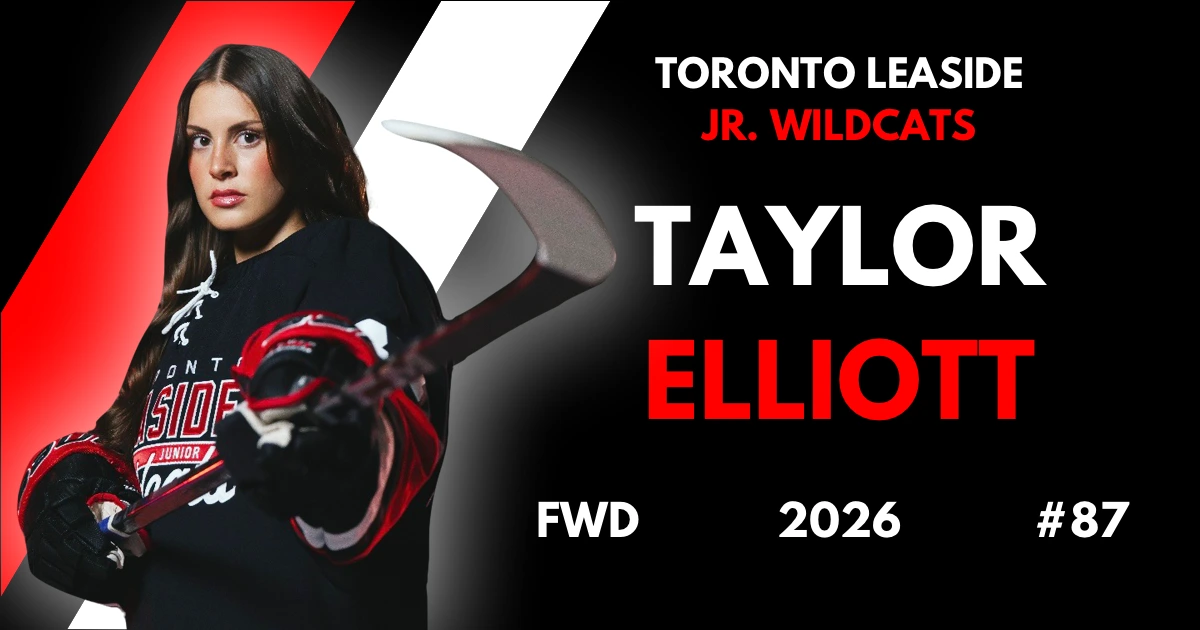
Taylor Elliott
Player Overview
Height
5’9″
Position
Forward
Shot
Left
Team
Toronto Leaside Wildcats U22AA
School
Everest Academy
Grad Class
2026
Programs of Interest
- Business
- Law
Academic Record
Scouting Report
Defensive Zone
Key Strengths
- Inside-Ice Discipline: When play collapses toward the slot, Elliott holds her ground between the dots and keeps her hips square to the puck. She protects inside ice and denies lateral seams, forcing play to stay below the goal line instead of cutting through the middle.
- Measured Engagement: She waits until the puck is truly exposed before closing, reading the handle and timing her stop. Her stick stays angled inside to take away the lane, and when she commits, it’s one sharp step that kills the play clean.
- Defend-to-Exit: When she reads pressure cleanly, Elliott turns stops into exits — a quick chip when the wall’s sealed or a composed carry when space opens ahead. Her choices match the forecheck, keeping control through the middle and allowing her team to reset in motion.
- Stabilizing Presence: Under long stretches of pressure, Elliott stays upright and square, using her stick and eye contact to cue coverage. Her calm stance settles the group — they read off her positioning and keep structure intact as play bends but doesn’t break.
- Confidence Through Reps: Each game shows sharper reads and stronger recovery through contact. The habits repeat — cleaner retrievals, quicker turns, smoother touches. With more minutes, that rhythm will keep translating into assertive, confident defensive control.
Areas to Refine
- Earlier Triggers: The next step is recognizing when opponents shift from perimeter play to an inside push — closing before they reach the slot. Catching that change early lets her end plays higher and turn defense into possession sooner.
- Trust the Read: Acting on her first recognition — stepping on a rim or jumping a lane once the picture forms — will make her stops faster and her exits more consistent.
- Push the Standard: Carrying her disciplined habits into every shift and holding that bar in harder minutes expands her influence. The more she drives that internal standard, the more she becomes the anchor piece that steadies everyone around her.
Key Strengths
- Seal and Hold: When play swings low and the carrier tries to cut under her stick, Elliott closes space and pins the lane without over-committing. Her stick angles off the wall, her hips stay square, and she locks the opponent where support can finish the battle. That posture kills lateral movement before it starts.
- Picking the Moment: Against rotations and give-and-go looks, she waits until the puck is truly exposed before stepping. Her first stride comes from the read, not the guess, turning potential scrambles into clean stops that stabilize coverage behind her.
- Precision over Power: She doesn’t need big collisions to win pressure. One stride, one stick angle, one clean touch — she strips pucks through timing and detail, forcing turnovers that let her side recover control without leaving soft ice behind.
- Stays Connected: When teammates engage down low, she shades her position to stay part of the fight while guarding the slot. That small shuffle keeps spacing tight and closes the seams that skilled teams try to slip through.
- Finishes in Control: After creating a loose puck, she doesn’t chase the next touch — she seals, resets, and re-establishes structure. Plays end on her terms, not in chaos, and the group resets instantly around her calm finish.
Areas to Refine
- Catch It Higher: At times she begins her pressure too deep, giving carriers room to build speed along the wall. Recognizing those cues earlier and meeting the attack higher would shorten reaction time and tilt play back toward the boards faster.
- Reset in Motion: After an initial challenge, she can linger half a beat before reclaiming her lane. Snapping back into structure sooner will close secondary threats and keep the group synced through longer cycles.
- Hold the Rhythm: On extended shifts, her timing can drift a half-second early or late on the close. Sustaining her read tempo under fatigue will preserve the same composure she shows at the start of sequences.
Key Strengths
- Sets Inside Ice: Elliott anchors between puck and net before the lane forms, holding her line inside the dots. She doesn’t drift with the cycle — she squares early, knees bent and shoulders firm, taking away clean sightlines and forcing shots into her frame.
- Trigger Read: She identifies release cues early — a shoulder load, a head turn, a grip change — and steps into the lane as the shot forms. That half-second anticipation disrupts rhythm and drives attempts into her pads instead of through seams.
- Controlled Block: When she drops, it’s one clean motion — shin angled, stick extended, head up. She absorbs contact without sliding, keeping the puck in front and her body ready to recover. Every block feels purposeful, not desperate.
- Coverage Reset: After contact, she pops up and re-scans instantly. One pivot locates puck, then threat, and her body cues teammates to collapse or reset. That composure eliminates rebound chaos and locks structure back in place.
- Consistent Execution: Her form doesn’t drift with game flow. Same drop, same angle, same control. That repetition gives teammates a reliable visual cue — they trust where she’ll be and play confidently off her lane.
Areas to Refine
- Advance Recognition: College shooters disguise release points with more movement and deception. Shifting from cue-based reads to pattern anticipation — tracking how plays develop into shooting lanes — will let her seal space before shooters load, cutting off clean looks entirely.
- Clean Activation: Her mechanics are steady, but college tempo demands an instant shift from recognition to block. Tightening that transfer into one compact, assertive motion — no extra gather — will keep her in position against quick releases and layered threats.
- Detail Retention: To reach elite precision, she can refine the micro-details inside her form — stick blade angle, shin rotation, head tracking — so every block redirects pucks predictably to safe ice.
Key Strengths
- Retrieval Positioning: When the play swings to her side, Elliott drops low under the hash marks and squares early to her defenseman, ready for the first pass under pressure. When play develops opposite, she times her release up ice — flying the zone in stride to stretch coverage and open the next lane.
- Low-Side Link: Once the puck moves to her wall, she pivots to face the defenseman and presents a clear passing option. Her first touch is calm — stick angled, shoulders square — and she transitions instantly up ice, turning structured breakouts into connected clears with purpose and control.
- Exit Read: Elliott times her routes through the defenseman’s body language, not the puck’s bounce. She anticipates where the next play opens and adjusts her depth to stay available without crossing into traffic.
- Controlled Escape: Under pressure, she shields the puck with her body and keeps her head up to read pressure. She holds possession through small spaces, buying her team time to shift from retrieval to transition instead of defaulting to panic clears.
- Trusted Exit: Teammates rely on her to turn defensive recovery into clean possession. Whether she carries, chips, or connects through the middle, her decision-making matches the forecheck picture — dependable, steady, and repeatable under strain.
Areas to Refine
- Stay in Motion: To succeed at the college level, she’ll need constant movement through support lanes to elevate her retrievals. Keeping her feet moving between touch points — instead of pausing near the wall — will keep her available as pressure closes and allow exits to form earlier.
- Angle Through: To reach college tempo, she’ll need to execute her routes with greater precision through open ice. Executing that crossover from low wall into open space with tempo will help her pull coverage and create multiple outlet options for her defenseman.
- Finish the Sequence: To reach next-level command, she can extend her control beyond the blue line — linking her clean exits into connected transition plays. Building that continuation sets her up as a natural connector between the defensive exit and the team’s neutral-zone flow.
Neutral Zone
Key Strengths
- Continues the Route: Elliott stays in stride and carries with purpose and power. She keeps her lane wide and controlled, driving through pressure instead of releasing early. Her route discipline extends the play’s structure, giving her teammates time to fill lanes and link into the rush without breaking rhythm.
- Shapes the Sequence: With the puck on her stick, she dictates the movement of those around her. Her carry up ice draws coverage, cues support routes, and sets the tempo for how her line advances together. The shape of the attack often mirrors her read — steady when she delays, aggressive when she accelerates.
- Controls the Carry: Elliott moves through transition with poise, scanning before contact and using subtle changes of stride to hold defenders at distance. She carries with control, drawing the first layer before deciding whether to attack space or distribute. Each sequence feels measured — no panic, no wasted touch.
- Reads-Then-Releases: She reads pressure off the rush, waiting for lanes to open before delivering crisp, accurate feeds that sustain possession. Whether it’s a cross-ice touch, a middle-lane dish, or a short bump to maintain flow, her release matches what the play needs, not what it looks like.
- Leads the Advance: When given the lane, she becomes the driver. She pushes defenders back with stride length and body control, forcing gap adjustments that open space for teammates to enter with speed. Her ability to carry entries cleanly inside the blue line turns transition sequences into possession starts.
Areas to Refine
- Read It Early: To succeed at the college level, she’ll need to process transition cues sooner when off-puck — recognizing when her linemate is attacking and where the next lane will open. Anticipating that moment earlier will help her arrive in sync and give the carrier a ready outlet instead of a static option.
- Match the Flow: Sustaining connection through the neutral zone means moving as one unit. Matching her speed and support routes with teammates will keep her inside the passing rhythm, allowing plays to unfold in stride instead of requiring resets.
- Create the Lane: At the next level, she can expand her value by both finding and building space. Reading how defenders angle and adjusting her route to open ice will widen the attack for her linemates — turning her movement into an active tool that shapes transition pressure and creates new entry options.
Key Strengths
- Sets the Route: Elliott positions early and defines her lane before the puck is turned up ice. She skates into the regroup with purpose, showing for the puck at the right depth and angle to create a clear first option. Her posture stays open to the play, giving the defense a visual target and a predictable release point that keeps the regroup organized.
- Times the Swing: Her timing off the puck is deliberate. She waits until the puck carrier commits before starting her swing, staying patient enough to avoid overrunning the support space. When she moves, it’s in one smooth arc through the middle — fast enough to stretch coverage, controlled enough to stay available for a short touch or give-and-go.
- Keeps It Clean: On receptions, she handles transitions with precision. Her first touch is flat, and her body stays over the puck to absorb any bump from behind. Even under pressure, she keeps her stick quiet and her routes efficient — no wasted turns, no extra glide. Each regroup feels connected, with her touch acting as the bridge between retrieval and controlled attack.
- Builds the Flow: Elliott doesn’t just follow structure; she adds to it. After the first outlet, she stays active, reading the next layer and skating into space to offer secondary support. Her routes open lanes for her linemates to swing under or through, turning what starts as a regroup into a sequence that carries rhythm and speed through center ice.
- Leads the Advance: Once the puck is transferred to her side, she drives the next phase. Her stride lengthens, and she guides the group forward with controlled tempo. By pulling defenders back and recognizing where the next handoff will be, she turns the regroup into a launch — carrying entries that convert resets into organized, possession-based attacks.
Areas to Refine
- Anticipate the Reset: To reach NCAA pace, she’ll need to sense when the regroup is forming before it’s visible. Reading the defense’s retrieval pattern earlier will help her start her route sooner and arrive in sync with the outlet. Anticipation in these moments will keep her from being late on the swing or disconnected from the carrier.
- Elevate the Tempo: At the next level, regroup sequences demand faster execution. She’ll need to accelerate her decision-making between reception and release — no extra glides, no pauses after touch. Sharpening that tempo will allow her line to move through the neutral zone in one motion, keeping pressure on the backtracking defense.
- Call the Play: As she grows into a leadership role, Elliott will need to be more assertive in calling the regroup. Directing teammates with quick verbal cues or visible stick signals can help align timing and spacing. Commanding those details will show next-level control — turning her from a reliable option into a trusted initiator of structure.
Key Strengths
- Reads the Regroup: Elliott identifies the opponent’s reset early and adjusts her positioning to cut off their preferred outlet. She reads body cues on the defenseman and closes space along the boards or middle lane to shrink the regroup’s options. Her anticipation forces opposing teams to settle for slower, indirect routes through neutral ice.
- Closes the Gap: She accelerates into her coverage lane with strong, balanced strides that hold the defender under pressure. Her stick stays extended and angled to the inside, eliminating the clean pass through the middle. Each close feels deliberate — she arrives in control, ready to contain or disrupt without overrunning the check.
- Forces the Mistake: Once contact pressure builds, she sustains pursuit through the turnover window. By shadowing the carrier’s hips and mirroring their pivot, Elliott creates a squeeze that forces rushed releases or errant passes. Her reads in motion generate broken plays that her linemates can immediately counter.
- Directs the Reverse: When teams attempt to escape through a reverse pass, she reads it on the pivot and steers the play into traffic. Her angle control pins opponents toward the boards or back into her support. It’s an intelligent form of pressure — not just chasing the puck, but shaping where it goes next.
- Finishes the Pressure: Elliott commits to completing the sequence. Once the puck is forced wide or deep, she tracks through the line to seal exits and recover position on the weak side. Her full-route discipline prevents easy counters and turns her forecheck into a complete defensive stand through center ice.
Areas to Refine
- Accelerate the Read: At the next level, she’ll need to process regroup cues a half-second earlier. Faster recognition of D-to-D passes or body pivots will let her jump lanes sooner and disrupt transitions before they form.
- Balance the Press: Her aggressive close occasionally pulls her too far ahead of the play. Learning when to hold versus commit will help her stay connected to her F2 support and avoid creating exploitable gaps behind her pressure.
- Advance with Support: As she grows, she can strengthen her coordination with linemates by timing her advances with their routes. Building synchronized pursuit patterns will turn isolated pressure into full-unit disruption through the neutral zone.
Key Strengths
- Owns the Route: Elliott doesn’t guess on entry — she decides. Before crossing the line, she’s already mapped her path, adjusting her hips and stick angle to control where the play goes. Sometimes she drives wide to stretch a defenseman; other times she cuts tight inside the dot line. Her choice defines how the rush unfolds, and teammates read off her body language.
- Pulls the Gap: She’s clever about tempo. Mid-entry, she’ll stop halfway down the wall, pull up, and cut back hard to draw the defenseman forward. That little pause breaks the defensive rhythm and gives her a moment to scan. By owning that pocket of ice, she turns what looks like a stall into a setup window.
- Controls the Delay: Pressure never rattles her. When a forechecker closes, she braces, protects the puck, and waits for the right passing lane to form. There’s no wasted shuffle or panic rim — just patience that settles the group and lets support routes reconnect through her.
- Reignites the Play: If the initial rush dies, she doesn’t fade out. When the middle lane opens, she drives it; if it’s closed, she hits a teammate in stride and stays under the puck to keep it moving. Those reads in motion reset momentum — one touch and the attack is live again.
- Finishes the Entry: After moving the puck, she keeps going. Elliott tracks her pass, stays engaged, and fills inside space so the group enters together. Her follow-through pressure pins the defensemen deep and turns a simple line gain into controlled zone time.
Areas to Refine
- Attack the Seam: She sometimes stays outside when the inside lane is available. Recognizing when that seam is open — and taking it — will pull defensemen out of shape and give her more direct scoring looks.
- Accelerate the Decision: As she approaches the slot, she can tighten the gap between recognition and action. The quicker she decides between shot, feed, or drive, the harder it becomes for defensemen to square up at college level.
- Trust the Release: Her shot already meets the college standard. Letting it go more often, especially right after entry when coverage is thin, will convert those strong possessions into immediate scoring chances.
Offensive Zone
Key Strengths
- Protects the Puck: Elliott stays in command through intelligent spacing. She steers her route off the wall just enough to hold inside-ice control, keeping the puck secure and options open. Every touch feels measured — enough resistance to keep defenders guessing, enough fluidity to transition cleanly into her next move.
- Escapes the Pressure: When coverage closes, she builds her own space. A sharp curl or cutback up high separates her from pursuit and resets her view of the ice. The move looks simple on film but creates a full-second of calm — the breathing room that lets structure re-form around her.
- Controls the Cycle: Once free, she becomes the anchor. She waits for support to swing, times her release, and sends the puck where the next possession can build. Her restraint keeps the play cohesive — no hurried rims or hopeful chips, just the right read to keep her team in control.
- Draws the Check: She pulls defenders toward her line without inviting contact. By carrying high and holding possession just outside their reach, she forces them to mirror her route instead of closing. That hesitation keeps space open beneath her and gives her options to pivot, dish, or reload the attack.
- Creates the Chance: The payoff comes when her reads and routes connect. From the high wall, she threads a pass through traffic and immediately supports the play, skating into the next lane to stay involved. Her follow-through turns distribution into continuation — possession extended, pressure sustained.
Areas to Refine
- Quicken the Pivot: She has the control; now she needs the snap. Faster directional changes at the blue line will help her beat double pressure and turn a safe escape into an instant re-attack.
- Attack the Window: At times she waits for the perfect lane instead of trusting the open one. Reading and attacking those short-life windows will convert more of her possession sequences into direct threats.
- Drive the Lane: After establishing control up high, she can add a downhill threat by carrying through the slot more often. Taking that space herself will keep defensemen honest and open secondary options for her linemates.
Key Strengths
- Tracks the Flow: Elliott reads possession like a playmaker without the puck. She mirrors the carrier’s movement while staying just outside coverage, keeping her stick ready and her route active. Her awareness keeps her synced to the rhythm of the cycle — never flat-footed, never drifting out of frame.
- Joins the Cycle: She slides seamlessly into the rotation when the puck turns up the wall. Instead of watching the play, she moves through it — arriving on time to extend possession or become the next outlet. Her timing keeps the exchange tight and the defense chasing.
- Finds the Pocket: Elliott senses soft space before it opens. As coverage collapses low, she drifts into the mid-slot or weak-side flank, positioning where she can be found quickly. Those small shifts — often just a few feet — turn her into an immediate shooting or support option.
- Reads the Pinch: When a defenseman steps down to pressure, she reacts in stride. Her read comes early, and she adjusts her depth or width to keep the release lane alive. That instinct preserves possession and ensures her line never gets trapped high.
- Lives in the Play: Even when the puck is two passes away, she stays engaged — scanning, adjusting, anticipating. She doesn’t drift to rest; she floats with intent, always within one motion of becoming playable. Her energy sustains the attack long after the first chance fades.
Areas to Refine
- Find the Ice: At the college level, impact will come from getting to open space earlier. Anticipating how coverage shifts during sustained pressure will let her arrive first to the pocket, giving her linemates a clean passing or shooting lane before defenders recover.
- Present the Threat: She can create more scoring chances by actively presenting herself as a shooting option. Small route changes, body feints, or quick depth shifts will open new lanes and make defenders react to her, not just the puck.
- Command the Puck: When she’s in a prime scoring spot, she has to own it. At the college level, calling for the puck with conviction when she finds the seam or backdoor lane will ensure her release becomes a regular weapon inside the team’s attack.
Key Strengths
- Protects Possession: Elliott holds the puck with calculated strength. She turns her body into a moving shield, keeping it extended from reach while scanning through traffic. Each touch buys her a moment to read movement — never rushed, never wasteful.
- Escapes the Check: When pressure closes, she doesn’t force a pass. A quick pivot or pull across her body resets the angle and breaks pursuit. That escape habit keeps possession alive and allows her to attack again from a better lane.
- Delays for Space: Elliott uses timing as a weapon. She holds her release until coverage commits, letting the play open in front of her. Those extra beats give teammates time to rotate into lanes, turning her patience into structure and her structure into threat.
- Orchestrates the Play: From the wall, she manages the rhythm of the shift. She surveys calmly, identifying who’s available and when support is in motion. The puck leaves her stick with purpose — each pass leading teammates into space instead of sending them to retrieve.
- Creates the Threat: Once the defense stretches, she shifts from setup to strike. A subtle cut or pass into the middle forces defenders to collapse, igniting scoring chances off her read. It’s creative pressure — a blend of control and unpredictability that keeps the zone alive.
Areas to Refine
- Take the Ice: To be dangerous at the college level, she’ll need to attack space herself when it’s there. Driving into that lane forces both defensemen to react, opening the weak-side passing lane that leads directly to the backdoor option.
- Open the Seam: At the college level, those lanes won’t appear — they have to be built. She can create them by shaping the defense before she passes: drive downhill to freeze the near-side stick, then release through the slot once the middle is exposed. That active pull-and-release sequence turns possession into a tap-in opportunity on the far post.
- Connect to the Back Door: Her next step is completing the sequence. Recognizing the weak-side route earlier and delivering that final touch across the slot will turn controlled possession into direct, high-value scoring chances.
Key Strengths
- Drives Off the Wall: Elliott initiates her attack through motion. She leans into her stride and powers off the wall with her inside shoulder leading, pushing defenders backward. Each drive carries intent — the combination of strength and control that transforms low-risk possession into an immediate scoring threat.
- Draws the Defenseman: Once she’s moving, she controls the defender’s reaction. By holding her route tight and using her frame as a shield, she forces the defenseman to match her line instead of challenging it. That control lets her decide when to shift inside and when to extend the drive.
- Cuts the Middle: This is her signature behaviour. She lowers her stance, powers through traffic, and drives the puck straight to the net. Every stride is forward pressure — hard, direct, and confident. It’s the sequence that defines her scoring identity: determined entry, committed route, and self-created opportunity.
- Creates the Look: The separation built through her drive opens the ice she needs. Once she’s cleared the defender, she adjusts her lane and pulls the puck into the open pocket between herself and the goalie. That self-made space becomes her shooting platform — earned through power, not patience.
- Finishes Through Traffic: Elliott drives the puck to the net and stays with it. She maintains control through contact, pushes the puck into dangerous ice, and forces plays to completion. Whether it’s the first shot or her own rebound, she turns momentum into finish — strength translating directly into scoring chance.
Areas to Refine
- Fill the Pocket: Impact at the college level starts with timing. Elliott can strengthen her scoring presence by arriving in the pocket earlier and under control, ready to receive and release before coverage sets. Owning that window turns opportunity into execution.
- Become the Option: Sustained zone time demands visibility. She can raise her threat level by showing her stick and shifting her route into playable ice instead of staying hidden behind traffic. Making herself the clear scoring option forces defenders to adjust and linemates to look her way.
- Shoot to Score: Her release already holds power and accuracy; what’s next is trust. Treating each touch inside the dots as a legitimate scoring chance — shooting with intent, not hesitation — will unlock her full value as a finisher at the college level.
Technical Skills
Key Strengths
- Skates from Power: Elliott’s stride begins with force and follow-through. Each push extends fully, driving from her hips and maintaining control through the glide. Her lower-body strength translates directly into forward momentum — strong, repeatable, and visible every shift.
- Moves with Balance: She stays centered through turns and transitions, rarely losing posture when traffic closes in. Whether adjusting to pressure or pivoting off a challenge, her frame stays anchored. That balance gives her the stability to keep plays alive under contact.
- Builds Her Speed: Rather than relying on quick bursts, she layers acceleration through repetition. Each crossover adds energy, each stride builds pace, until she’s carrying speed through the neutral zone. It’s a stride pattern built on discipline — steady, powerful, and reliable under fatigue.
- Drives Through Contact: Physical pressure doesn’t slow her stride. Elliott keeps her legs moving through bumps, pushing defenders off balance while maintaining control of her path. Her skating strength turns contested ice into space she earns herself.
- Finishes Every Shift: Even in late-shift sequences, her legs keep driving. She closes checks, wins exits, and stays inside her route until the whistle. That consistency turns skating from a technical skill into a defining habit — effort sustained through the full length of a shift.
Areas to Refine
- Start Light Early: Elliott gains more separation when her first few strides come smooth and relaxed. Starting lighter on her edges helps her rise into full stride faster — speed earned through rhythm, not muscle. That early pop gives her the jump she needs to win the lane.
- Agile in Motion: Sharper edge transitions — short cuts, crossovers, and turns — let her change direction without losing stride integrity. Keeping that movement elastic inside her power stride makes her unpredictable through traffic and harder to contain along the walls.
- Stay Dynamic Late: Late-game skating should become her edge at the college level. Keeping her stride fluid and posture active allows her to push the tempo when the ice opens up, carrying the same explosiveness into closing shifts as she shows at puck drop.
Key Strengths
- Strong on the Puck: Elliott handles contact without losing control. Her hands stay quiet and close to her body, allowing her to absorb pressure while keeping the puck secure. Every touch carries purpose — heavy enough to protect, light enough to move.
- Shields Possession: When challenged, she uses her reach and frame to separate stick from pressure. The puck stays on the safe side of her body, controlled through her hips and shoulders. That spatial awareness makes her difficult to strip cleanly once she’s established control.
- Controls the Flow: Elliott’s stick and stride move in rhythm. She carries through the neutral and offensive zones with steady puck movement, never breaking her motion to correct. That synchronization gives her the ability to handle at full speed and maintain flow through contact or congestion.
- Keeps It Clean: Her puck management is deliberate — no extra stick waves, no unnecessary handling. She moves it when she should, holds when it’s safe, and rarely forces touches through sticks. That composure underlines her reliability as a possession carrier.
- Controls with Confidence: Elliott looks settled when the puck is on her blade. She’s decisive in direction, consistent in touch, and comfortable managing play in tight space. Her confidence with the puck reinforces her line’s stability and allows plays to stay connected through pressure.
Areas to Refine
- Soften the Touch: At the college level, quicker hands start with lighter control. Adding touch precision and smoother puck feel will help her handle with more finesse, giving her the ability to adjust and create while in full motion.
- Free the Top Hand: Unlocking her upper hand will open new handling range. Extending away from her body gives her better reach and movement options — essential for creating deception at higher speed.
- Show Then Shift: She can become more deceptive by showing the puck early, forcing the defenseman’s stick to commit, then shifting across the body or lane. That small misdirection turns basic possession into a one-on-one advantage and adds creativity to her attack game.
Key Strengths
- Crisp Delivery: Elliott’s passes leave her stick flat and firm. The puck stays low, tight to the ice, and arrives clean. She snaps through the release with control, giving her linemates an easy first touch and keeping the play connected.
- Passes with Authority: Her feeds carry command. She transfers weight through her base and finishes through her blade, sending pucks that stay straight and true. Even under contact, the delivery holds its line and keeps her team in control.
- Feeds in Motion: Elliott passes while her feet stay alive. She can glide, shift, or pivot through space and still deliver clean. Her balance never fades, and her timing stays sharp — the puck leaves her stick mid-motion, keeping possession flowing through every stride.
- Waits for the Window: Elliott shows patience with possession. She holds the puck until the lane opens, reading the stick and body in front of her before sending it through. That timing creates clean looks that others might rush.
- Controls the Tempo: Elliott manages the speed of a sequence. She can speed up a give-and-go or pull back to slow the setup, always matching the rhythm of her support. Her sense of timing keeps plays steady and possession stable.
Areas to Refine
- Small-Area Passing: In close quarters, Elliott can tighten her touch and move it quicker. One-touch feeds and quick returns will help her connect before pressure lands. The faster she executes inside traffic, the more control she’ll keep in heavy shifts.
- Invent the Option: She needs to recognize her next outlet earlier. Reading second support and adjusting her angle before pressure arrives will let her move the puck cleanly and sustain control through faster exchanges.
- Sell the Pass: At higher levels, subtle deception will raise her impact. Using a quick look-off or a shot fake before release can draw coverage and free the real target. Turning routine touches into disguised threats will make her delivery unpredictable and harder to defend.
Key Strengths
- Shoots in Stride: Elliott doesn’t slow down to fire. Her shot comes in full motion, especially off the rush from her off wing, where stride and release blend into one motion. It’s the anchor of her shooting identity — fluid, compact, and repeatable.
- Leans Through Contact: She holds balance through traffic. Elliott drives her inside shoulder forward and stays centered over her base, keeping power through the shot even under pressure. The puck leaves her blade heavy, with enough force to hit target through bodies and deflections.
- Strikes from the Off Wing: Her confidence peaks when cutting off the flank. She reads the lane early, loads on her inside edge, and snaps clean through the slot line. The release is quick, low, and purposeful — short load, heavy finish, rebound ready.
- Tracks and Re-Attacks: The sequence doesn’t end with the shot. Elliott follows through, eyes on the puck, driving into the crease for rebounds or loose touches. Her route awareness keeps plays alive and forces defenders to extend coverage instead of resetting.
- Creates Scoring Angles: Elliott shapes her release to the ice around her. She adjusts her feet, shoulder line, and blade angle to open lanes from the flank or inside the dots. The puck leaves quick and clean, turning small pockets of space into scoring looks. It’s versatility through control — a shooter who builds her own angle instead of waiting for one.
Areas to Refine
- Want the Puck: Elliott finds space but sometimes fades from it when the play slows. Calling for the puck with purpose — voice up, stick set, body square — makes her easier to find and harder to ignore. When she shows that urgency, it pulls her line into motion and keeps the attack connected.
- Develop the One-Timer: She owns a strong shot but hasn’t yet built the one-touch version into her regular game. Sliding off the wall and setting her base early will let her strike through passes instead of resetting her stance. As that habit becomes automatic, she turns into a clean back-door finisher and a true weak-side threat.
- Hunt the Opportunity: At the next level, pace and pressure compress every chance. Elliott can separate herself by reacting through instinct — reading space and firing as soon as it opens. When she trusts that first window, her release becomes the play that changes possession, not the one that follows it.
Situational Play
Key Strengths
- Holds Her Structure: Elliott’s play begins with positional clarity. She locks into her lane and trusts the system to work around her rather than chasing the puck out of pattern. Each defensive or neutral reset shows discipline — she keeps her width, shoulders open, and routes consistent. That reliability lets her linemates read her location before they ever look. Her stability gives the structure its backbone.
- Reads the Rotation: When coverage exchanges or the forecheck flips, she senses it early. Elliott tracks movement through peripheral reads — one glance, one shoulder turn — and adjusts seamlessly. You can see it on tape when she slides from strong-side support into middle coverage without a cue. It’s anticipation born from repetition, the mark of someone who plays within system logic rather than outside of it.
- Connects the Layer: As play moves through zones, Elliott becomes the connective tissue. Her awareness of spacing allows her to bridge defense and forward support, ensuring gaps never widen beyond control. She doesn’t float above structure; she fills it. When the puck moves east-west, she moves with it — one stride, one stick angle — keeping the unit synchronized and preventing isolation.
- Stabilizes Under Change: Adjustments never pull her off rhythm. Whether the line switches responsibilities mid-game or the opponent alters formation, she keeps her reads clean and body language composed. Her calm steadies those around her. Even when coverage bends, she holds her reference points and resets positioning without drift. The consistency of her reaction time builds trust — coaches know she’ll make the right decision at tempo.
- Commands the Framework: Elliott’s quiet presence has become directive. Her communication is subtle — a hand point, a head tilt, a verbal cue — but it organizes the group. On film, she’s often the first to recognize when spacing begins to stretch and corrects it before coaches can. That awareness turns structure from instruction into instinct. She’s not just surviving inside the system; she’s starting to own it.
Areas to Refine
- Close the Gap Early: When structure shifts quickly, Elliott can afford to attack space sooner. At times, she waits for full confirmation before committing, giving opponents an extra stride to enter. Trusting her early read — and sealing inside ice one beat faster — will tighten her unit’s control.
- Sharpen Verbal Triggers: Her communication is steady but could grow sharper. Calling switches or confirming coverage audibly can preempt breakdowns when systems rotate under pressure. Becoming more assertive with her cues will elevate both her reliability and her line’s reaction speed.
- Direct the Unit: The next evolution is leadership within structure. Elliott already reads and reacts with discipline; now she can direct. Taking command during defensive sequences or controlled breakouts — setting tone, not just following it — will complete her system profile. That shift from participant to organizer is what coaches trust most at the college level.
Key Strengths
- Settles the Touch: When the puck finds Elliott on the flank, the entire possession steadies. Her first contact slows the moment just enough for structure to form. No panic. No rush. The puck sits flat, the group resets, and movement starts in rhythm. That single, calm touch gives the power play its shape — every pass after feels connected, never hurried.
- Shapes the Flow: From the half wall or high slot, she dictates how the play breathes. Her glide along the wall stretches coverage sideways, pulling defenders into hesitation. She reads where pressure comes from and times her route to slip behind it, waiting until the lane opens clean. Her control of the puck keeps the setup alive long enough for the play to mature.
- Freezes the Defender: Deception lives in her detail work — a shoulder twitch, a head turn, a short hold on the puck. Each move shifts the penalty killer’s eyes, forcing a bite she’s ready to exploit. When it happens, she threads the seam or hits the bumper for a quick look inside. It’s not flash; it’s manipulation. Controlled danger that builds instead of bursts.
- Resets the Frame: When structure wobbles, Elliott becomes the hinge. She curls high, gathers the puck, and waits a beat for her unit to realign. The result: no frantic clears, no broken rhythm. The play breathes again. That instinct to slow chaos, to restore order mid-sequence, turns her power play minutes into extended control.
- Orchestrates the Advantage: Repetition has turned comfort into command. She senses when her unit drifts off tempo and corrects it with a single decision — one quick dish to lift the rhythm, one calm hold to settle it. That feel for collective timing shows maturity. She’s not just part of the pattern now; she guides it. Her touch gives the advantage its polish.
Areas to Refine
- Quicker Execution Windows: Her patience creates time — sometimes too much of it. Against faster rotations, those seams close in an instant. Snapping passes or releasing shots the moment space appears will raise her threat level and keep defenders frozen instead of reacting.
- Become the Threat: The calm that draws pressure can now be turned into danger. Shooting with conviction when the lane opens, or faking that shot before sliding the puck inside, will force defenders to commit. Once she carries that dual threat, the entire setup opens around her.
- Command the Setup: Leadership is the next evolution. Elliott can move from rhythm-keeper to on-ice director — calling for pucks, shifting teammates, dictating how the formation runs under stress. Her awareness already earns trust; using her voice and initiative will complete her as the power-play quarterback her group plays through.
Key Strengths
- Reads the Lane: Elliott defends through foresight. She reads body posture and blade angle before the pass ever moves, adjusting her stick line to intercept. One shift of her hips closes a seam; one stride forward changes the look the puck carrier sees. It’s early recognition, not reaction, that lets her stay a step ahead.
- Holds the Inside Ice: She protects the middle like a guardrail. When rotations pull coverage wide, she stays anchored between the dots, knees flexed, stick out, eyes steady. Her presence forces the play to the perimeter, where her unit can absorb pressure without giving up prime ice. That positional discipline gives her penalty kill its spine.
- Controls the Clear: Every touch off her stick has purpose. She doesn’t just hammer the puck out; she lifts, angles, or chips depending on distance and traffic. Those controlled exits turn relief into reset, giving her group the extra seconds needed to regroup and change. Each clear looks coached — clean, calm, efficient.
- Extends the Shift: When the kill drags deep, her poise doesn’t fade. She keeps her base low, recovers through pivots, and manages her breathing between movements. Even under full-court pressure, her body language stays composed. That endurance — both mental and mechanical — keeps breakdowns from forming when legs start to burn.
- Leads the Kill: Her steadiness has become contagious. Teammates feed off her predictability; they mirror her pace and positioning. You can see it in how her unit moves — together, never scattered. Elliott’s kill minutes aren’t reactive; they’re orchestrated through consistency. She gives the group a structure it can trust.
Areas to Refine
- Recover into Position: After blocks or stick challenges, she can tighten her re-entry into formation. Snapping back to her lane a half-step quicker will close the middle sooner and maintain pressure flow through the next pass.
- Accelerate Lane Pressure: Her reads are perfect; now she can add urgency. Jumping the puck an instant earlier or attacking the release point with one extra stride will create more forced clears and short-handed possession chances.
- Direct PK Shape: Elliott’s reliability now needs a voice. Taking charge of the unit’s communication — calling switches, signaling pressure cues — will shift her from dependable piece to driver. That vocal presence is the final detail separating a good penalty killer from a great one.
Key Strengths
- Reads the Moment: Elliott plays with the whole picture in mind. Time, score, matchup — she processes it all without pause. Before anyone else reacts, she’s already shifted her plan: hold possession, press the attack, or manage space. Her choices look natural, not rehearsed. It’s awareness that feels built in rather than taught.
- Manages the Momentum: When energy swings, she’s the one who steadies it. A soft chip, a short regroup, a clean reset — just enough to slow the rush and let her group settle. She doesn’t feed chaos with extra movement. Every touch is a small act of control, keeping emotion from spilling into execution.
- Finds the Calm: In the middle of scrambles, she becomes the pause button. Elliott pulls the puck out of traffic, turns up ice, and resets shape. Her composure rubs off — teammates track her posture and mirror it. Even when the frame breaks, she restores order by slowing the play and giving it direction again.
- Anticipates the Turn: She reads trouble before it shows. A tired backcheck, a weak gap, a loose winger — she notices before it costs a chance. That anticipation lets her tighten formation or simplify her next touch. While others chase events, she’s already adjusted. It’s a quiet kind of foresight that keeps her side a step ahead.
- Owns the Tempo: Experience has turned her awareness into control. Elliott decides when to speed the game and when to bring it back under the team’s hands. Quick when space opens, steady when things fray. Her rhythm isn’t loud, but everyone feels it. She gives her line something to play through — and that timing wins minutes, not just shifts.
Areas to Refine
- Finish the Shift Sharp: Her reads stay crisp early but can trail off at the end of long sequences. Staying mentally locked for those final few seconds — scanning for exits or quick counters instead of defaulting to the safe clear — will tighten her shift endings.
- Track the Matchup: Between turns, there’s room to absorb bench detail faster. Spotting who’s coming next, which pairing is fresh, or what tendency just appeared can keep her a move ahead before the next faceoff.
- Drive Momentum: The next stage is using her stability as a spark. She already settles the group; now she can swing it. A word on the bench, a lifted tone, an assertive first touch after a lull — those small cues can flip mood and tempo. Turning calm leadership into active ignition will make her presence both grounding and galvanizing.
Mental Game
Key Strengths
- Sees the Whole Picture: Elliott reads the game in full scenes, not snapshots. Her eyes track puck, spacing, and body position all at once, letting her sense what’s coming before it forms. Because she reads sequences instead of single actions, she rarely looks caught off guard. Plays unfold the way she already pictured them, and that foresight keeps her one stride ahead.
- Thinks Within Flow: Her mind never leaves the motion. She reads while she moves, adjusting in real time rather than pausing to decide. Instinct and structure run together — constant scanning, quiet shifts, small timing changes that fit the rhythm of the play. Her processing happens at full speed; you only notice it when she’s already in the right spot.
- Manipulates the Read: Her hockey sense doesn’t just see the ice — it shapes it. She uses small cues to steer defenders where she wants them: a shoulder lean, a glance off the puck, a body turn that sells a route. Once they bite, she reverses the play or slips a pass through the gap she just created. It’s intelligence disguised as instinct, control hidden inside movement.
- Solves Under Fatigue: When the legs get heavy, her decisions stay clean. She resets her focus between plays, taking a breath before fatigue turns into error. Late in shifts, her choices still hold clarity — quick exits, safe outlets, steady touches. The calm under tired pressure speaks to maturity more than mechanics.
- Leads Through Vision: Her vision links players together. Elliott sees the next look a beat early and uses subtle cues — a head tilt, a quick gesture, a tap of the stick — to direct flow without saying much. Those cues pull her line into sync. She leads by understanding, not volume, and her sense of connection gives every shift quiet shape.
Areas to Refine
- Maintain Clarity Late: As the game wears on, her scan can tighten slightly. Keeping that wide awareness — especially of weak-side outlets and late support — will carry her early sharpness through full games.
- Act on the First Read: Her instincts are strong, but she sometimes waits for proof before moving the puck. Trusting that first look, particularly in transition, will make her play faster and less predictable.
- Direct the Offensive Picture: Growth now depends on communication. Elliott already reads the play before others; the next stride is expressing it. Calling routes, signaling small adjustments, and guiding spacing as the sequence builds will turn her vision into shared direction.
Key Strengths
- Battles with Precision: Elliott competes with focus, not frenzy. She wins space through angles, leverage, and timing instead of raw collision. You’ll see it in the small moments — a shoulder turn that seals position, a stick lift timed to perfection, a quick counter-step to regain inside ice. Her battle habits are efficient and intentional, leaving her ready for the next play rather than stuck in it.
- Endures Through Detail: As fatigue sets in, her form rarely slips. Knees stay bent, hands stay active, posture stays sound. She doesn’t fight exhaustion with force — she manages it through repetition and detail. Each stride looks the same, whether early or late. That quiet endurance becomes a weapon against opponents who fade as shifts wear on.
- Wins the Minute: Every sequence feels personal. Wall battle, net-front scrum, puck race — she treats each as a small victory to claim. Those moments stack. One controlled touch becomes two, and soon her group owns the rhythm. Elliott’s focus doesn’t drift between whistles; she turns those minor wins into the steady pull of momentum.
- Stabilizes the Group: When emotion spikes, she’s the calm center. Elliott absorbs contact, resets her edges, and moves the puck without flinch. That steadiness acts like an anchor for those around her. Teammates settle into her pace; chaos slows. The harder the shift gets, the more balanced she becomes, and the more confidence her group draws from it.
- Sets the Example: Her compete level speaks louder than any shout. She plays every shift with the same posture — strong on the stick, firm through contact, eyes locked on detail. That reliability turns heads. Teammates begin to match it, not because she demands it, but because her consistency defines the standard. What she does quietly, others start to echo.
Areas to Refine
- Initiate Contact Earlier: Elliott reads body position well but can let the first touch come to her. Setting the frame sooner — meeting opponents instead of waiting — will let her dictate how contact unfolds and keep control of the puck on her terms.
- Raise External Energy: Her internal drive runs deep, but the outward spark can rise higher. A hard close at the blue line, a louder stick tap on retrieval, a burst that wakes the bench — those visible cues can spread her intensity across the line. Showing that competitive edge through action — not volume — spreads urgency without losing composure.
- Become the Tone-Setter: Her reliability already grounds the team. Turning that into tone means showing presence before the puck drops — a sharp first stride, a steady look across the circle, a readiness that speaks before the play starts. The same steadiness that keeps her composed can also lead the fire that follows.
Key Strengths
- Holds Her Composure: Elliott’s calm isn’t forced — it’s built from trust in her habits. When contact comes or pressure rises, her body language barely changes. One shoulder roll, one balanced stride, and she’s back in control. That poise keeps her reads sharp and her touches exact. Even when the game turns heavy or chaotic, her actions stay measured.
- Calms the Storm: When tension spreads through a shift, she becomes the release valve. One clean possession, one smart chip — and the temperature drops. Elliott slows the play just enough for her group to reset shape. She never feeds panic with overhandling or excess motion; her timing restores rhythm by doing only what’s needed.
- Centers the Response: Her reaction discipline turns frustration into focus. A bad bounce, a missed call — she exhales once, resets, and re-engages. That reset speed keeps her line emotionally level and prevents spillover mistakes. Where others might chase the moment, she simply adjusts and keeps the sequence alive.
- Plays with Control: Elliott competes with edge but not recklessness. She finishes checks, rides contact through the wall, and separates clean. You can sense her read of when to lean in and when to let go. That judgment lets her stay physical without crossing lines, proving that controlled intensity beats empty aggression.
- Leads with Poise: Her composure has become influence. When scrums form or tempo swings, teammates glance her way and follow her calm. She doesn’t force order — she restores it. Every composed shift, every quiet regroup under pressure shows that the moment still belongs to her side. Poise becomes her leadership language.
Areas to Refine
- Release Internal Frustration: Elliott channels emotion inward, using control as armor. The next step is balance — turning that tension into intense compete rather than silence. When she lets emotion fuel her effort, it becomes energy instead of weight.
- Re-Engage After Conflict: After heated exchanges or physical battles, she can get caught up in the extra jabbing. Resetting faster — eyes up, body set, mind cleared — will turn those moments from distraction into transition.
- Compete through Adversity: Elliott’s control gives her stability; now she can use that same poise to drive through momentum swings with visible urgency. When the game leans against her group, showing that extra push in puck battles and recovery shifts turns composure into response. It’s the fight inside the calm that defines the next level.
Key Strengths
- Cleans the Slate: Elliott doesn’t carry the last shift with her. Good or bad, she wipes it clean and starts again. You can see it in her body language between whistles — shoulders reset, stick steady, motion composed. That visible calm keeps her sharp through long games where emotion and fatigue build fast.
- Re-Centers on Cue: After mistakes, she finds structure fast. A quick posture reset, a steady stance, and she’s back in position. The habit is subtle but consistent — her cue to regain control before the next sequence unfolds. It’s self-correction through routine, showing how deeply she trusts her process.
- Applies the Adjustment: Elliott doesn’t linger on mistakes. She absorbs feedback in stride — a quick internal note, a mental reset, and she moves on clean. It’s not overthinking; it’s awareness converted into composure. Each correction happens quietly, but you can feel the steadier version of her appear one shift later.
- Resets Herself Quickly: Her recovery between sequences is fast and deliberate. She doesn’t let frustration, fatigue, or tempo drag linger. A brief pause, a head lift, and she’s ready to read again. That tight emotional reset loop makes her a stabilizer in unpredictable moments.
- Owns Her Reset: At this stage, her control feels instinctive. Elliott doesn’t need to think about calming down — she just does. Her ability to recover, refocus, and re-engage defines her consistency. Teammates see it and feed off it; her composure becomes part of the team’s rhythm.
Areas to Refine
- Shorten the Recovery Window: When frustration hits, she sometimes gives herself too long to cool off. Recovering focus faster — flipping from reaction to readiness in the moment — will keep her confidence unbroken through momentum swings.
- Simplify the Self-Talk: Elliott processes deeply, which can mean overthinking tough sequences. Stripping her inner dialogue down to clear, simple triggers will make her resets faster and freer. Less reflection, more action.
- Carry the Presence Forward: She’s mastered her reset; now it’s about transmission. When her focus holds, it gives the group quiet direction. The way she processes momentum — clear, composed, unhurried — becomes something others draw from. Recognizing that influence, and leaning into it, turns self-control into presence that organizes thought as much as play.
Game Film & Highlights
| Date | Opponent | Game Type | Watch |
|---|---|---|---|
| Dec 5, 2025 | RHA Kelowna | Showcase | ▶ Watch Film |
| Dec 5, 2025 | RHA Winnipeg | Showcase | ▶ Watch Film |
| September 2025 | Various | Highlight | ▶ Watch Film |
| Sept 13, 2025 | John Abbott College | Showcase | ▶ Watch Film |
| Sept 13, 2025 | New Jersey Colonials | Showcase | ▶ Watch Film |
×