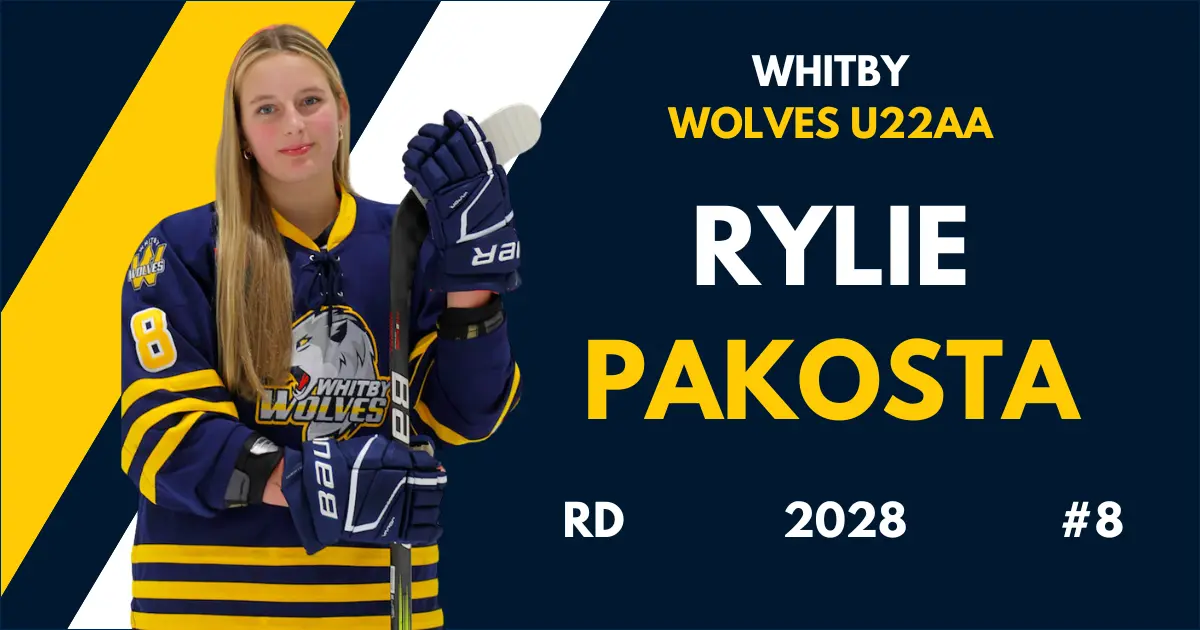
Rylie Pakosta
Player Overview
Height
5’8″
Position
Defenseman
Shot
Right
Team
Whitby Wolves U22AA
School
Anderson C.V.I.
Grad Class
2028
Programs of Interest
- Criminology
- Science
- Sports Management
Academic Record
Scouting Report
Defensive Zone
Key Strengths
- Net-Front Authority: Rylie Pakosta owns the blue paint without wrestling herself out of the play. She times her engagement, arrives with momentum, and bumps attackers off their line instead of locking up and losing body position.
- Inside Leverage Control: She’s done real work here. Instead of defending from the outside and reaching in, she establishes inside positioning early and keeps her stick free, which allows her to defend both body and puck without panic.
- Momentum Box-Outs: Rather than planting and shoving, she glides through contact and displaces forwards using angle and movement. The attacker moves — she stays balanced and connected to the play.
- Corner Containment: Below the goal line and in the corners, she reads when pressure isn’t hers and seals her lane. She doesn’t chase into dead ice; she protects the middle first and forces play to low-percentage areas.
- Depth Adjustment Reads: She changes her proximity to the crease based on the threat. Tight when traffic builds. Higher when the puck shifts up. It gives her goalie sightlines and prevents second-layer attackers from slipping unchecked into scoring ice.
Areas to Refine
- Weak-Side Ownership: When the puck is strong-side, her job becomes eliminating backside threats before they arrive. Instead of reacting once the floater enters the slot, claim that ice early and sit on it. Make them skate around the perimeter with nothing available inside.
- Scan Before Shift: There are moments where she adjusts off net-front too quickly without confirming the next layer. A half-second shoulder check before moving will prevent small seams from opening behind her.
- Defensive Quarterbacking: Her reads are strong — now lead them. Clear, early communication on switches, low-to-high threats, and expanding coverage will tighten the five-player unit and stamp her presence on the zone.
Key Strengths
- Calculated Close-Outs: Rylie Pakosta doesn’t fly blind into pressure. She reads when to jump, takes a direct route, and closes with control instead of overcommitting and getting spun off.
- Angle Denial Routes: Her approach cuts off the wall escape. Puck carriers don’t just walk up the boards on her side — she steers them below the goal line where she’s strongest.
- 50/50 Winner: On loose pucks and foot races, her size and strength show up. She arrives with purpose and competes through contact instead of reaching and hoping.
- Battle Neutralizer: When she can’t win it clean, she stalls it. She pins, leans, and buys time until support arrives, turning dangerous touches into manageable scrums.
- Below-Goal Kill: Forcing play under the goal line plays into her identity. Once she drives attackers low, she closes space and suffocates the play before it can climb back into scoring ice.
Areas to Refine
- Turnover Conversion: Winning the battle is step one. Step two is coming out with it. At the next level, she needs to retrieve and exit herself more often instead of separating and leaving the puck for someone else.
- First-Touch Authority: When she wins a race, the puck has to settle on her stick immediately. Cleaner first touches will turn defensive stops into instant transition instead of extended zone time.
- Dominant Finish: She has the tools to dictate these moments. The growth now is committing fully — arriving to end plays, not just disrupt them — and turning her pressure into clear possession for her team.
Key Strengths
- Lane First Instinct: Rylie Pakosta places herself in lanes early. Whether it’s a shooting threat or a seam play, she arrives in position before the puck is delivered, shrinking options before they fully form.
- Stick-Led Seals: She’s progressing from pure fronting to initiating blocks with her stick. Passing lanes get disrupted at the source, not just absorbed after they travel.
- Timed Arrivals: She reads when the puck carrier is thinking shot or pass and adjusts her depth to cloud the idea. The hesitation she creates often prevents clean execution.
- Pressure-to-Disrupt: She still leans on skating pressure and stick detail to break plays before they become shots. It’s an active defensive style that limits clean releases.
- No-Fear Commitment: Whatever choice she makes — front, stick, or step — she doesn’t hesitate. That decisiveness is a strong foundation as her full blocking technique continues to mature.
Areas to Refine
- Execution Finish: She’s taking away lanes, now she needs to finish the block itself. Arriving in the lane is step one — sealing it completely with body alignment and controlled contact is the next level.
- Full-Body Confidence: The willingness is there, but the body-drop technique isn’t automatic yet. As she trusts her reads, committing fully to the block will turn close calls into clean denials.
- Rebound Direction: When she does get a piece of it, the puck can die in bad ice. The next step is killing it to the wall or below the goal line. A block only matters if the second touch isn’t dangerous.
Key Strengths
- Shoulder Check Retrievals: On dump-ins, Rylie Pakosta will scan early, arrives under control, and retrieves with a plan. The puck doesn’t surprise her — she knows her next touch before she gets there.
- Net Shield Setup: Using the net as protection has changed her breakout game. Instead of forcing pucks up ice, she curls, settles, and lets her team get organized before initiating the exit.
- Composed First Pass: Her first touch is cleaner now. She delivers flat, purposeful passes that hit tape and allow the breakout to flow instead of survive.
- Controlled Initiation: She doesn’t panic under light pressure anymore. She sets her feet, pulls the forechecker into her route, and exits on her terms.
- Follow-Up Activation: After moving it, she doesn’t watch. She joins the rush line as the second wave, keeping the unit connected up ice.
Areas to Refine
- Reversal Availability: On weak-side retrievals, she can get to her corner spot sooner and demand the puck. Becoming a louder, clearer outlet will give her partner a safer escape under pressure.
- Pressure Reversals: When she is the puck carrier and feels heat, the reverse option isn’t automatic yet. Adding that instinct will prevent forced wall plays.
- Weak-Side Join Timing: When the puck exits opposite her side, there are chances to accelerate into the middle lane and push defenders back. Arriving earlier into the breakout will stretch coverage and support transition speed.
Neutral Zone
Key Strengths
- Connected Awareness: Rylie Pakosta stays tied into the state of possession whether her team has it or not. She reads the flow early and adjusts her positioning before the puck fully declares, which keeps her involved instead of reacting late.
- Regroup Positioning: As an outlet, she hinges with intention. She creates depth for her team, gives the puck carrier relief, and presents clean support underneath the play without drifting out of range.
- Checker Manipulation: She doesn’t just receive and move it — she draws pressure toward her before slipping pucks behind checkers. That subtle pull opens ice and allows the regroup to continue advancing instead of stalling.
- Flow Recognition: When possession flips, she adjusts quickly. If the opposition controls it, she doesn’t get caught overextended. If it swings back, she’s already in motion to support the next play.
- Reliable Outlet Habits: Her default support routes are dependable. Teammates know where she’ll be on the regroup, which stabilizes the neutral zone and keeps exits from turning into scrambles.
Areas to Refine
- Space Attack Mindset: On regroups, when she receives with open ice in front of her, she can look to skate into it first. Becoming more willing to carry through the neutral zone will allow her to initiate more rushes instead of simply facilitating them.
- Middle Activation: Her passing options lean heavily toward the wall or her d-partner. Elevating her eyes to the middle lane will create more controlled entries and disrupt defensive spacing at higher levels.
- Weak-Side Recognition: The far-side wing is available more often than she uses it. Identifying and executing that cross-ice neutral zone pass will convert possession into immediate offensive advantage instead of predictable lane usage.
Key Strengths
- Support Priority: Rylie Pakosta values her positioning first. She makes herself available underneath the puck and gives her teammates a calm, predictable outlet when forward progress stalls.
- Simple Execution: She doesn’t overcomplicate the reset. The first pass is clean, flat, and purposeful, allowing her team to reorganize without inviting unnecessary pressure.
- Momentum Continuation: After moving it, she advances with the play. She doesn’t become a spectator — she pushes up ice to keep the regroup from turning static.
- Forced Play Reduction: She rarely tries to thread hope plays through traffic on regroups. If it’s not there, she moves it efficiently and keeps possession intact.
- Composed Presence: There is visible confidence in how she handles these sequences. Her body language is steady, and her decisions don’t rush just because the initial rush died.
Areas to Refine
- Deeper Reset Option: At times, she can take the puck back even further — fully resetting into her own zone when necessary. That extra layer of patience will stretch forechecks and create cleaner re-attack lanes at higher levels.
- Role Interchange: Switching off with her d-partner and carrying the puck herself would add another dimension. Becoming comfortable initiating the second wave makes her less predictable and more dynamic in controlled breakouts.
- Change Management: When her team needs a line change and entry isn’t available, converting cleaner dump-ins becomes critical. Placing pucks with intention instead of defaulting to safe chips will preserve territorial advantage.
Key Strengths
- Weak-Side Control: When the puck is away from her, Rylie Pakosta doesn’t drift into comfort ice. She stays tethered to her check — close enough to close instantly, far enough to read the next layer of the play. She’s not guessing. She’s waiting to strike.
- Kill the Catch: When the puck arrives on her side, she closes with intent and goes straight through hands and sticks. Receivers don’t settle pucks cleanly against her. She disrupts first contact and turns controlled advances into broken plays.
- Wall Authority: Along the boards, she doesn’t wave at pressure — she leans into it. She pins, compresses, and holds until help seals it. Opponents feel her there. The play slows because she makes it slow.
- Early Line Stand: She’s growing into stepping up before entries form. Instead of surrendering the blue line and defending inside, she’s meeting rushers in the neutral zone and forcing decisions earlier.
- Processing Speed: Her scanning is real. You can see her read routes developing — middle drive, wide push, late trailer — and adjust her angle before the puck arrives. She’s not reacting after the fact.
Areas to Refine
- Suffocate Mode: There are sequences where she contains when she could erase. I want to see her decide that the neutral zone ends with her — no glide, no survive, just close and finish the play completely.
- Middle Lane Denial: From the weak side, she sees the seam. The next evolution is stepping into it before the puck travels. Don’t just track the middle option — eliminate it.
- Own the Ice: With her frame and edge control, she can take away more real estate earlier in the rush. Step up sooner. Lean sooner. Make attackers feel boxed in before they even cross center.
Key Strengths
- Above-Puck Discipline: Rylie Pakosta stays above the play on entries instead of drifting below the tops of the circles. It protects against odd-man rushes against and gives her team an immediate defensive answer if possession turns.
- Regroup Anchor: When the line gets jammed or the puck carrier runs out of space, she is already in position to reset the attack. She absorbs the puck cleanly and moves it with purpose instead of forcing it into traffic.
- Second-Wave Arrival: Her timing as a trailer is improving. She doesn’t arrive too early and clog ice, and she doesn’t arrive late and become irrelevant — she shows up as a usable option once the zone is gained.
- Blue Line Awareness: Inside the zone, she reads pressure and slides laterally to keep plays alive. She adjusts her feet to open lanes rather than standing flat at the line and hoping.
- Activation Restraint: She understands risk. She picks her moments to join instead of chasing offense, which keeps the five-player unit connected and organized behind the puck.
Areas to Refine
- Entry Ownership: She supports well — now she needs to initiate more. Coaches will want to see her take control of entries through clean first passes, planned dump executions, or carrying the puck over the line when ice is given.
- Middle-Lane Push: There are opportunities for her to drive through the middle as a weak-side option and back defenders off. Adding that inside presence forces coverage decisions instead of allowing defenders to sit wide.
- Decisive Carry Reads: When space opens in front of her, she can default to moving it early. At the next level, recognizing clear ice and skating it in herself adds a dimension that makes her less predictable.
Offensive Zone
Key Strengths
- Composed Patience: Rylie Pakosta no longer forces what isn’t there. When she has the puck, she reads the ice first. If time is given, she uses it. If pressure arrives, she simplifies. That shift has changed her offensive zone impact.
- Connected Decisions: Her choices now keep plays alive instead of ending them. A quick touch to the closest option. A smart bump back down the wall. She understands possession isn’t about forcing something pretty — it’s about keeping her team attached to the attack.
- Blue Line Mobility: She is far more active with the puck at the line. Walking laterally, adjusting her angle, or carrying deeper when space opens. She is no longer stationary, and that movement stretches coverage.
- Pressure Management: When confronted, she absorbs contact and makes the next simple play. She protects pucks instead of handing them away. There’s maturity in how she handles defensive pressure.
- Play Extension: She recognizes moments to delay and let the play breathe. Instead of rushing into traffic, she waits for support and allows the next option to reveal itself. That awareness has increased sustained zone time.
Areas to Refine
- Earlier Commitment: As she climbs levels, time will shrink. There are moments to commit sooner — carry with conviction, move it immediately, or snap a quick release before defenders set their feet. Trusting her first clear read earlier will raise her ceiling.
- Forward Rotation: There are opportunities to rotate down the wall and interchange with forwards during extended possession. Becoming more interchangeable in-zone will open another creative channel within her game.
- Focal Point Presence: She has the tools to be the player possession runs through. Stepping into that responsibility — demanding touches and initiating sequences — is the next evolution. Not individualistic. Influential.
Key Strengths
- Anticipatory Movement: Rylie Pakosta does not watch plays unfold — she tracks them before they arrive. As the puck shifts sides, she adjusts her route early, sliding into space before it opens instead of reacting after it does. That timing keeps her available as a clean second option and prevents possession from stalling at the wall.
- Support Layering: She positions underneath puck battles instead of on top of them. When her forwards engage along the boards, she doesn’t crowd the fight — she reads the likely outcome and stations herself where the puck will escape. That habit extends zone time and turns 50/50s into second-chance touches.
- Partner Security: She consistently gives her D-partner a dependable release valve. Her spacing is intentional — close enough for a short outlet, far enough to avoid being defended by the same player. That detail stabilizes possession and allows the pair to reset without panic.
- Interior Activation: She is arriving inside more often. Not drifting high and hoping for a recycle — stepping into seams between coverage, presenting her stick as a legitimate scoring threat. That evolution forces defenders to account for her instead of sagging toward the forwards.
- Pinch Timing: Her reads at the blue line are rarely late. She identifies soft rims and hesitant exits and closes with purpose, keeping plays alive without overexposing the middle. Her pinches are calculated, not hopeful.
Areas to Refine
- Punish the Exit: When she chooses to close the wall, she can finish the job lower. Instead of containing the breakout, she has the strength and instincts to end it — cutting underneath routes and eliminating space before the first stride. At higher levels, disruption beats containment.
- Late-Game Compression: In critical minutes, she can step down earlier and shrink the zone. Whether protecting a lead or pressing for one, backing off the line gives skilled carriers air. Compressing space sooner forces rushed decisions and keeps momentum on her side.
- Demanding Presence: She has the awareness to influence play, but the next step is insisting on it. Calling for pucks. Rotating aggressively into exchange positions. Becoming the off-puck driver rather than the available option. The tools are there — the responsibility is the next layer.
Key Strengths
- Efficient Distributor: Rylie Pakosta does not overhandle pucks. She moves them before pressure arrives and keeps sequences alive with clean, direct execution. Her passes are purposeful — tape to tape, on time, and rarely forced.
- Flow Maintenance: She understands that offensive zone rhythm dies when the puck stalls. She keeps it moving. Quick exchanges. Simple bumps. Immediate resets. That habit prevents defenders from setting their coverage.
- High-Percentage Vision: She consistently identifies the closest reliable option. Instead of hunting low-odds plays through traffic, she chooses the pass that sustains possession and builds the next layer of attack.
- Mobile Creation: She doesn’t plant and distribute. She moves her feet before and after the pass, adjusting her angle to improve the next touch. That motion keeps her from becoming predictable and supports continuous pressure.
- Composure Under Pressure: When forechecked, she doesn’t panic into blind plays. She absorbs the first wave and makes the next clean decision. That steadiness stabilizes the unit.
Areas to Refine
- Creative Expansion: She has the ability to add deception and variety. Carrying deeper herself. Initiating give-and-gos. Executing switch-offs with her partner. Expanding her playmaking menu will make defenders hesitate instead of reading her early.
- Initiation Mindset: Right now she connects plays. The next step is starting them. Instead of waiting for the obvious outlet, she can attack a seam or pull coverage toward her before distributing. That shift moves her from dependable to difficult.
- Calculated Risk: There are moments to take a chance — a slip pass through a seam, a delay to draw a defender, a quick middle touch. Not reckless. Intentional. Growth at the next level requires testing limits.
Key Strengths
- Selective Threat: Rylie Pakosta doesn’t fire just to register a shot anymore. She used to lean into volume. Now she reads the layer in front of her and chooses moments that actually create something. That shift from quantity to purpose has improved her impact.
- Low Through Legs: She consistently keeps pucks under sticks and through shin pads. Not blasting for glory — sliding it past the first defender so the real play happens at the crease. That’s intentional offense.
- Rebound Builder: A lot of her production comes from disruption. She shoots to make the goalie fight the puck. Bodies converge. Sticks whack. That’s how she helps tilt momentum.
- Angle Creator: She won’t always release from where she receives it. A small lateral pull. A half-step inside. Just enough to open a lane before it closes. Subtle, but effective.
- Secondary Arrival: When she does score, it’s usually because she stayed connected to the play and arrived at the right time — not because she forced something that wasn’t there.
Areas to Refine
- Attack the Gap: When defenders sag and the lane opens, she can close that ice immediately instead of settling for the perimeter release. One or two strides downhill changes the goalie’s depth and forces coverage to collapse.
- Finish Mentality: There are clean looks where the intent still feels like “create chaos” instead of “beat her clean.” When the sightline is clear, the delivery needs to say goal — not maybe.
- Get Closer: Separate from walking in with the puck — this is about activating without it. Sliding into the high slot when the cycle shifts. Dropping below the tops of the circles when timing allows. Arriving where goals actually happen instead of watching them develop.
Technical Skills
Key Strengths
- Recovery Speed: Rylie Pakosta’s straight-line skating is a strength, especially on recoveries. When a play turns, she can get back into position with authority. That ability protects gaps and erases developing threats.
- Backward Control: Her backward skating is strong for her age and level. She mirrors puck carriers well, adjusts her angle without panic, and prevents outside drives or middle cut-ins from gaining leverage.
- Gap Footwork: She uses her feet to manage space rather than reaching with her stick. Her skating supports her gap control, allowing her to stay connected to attackers without overcommitting.
- Situational Mobility: Down low and along the wall, she utilizes her feet effectively. She doesn’t get stuck flat-footed when puck pressure builds. Her movement supports her defensive reads.
- Up-Ice Stride: When she joins the rush or carries the puck herself, her stride looks strong and composed. She covers ice efficiently, supports transition with purpose, and can push play forward without overhandling or stalling the advance.
Areas to Refine
- Explosive First Steps: Her first three steps are above average, but there’s room to become lighter and more explosive. Adding sharper acceleration early in movements would elevate her ability to separate or close instantly.
- Edge Escapes: Under pressure resets, becoming more agile on her edges would unlock another layer. Quick weight shifts and tighter turns would help her evade forecheck pressure more efficiently.
- Lateral Dynamism: She isn’t rigid, but increasing her lateral movement and quick directional changes would make her even more difficult to read. Becoming more dynamic side-to-side would elevate how she presents as a skater in pressure situations.
Key Strengths
- Puck Control Identity: Rylie Pakosta is more of a puck controller than a flashy stickhandler. She doesn’t overhandle. Her touches are strong, efficient, and the puck stays settled on her blade.
- Body Shielding: She protects the puck extremely well by positioning her body between the checker and the puck. She makes excellent use of her frame, keeping it out of reach rather than relying on quick hands alone.
- In-Motion Security: Whether skating forward or carrying it while moving backward, she keeps the puck clean. There’s no unnecessary exposure. She doesn’t bobble or present easy poke-check opportunities.
- Hand Strength: She can move from two hands to one under pressure and still maintain control. When neutralized, she doesn’t panic or surrender possession. She absorbs contact and keeps the puck.
- Blue-Line Composure: Walking the offensive blue line, she doesn’t leave pucks exposed. Her positioning and control prevent easy knock-offs, keeping plays alive and organized.
Areas to Refine
- Carrier Deception: When she carries the puck, incorporating more subtle hand fakes and slight pulls across her body would help freeze defenders. Small manipulations before contact can buy her an extra half-second and open cleaner lanes.
- Route Variation: Expanding how she transports the puck — adding cutbacks, lateral shifts, or delayed entries — would prevent defenders from locking into her skating line. Changing her path with intention makes her harder to contain without relying on flash.
- Skill Expansion: There’s value in experimenting more. Trying new handling patterns in practice and lower-risk moments builds range. Expanding her stickhandling toolkit will help her discover what feels authentic and effective at higher speeds.
Key Strengths
- Breakout Precision: Rylie Pakosta’s first pass on the breakout can be extremely precise when given a clean look. Pucks arrive flat and on time, allowing forwards to move without breaking stride.
- Regroup Reliability: Her D-to-D passing during regroups carries a high success rate. She moves the puck cleanly and keeps transition flowing without unnecessary delay.
- Offensive Distribution: In the offensive zone, she’s effective both linearly and cross-ice from high to low. She can shift the point of attack and help extend zone time rather than settling for perimeter movement.
- Long-Range Power: Her passing power stands out. Quick ups and long-range feeds have pace and accuracy, allowing her to bypass layers and change ice quickly.
- Rush Continuity: When joining the rush, she doesn’t overhandle. She lets the pass continue the movement of the play, keeping momentum intact rather than forcing her skating to do all the work.
Areas to Refine
- Pressured Decisions: When regaining possession under pressure in her own zone, continuing to shorten her decision window will elevate her game. It’s not about rushing — it’s about committing to the right option earlier.
- Purposeful Advancement: She rarely throws pucks away, but eliminating the occasional “move it forward for the sake of moving it” play would sharpen her profile. Higher levels reward intent on every touch.
- Reversal Chemistry: Developing more forward-skating and pivot reversals with her partner would add another layer to her defensive-zone exits. Calling for it early, selling up ice, then slipping it back while staying available keeps the forecheck honest and builds real trust between partners.
Key Strengths
- Intentional Usage: The biggest growth in Rylie Pakosta’s shot this season isn’t mechanics — it’s application. From the blue line, she’s making better choices about when to shoot and when to hold. Instead of forcing pucks into legs, she waits for lanes, gets it through clean, and uses low placement to create second chances.
- Lane Awareness: She has shifted from trying to overpower shin pads to prioritizing clean lanes. That discipline has increased how often her pucks reach the net and stay alive for traffic.
- Angle Creation: Her feet are more active along the line. By adjusting her positioning before release, she improves her shooting lane and avoids predictable, stationary point shots.
- Rebound Generation: She understands how to create offense from the outside. Low, purposeful shots generate pucks that forwards can attack. It’s calculated and team-first.
- Shot Variety: While she favors wrist and snap shots, she can step into a heavier release when the moment calls for it. She’s also comfortable attacking far side when the lane presents itself.
Areas to Refine
- Self-Created Lanes: Continuing to manipulate defenders before shooting — subtle shifts, look-offs, lateral pulls — would help her manufacture windows rather than waiting for them.
- One-Timer Development: Adding the one-timer more consistently would introduce a new layer to her threat profile. Comfort with that release will matter as power-play speed increases at higher levels.
- In-Stride Release: When joining the rush, releasing in stride more often would add unpredictability. Shooting off movement instead of settling first forces defenders and goaltenders to adjust later than they’d like.
Situational Play
Key Strengths
- System Fidelity: At 5v5, Rylie Pakosta executes what her team is asking of her. She understands the framework and plays inside it without resistance. Coaches don’t have to wonder if she’s aligned with the plan.
- Adaptive Execution: What stands out this season is her ability to shift gears. She can follow the team concept when required, but she’s also growing into moments where she can freewheel when the situation allows. That balance is developing nicely.
- Zone-Specific Awareness: She doesn’t carry a defensive-zone mindset into the offensive zone. Her decisions change with geography. In each zone, she looks to make the right play for that environment rather than defaulting to habit.
- Unit Movement: She moves with the group, not against it. Her reads are synchronized with the other four players. When rotations happen, she adjusts without hesitation.
- Opportunistic Instinct: She won’t cheat for offense carelessly. But if space presents itself and the opponent fails to recognize it, she’ll step into it. That restraint paired with awareness keeps her game controlled.
Areas to Refine
- Creative Expansion: She has begun to show signs of creativity beyond the basic execution of the system. The next layer is pushing that further. Finding new solutions inside the framework that elevate the play rather than simply maintaining it.
- Evolve the Pattern: As she climbs levels, opponents study tendencies. Continuing to add subtle variations — in breakouts, regroups, and offensive touches — will keep her game dynamic and harder to read.
- Command the Moment: When she leans into her creative side, there’s a different presence. Developing that “show me something” quality consistently will separate her from reliable to impact-driven in the eyes of higher-level evaluators.
Key Strengths
- Role Versatility: Rylie Pakosta has been used on both units and in multiple spots, and she handles each assignment well. She doesn’t need the power play built around her to be effective. Wherever she’s placed, she executes.
- Blue-Line Mobility: Her movement along the line and through wall exchanges has improved noticeably this season. She adjusts her feet, stays available, and keeps the unit connected rather than static.
- Right-Play Discipline: She doesn’t force offense just because it’s the power play. She looks for the correct option at the correct time. That patience prevents unnecessary clears and keeps possession intact.
- Shot Placement: She does a good job keeping her shot low and through traffic. Pucks get past shin guards, arrive on net, and create second opportunities. It’s functional offense that keeps pressure sustained.
- Unit Stability: When she has the puck up top, the group settles. There’s a dependable rhythm to her touches. Even without highlight plays, she helps the unit stay organized and pressing.
Areas to Refine
- Heavier Shot Identity: She has the ability to lean into her shot more. There are moments where a forceful release changes the penalty kill’s posture. Using that heavier option more deliberately adds another layer to her threat.
- Deceptive Distribution: Her passing is reliable, but there’s room to make it more deceptive. Shoulder checks, look-offs, slight delay holds — small details that open seams rather than simply moving it point to point.
- Dynamic Presence: She profiles as a power defenseman, and there’s space for that at higher levels. The next step is bringing her natural compete and drive into the power play more assertively — not with flash, but with conviction that makes the penalty kill adjust to her.
Key Strengths
- Pressure Control: Rylie Pakosta can contain or pressure depending on what the moment requires. She understands when to hold her ground and when to step into a carrier. That judgment stabilizes the unit when things tighten.
- Physical Dial: This is an area where she does a great job revving it up or dialing it back. Her physical engagement matches the situation. That modulation brings order to a situation where the opposition is trying to create breakdowns.
- Lane Ownership: She holds her zone well and takes away passing lanes without chasing. There’s discipline in how she protects space. She doesn’t abandon her responsibility to over-pursue.
- Net-Front Detail: She boxes out effectively without tying herself up. She bumps and releases, keeping her assignment outside while maintaining her own vision of the puck. That separation is mature penalty-kill work.
- Confident Execution: She doesn’t hesitate or second-guess herself. There’s no visible “I should be somewhere else” reaction. She knows her job and carries it out with conviction.
Areas to Refine
- Decisive Clears: At higher levels, time and space shrink. When under pressure, picking a spot and committing to it becomes critical. It’s not about harder clears — it’s about intentional ones that guarantee the puck leaves the zone.
- Battle Domination: Along the wall or in the corner, she competes well. The next step is owning those moments. Not just surviving the battle — coming out with the puck herself and ending the sequence.
- Ice Denial Posture: She relies well on stick detail, but adjusting body positioning to take away more ice with her frame would make entries and seam plays even harder to execute against her.
Key Strengths
- Situational Trust: Rylie Pakosta is a defenseman you can rely on in a variety of game states. Whether protecting a lead or managing a tight score, her decision-making remains steady and dependable.
- Big-Minute Composure: Her confidence has grown into something visible. In tougher moments, her body language shows purpose. There’s no hesitation in her posture, no visible cracks when pressure rises.
- Pressure Calibration: She reads when to contain and when to pressure. That ability to adjust the thermostat based on momentum — good or bad — has become part of her identity as a big-minute defender.
- Score Discipline: She doesn’t chase plays when urgency rises. She plays within what is required in the moment. When up, she manages. When down, she engages. The decision matches the scenario.
- Momentum Awareness: When swings happen, she doesn’t get pulled into emotional reactions. She absorbs the shift in energy and responds with controlled execution rather than impulse.
Areas to Refine
- Flow Control: The next step is taking ownership of the game’s direction herself. Through puck possession and assertive reads, becoming the player who dictates when to press forward and when to retreat.
- Command Presence: Coaches at higher levels look for someone who can carry the game when it tightens. Developing the confidence to step into that responsibility — rather than simply managing it — elevates her impact.
- Play Magnetism: The growth opportunity is becoming the defender the play gravitates toward. On puck or off puck, being the one who halts opposition momentum and redirects it. That comes from repetition, experimentation, and choosing to own that role fully.
Mental Game
Key Strengths
- Role Awareness: Rylie Pakosta understands her job within the five-player picture. She plays with clarity about her responsibility and how it connects to her D partner. There’s very little freelancing. She supports when support is needed and holds when holding is required. You can see the communication without words.
- Partner Sync: She reads off her D partner extremely well — whether her partner has possession or is defending without it. Her spacing adjusts naturally. When the puck shifts, she shifts. When pressure builds, she compensates. That relational awareness keeps plays from unraveling.
- Weak-Side Attachment: Off the puck, she stays connected to the flow. Weak side doesn’t mean asleep. She positions herself early, keeps her stick and body available, and is ready when the puck swings across. She doesn’t get surprised by second-side threats.
- Strong-Side Activation: When the puck becomes a real threat on her side, she doesn’t hesitate. She closes space with purpose and makes herself relevant in the play. There’s conviction in those moments — she doesn’t drift into coverage, she steps into it.
- Simple Execution: With the puck, she doesn’t complicate the game. First option is usually the right option. Breakouts are clean. Regroups are controlled. Offensive-zone touches extend possession rather than force something low percentage. Coaches know what they’re getting shift to shift — and that trust matters.
Areas to Refine
- Situational Gear Shift: There are moments — protecting a lead, chasing a goal — where she can access another level of intensity. Not reckless. Not forced. But intentional. Recognizing when the temperature of the game changes and matching it with more edge.
- Impose Your Size: She has the frame and strength to tilt matchups. The next step is choosing to lean into that advantage more often. Finishing sequences physically. Owning space. Making opponents feel her presence over 200 feet.
- Big-Game Presence: In high-leverage minutes, she can look the same as she does in routine minutes. That consistency is valuable — but there’s room to command those moments more. Take ice. Dictate matchups. Force the issue when the game demands it.
Key Strengths
- Three-Zone Consistency: Rylie Pakosta brings a steady level of compete in all three zones. It doesn’t spike and drop. Whether she’s defending, transitioning, or supporting offensively, her engagement level is reliable and predictable in a good way.
- Engagement Timing: She recognizes when it’s her moment to jump a check and when it’s not. If the puck is on her side, she steps in. If it’s away, she stays attached to her assignment and doesn’t get pulled out of position chasing noise.
- Quiet Edge: There’s a controlled competitiveness to her game. When she has time and space, she uses it. When the moment doesn’t call for risk, she doesn’t force one. That internal governor shows maturity and awareness.
- Battle Persistence: If she gets knocked off a puck or tied up in a battle, she doesn’t exit the play mentally. She works back into it. There’s no drifting away after first contact — she stays connected until the sequence resolves.
- Physical Capability: When a challenge is directly in front of her, she uses her size effectively. She can be a robust presence along walls and in contested areas. When she chooses to lean in, she is difficult to handle.
Areas to Refine
- Automatic Wins: She wins a lot of battles now. The next step is making it feel inevitable. At higher levels, good isn’t enough — it has to look automatic. Coaches should know before the puck arrives that she’s coming out with it.
- Imposed Identity: She can become a known presence when she wants to. The growth area is sustaining that identity shift to shift so opponents are aware of her before they even engage. That kind of reputation changes matchups.
- Leadership Edge: The physical and competitive tools are there. Pulling that extra gear out consistently — especially in defining moments — elevates her from solid competitor to tone-setter. It’s less about doing more, and more about deciding to own more.
Key Strengths
- Mistake Recovery: When Rylie Pakosta makes an error, she doesn’t wear it. She stays in the play until the result is settled. There’s no visible spiral, no drop in posture. The shift continues, and so does she.
- Composed Presence: Her body language remains steady when plays break down. You see acknowledgement — not frustration. She processes what happened without broadcasting emotion that disrupts the group.
- Clean Physicality: She can play a heavy game without crossing lines. There’s no unnecessary after-whistle behavior, no projecting for attention from officials. She competes hard but keeps it between the whistles.
- Bench Stability: She isn’t inflaming situations from the bench. If a call doesn’t go her way, she absorbs it and resets. That emotional restraint protects team focus in volatile stretches.
- Emotional Intelligence: The growth this season is evident. She has moved from being hard on herself after mistakes to playing with visible self-confidence. The emotional standard she’s holding now mirrors that of an older, more experienced defenseman.
Areas to Refine
- Controlled Fire: The next layer is knowing when to deliberately turn the temperature up. There are moments where the game calls for edge — not recklessness, but presence. Choosing when to show that fire is the growth point.
- Intimidation Balance: She has the composure of a player who is in control of herself. Adding the ability to flip that switch when needed makes opponents think twice. It’s about being respected not only for control, but for what happens if tested.
- Reputational Command: As she climbs levels, veterans will probe emotional weakness. If she can experiment with accessing that competitive edge at the right moments, she builds a reputation that discourages challenges before they start.
Key Strengths
- Clean Slate Mentality: Rylie Pakosta treats each shift as its own event. Up a goal or down one, she doesn’t let the previous sequence leak into the next. The game resets in her mind quickly, and you see that in her play.
- Emotional Neutrality: She doesn’t get overzealous when things are rolling. Success doesn’t pull her off task. That restraint keeps her details intact when momentum is in her team’s favor.
- No Residue Play: When something goes wrong, it doesn’t attach to her like a wet blanket. She doesn’t drag mistakes through the period. The response is composed, steady, and forward-moving.
- Game-to-Game Stability: Earlier in the season you could read how she felt about her performance. Now, there’s a level of internal confidence that stabilizes her from shift to shift, period to period, game to game.
- Calm Continuity: Her demeanor remains calm, cool, and collected regardless of situation. That consistency gives her partner and her line a steady presence to play around.
Areas to Refine
- Aggressive Reset: When momentum turns against her team, there’s room to reset with intent. Not just calm — but calculated. Gather it internally, form the next plan, and step back onto the ice with heightened purpose.
- Comeback Gear: The next level is becoming the player who elevates when games tighten. When things get tough, instead of maintaining baseline, rise above it. Increase intensity in defining moments.
- Declare Presence: In high-pressure resets, don’t shrink. Do the opposite. Make it known you’re on the ice. A physical play. A puck touch. A defensive stop. Something that stamps the shift and flips the tone.
Game Film & Highlights
| Date | Opponent | Game Type | Watch |
|---|---|---|---|
| April 2026 | Various | Highlights | ▶ Watch Film |
| Dev 6, 2025 | Ottawa Senators | Showcase | ▶ Watch Film |
| Dec 5, 2025 | Lindsay Surge | Showcase | ▶ Watch Film |
| October 2025 | Various | Highlights | ▶ Watch Film |
| Sept 12, 2025 | Philadelphia Jr. Flyers | Showcase | ▶ Watch Film |
| Sept 12, 2025 | East Ottawa Stars | Showcase | ▶ Watch Film |
×
Frequently Asked Questions
- After hockey, Rylie is interested in pursuing a career in public service or human performance, with paths such as policing, sports physiology, or scientific work.
- Outside of hockey, Rylie plays lacrosse, enjoys travelling in the summer, and spends her spare time reading and listening to music.
- Rylie trains through the ASAD program at school, which includes on-ice development and strength training, and she plays under coach Mike Grammatikos during the season.
- Coaches should know Rylie is in French immersion and working toward bilingual certification, timekeeps hockey, officiates field lacrosse, and volunteers coaching youth lacrosse and hockey.