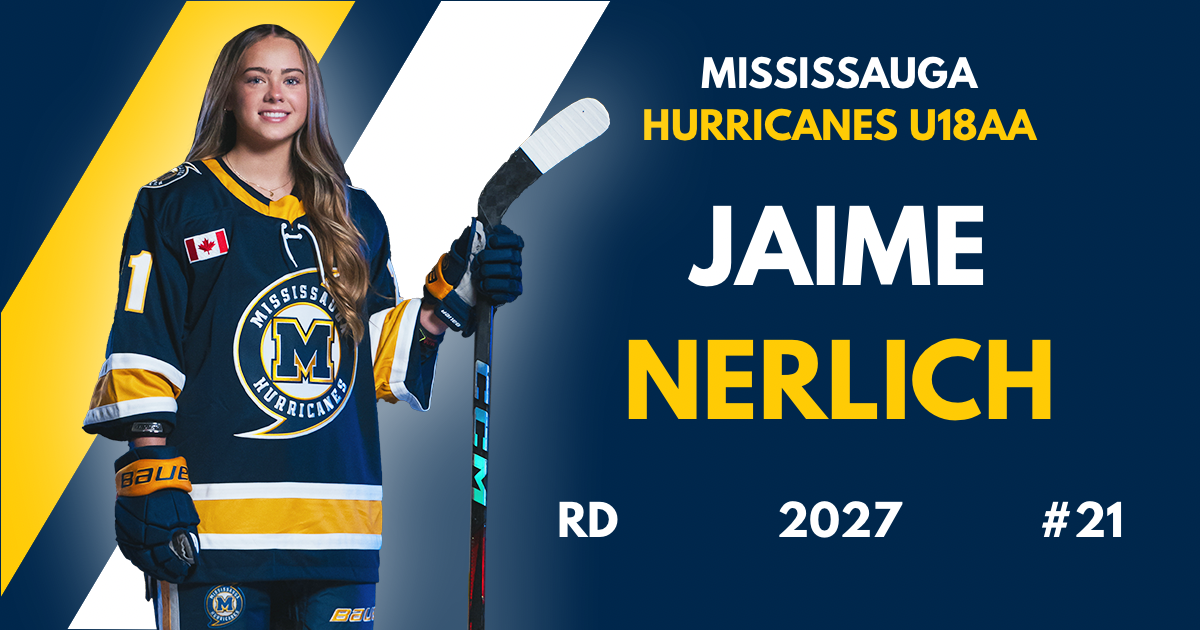
Jaime Nerlich
Player Overview
Height
5’6″
Position
Defenseman
Shot
Right
Team
Oakville Hornets U18AA
School
The Bishop Strachan School
Grad Class
2027
Programs of Interest
- Business
- Health Sciences
Academic Record
Scouting Report
Defensive Zone
Key Strengths
- Technical Foundation: Jaime Nerlich plays a positionally disciplined game. Her reads are deliberate and assignment-driven — she processes what is happening around the ice and commits to the right coverage, not the flashiest one.
- Net-Front Intelligence: In front of her own net, she plays off the check until the situation demands engagement. When a shot loads from the outside or play collapses down, she steps in with purpose — never tying herself up with a forward in front just to look active.
- Assignment Clarity: Her defensive reads show up in how cleanly she identifies her responsibility shift to shift. She is not reacting to chaos — she is reading the play and executing the coverage that belongs to her.
- Disciplined Engagement: Where other defenders in her class burn energy battling at the net-front before the threat materializes, Jaime holds her ground and times her contact to where it actually matters — protecting her goaltender when the danger is real.
- Composure in Structure: She does not unravel when play collapses into her zone. Her instinct is to hold position, track the threat, and respond within the structure of her coverage — a quality that reflects both her technical identity and her maturity as a defender.
Areas to Refine
- Physical Presence on Demand: Jaime reads the net-front well, but as she steps into higher-leverage situations, developing a more assertive physical imprint when the play demands it will signal to coaches that she can be trusted in critical defensive minutes.
- Engagement Timing: Her disciplined approach is an asset, but learning to time her engagement a beat earlier — before a shot releases or a forward settles — will close the window between awareness and action at the next level.
- Shutdown Identity: The tools are in place. The next step is owning the role — playing with the conviction that she is the one who erases threats before they develop, not simply manages them after they arrive.
Key Strengths
- Route and Angle Craft: On 50/50 pucks, Jaime reads the play and makes a decision — jump the footrace when the puck is winnable, contain and angle when it is not. That clarity prevents reckless pursuits and keeps her side structurally sound.
- Inside Battle: When she commits to a footrace, she competes for inside position. She is not just running alongside a carrier — she is working her body into the right spot to take away the lane.
- Angling Execution: When she identifies a puck she cannot reach first, she contains and steers — directing the carrier into predictable, low-danger ice rather than gambling on a check she cannot complete.
- Body Positioning: The quality of her puck pressure traces back to her technical foundation. Her routes, angles, and body positioning reflect a defenseman who has learned the craft — and who is capable of executing it at a higher level as her commitment to the details deepens.
- Decision Efficiency: She does not waste motion. Each pressure sequence starts with a read, and she executes off that read rather than reacting after the fact — a habit that separates her from defenders who simply chase.
Areas to Refine
- Smother the Play: When the carrier is contained, the job is not finished. Closing space so aggressively that there are no options left — no pass, no lane, no room to create — will turn Jaime's controlled pressure into something opponents simply cannot escape.
- Turn It Up: Defaulting to contain is a smart baseline, but the next level demands more. Raising the intensity a notch beyond the read — pressing through the play rather than managing around it — will shift her from disciplined defender to one opponents genuinely fear.
- Commit to the Identity: The angling, the routes, the positioning — it is all there. Fully committing to turning those technical habits into a suffocating presence, one that leaves opponents with no options, is the work that will define her next level.
Key Strengths
- Developed Reads: Jaime has built a legitimate shot-blocking process over the course of this season. She tracks the play, selects her route, and commits to the lane — the sequence is becoming faster and more automatic with each passing month.
- Active Disruption: What began as fronting and stick-checking to alter looks has evolved. She is now positioning her body to take away more space from the shooter, adding a physical dimension to what was already a disciplined approach.
- Lane Selection: She does not guess her way into position. Her route to the lane is deliberate — the product of reading the play rather than reacting to a release — which gives her a clean shot at disrupting attempts before they reach her goaltender.
- Progression Arc: The growth from tracking and fronting to committing her body and directing blocked pucks shows a player who is not just learning technique — she is internalizing a mindset and making it her own.
- Compete Foundation: Her shot-blocking development reflects her overall compete level. She is willing to put herself in harm's way, and that willingness combined with her improving reads is producing a more complete defensive toolkit.
Areas to Refine
- Speed to the Play: The technique is developing — the next step is making it automatic. Getting to her lane faster, driven by the read rather than the shot, will give her a bigger window to disrupt before the puck leaves the stick.
- Connect the Skills: Shot blocking does not live in isolation. Weaving her lane commitment into her puck pressure game — so that the block is the natural next step off a containment or angle — will make her defensive sequence seamless and harder to bypass.
- Directing Blocked Shots: Taking shots out of the air is one thing — controlling where they go is the next level. Developing the habit of angling her body to direct blocked shots away from danger will turn her efforts into immediate possession and clean exits.
Key Strengths
- Tape-to-Tape Pass: When the breakout is in motion and space exists, Jaime delivers — her first pass is clean, accurate, and on time. That reliability gives her teammates confidence to run their routes knowing the puck is coming to them.
- Exit Under Pressure: She can make the tape-to-tape pass with a checker on her back. Most visibly when wheeling behind the net, she executes the outlet under duress — a sign that her breakout mechanics are not only practiced but internalized.
- Reversals as a Weapon: She reads when her partner is available on the reverse before she even starts her carry. By drawing the trailing checker toward her first, she creates the lane and sends it back — a nuanced play that requires spatial awareness and timing most defenders in her class have not yet developed.
- Rush Activation: In the second half of the season, Jaime made a habit of jumping into the rush after delivering her breakout pass. She reads when the play is going north and pushes into the attack — turning a breakout touch into an offensive contribution.
- Weak-Side Instincts: She identifies weak-side rush opportunities and has shown the ability to jump into the play from that side when her team gains possession. That vision adds another dimension to her transition game and gives opponents an extra body to account for.
Areas to Refine
- Options Under Pressure: When she retrieves under heavy pressure, it is the passing read — not the execution — that breaks down. Developing the habit of identifying her outlet before she has the puck will clean up those sequences and keep the breakout on time.
- Reverse Positioning: The instinct to reverse is there, but her positioning on the receiving end of that play still needs sharpening. Being further extended and away from pressure when her partner needs that release valve will make the reversal a reliable option rather than an occasional one.
- Weak-Side Urgency: She sees the weak-side opportunity — the work now is getting into the play faster. Moving with more aggression once her team gains possession will allow her to join the rush as a true threat rather than a trailing option.
Neutral Zone
Key Strengths
- Timed Activation: Jaime does not jump into the rush for the sake of being involved — she reads when the play supports it. That discipline is what separates her activation from reckless pinching, and it is why she consistently arrives as a genuine option rather than a passenger.
- Lane Awareness: She fills what is available and what makes sense — weak-side, strong-side, trail position — based on what the play is giving her. The decision is always contextual, never automatic.
- Offensive Involvement Without Exposure: When she joins the rush, she does so with one eye on the attack and one on a potential breakdown. She is far enough into the play to apply pressure on the opposition, and positioned well enough to recover if possession flips.
- Strong-Side to Weak-Side Range: Her transition game has grown in both directions. Whether she initiated the breakout or is reading from the weak-side, she finds a way to stay connected to the attack at the right moment — a development that has added a new layer to her game this season.
- High-Percentage Movement: Her passing game through transition carries a strong rate of success. When she moves the puck in stride, she is picking options with the clearest path forward — clean, efficient, and reliably on time.
Areas to Refine
- Lead the Rush: She has the reads and the positioning to be the one driving play through the neutral zone — but she defaults to the pass when the carry is there for the taking. Trusting herself to push north with the puck, accepting the trial and error that comes with it, will unlock a dimension of her game that is currently sitting on the table.
- Take a Chance on Herself: The passing default is smart and has a high success rate, but high stock value at the next level will require more. Embracing the moments where she can be the initiator — not just the connector — is a choice as much as it is a skill, and it is one worth making.
- Carrier Confidence: The ability to make that decision is already forming. Giving herself permission to fail at it, grow through it, and own it will be the difference between a reliable transition defender and one who can take over a game through the neutral zone.
Key Strengths
- Automatic Execution: Jaime's regroup game runs on instinct — clean, efficient, and never forced. Whether she is initiating the sequence or continuing it, she processes the play and executes without hesitation or excess.
- Passing Reliability: With space, her passing game does not waver. She delivers the right option at the right time, giving coaches and teammates the confidence that a regroup running through her will not break down at the point of distribution.
- Skating to Connect: Her ability to escape pressure with her feet and find the safest outlet is at a level that does not create anxiety on the bench. She moves to create the play, not just react to it — a quality that keeps regroups fluid under duress.
- Turning Denied Entries: When the opposition shuts down a zone entry, Jaime is the type of defenseman you want with the puck. She resets the play back up ice with composure — the technician in her takes over, and the group moves forward without losing momentum.
- No Shortcuts: She does not take the lazy option or force a play that is not there. Her regroup game reflects her technical identity — sound, repeatable, and built on doing the right thing every time rather than the flashy thing when it suits her.
Areas to Refine
- Hinge Deeper: On weak-side reversals and regroups, Jaime has room to extend further back into her own zone than she currently does. Hinging way back gives her team more time and space to reset — and puts the puck in her hands with no pressure on her, which is exactly when her skill set takes over.
- Use the Net: Resetting behind her own net, using it as a shield to stand her ground, and reading what is developing in front of her before starting the regroup back up ice would add a layer of control to her game. Slowing it down before speeding it up is a weapon — and one that suits her game perfectly.
- Slow It Down to Take Over: The ability to control the pace of a regroup — to deliberately decelerate the play so she can dictate its restart on her terms — would be a significant addition. That kind of composure and command is what separates a reliable regroup defender from one who can actually run the game from her own end.
Key Strengths
- Wall Denial: Stepping up on the wall outlet to shut down forward movement is the most automatic play in Jaime's neutral zone game. When the opposition tries to regroup, she reads it early, engages with conviction, and takes away the option before it develops — a play that looks effortless because it has become second nature.
- Strong-Side Reads: Her reads and engagement are sharpest when the play runs through her side of the ice. She times her step-up cleanly, closes with purpose, and denies movement without overcommitting — the product of a defender who has logged the reps and knows exactly when to go.
- Denial as a Habit: What stands out about her wall pressure is that it is not situational — it is consistent. Shift to shift, she is in position to make that play, and opponents cannot count on slipping past her on the wall when she is reading the regroup correctly.
- Structure Within Pressure: She does not gamble. When she steps up, she does so within the shape of her team's neutral zone structure — which means even when she engages, her side is not left exposed behind her.
- Disruption Without Risk: Her containment habits carry into her zone pressure game. She forces the opposition into low-percentage decisions without putting her own team in a vulnerable position — a balance that reflects her overall defensive maturity.
Areas to Refine
- Activate on the Weak Side: When play is away from her, Jaime can afford to be more active — staying in motion, keeping all opposition in front of her, and letting the puck carrier close the gap naturally so she can step in and close hard along the wall.
- Let the Play Come to Her: On the weak side, she does not need to chase — she needs to move. By staying active and reading the carrier's path, she can time her engagement so the contact happens on her terms rather than as a reaction.
- Add the Physical Element: Using her hockey sense to engineer the right moment to step in and take the body — rather than relying on stick work and containment alone — would bring a physical dimension to her zone pressure game that coaches at the next level will notice and reward.
Key Strengths
- Passing as an Entry Tool: Jaime's most consistent contribution to her team's zone entries runs through her passing game. Whether off the transition or out of a regroup, she identifies the option with the clearest path to gaining the zone and delivers the puck to make it happen.
- Joins When It's Right: In the second half of the season, Jaime began jumping into entries when the play called for it — giving her team an extra attacker and making the opposition account for an additional body at the line. The timing was right, the decision was sound, and the presence was felt.
- High Positioning on Entry: When she does join the attack, she stations herself just inside the blue line — high enough to stay connected to the play, close enough to the line to create real pressure on the opposition's defensive positioning.
- Making It Her DNA: The fact that joining the attack on entries became a deliberate, developing part of her game this season is significant on its own. She was building a new habit in real time, at game speed, and the progress from start to finish was visible and meaningful.
- Read Before Commit: Even when joining late or from the weak side, she reads whether the entry is sustainable before committing fully. That instinct keeps her from going all-in on plays that are about to break down — and reflects the same disciplined intelligence that runs through the rest of her game.
Areas to Refine
- F2 or F3 Selection: There were moments where Jaime stayed high on an entry when the play was calling for her to drive the net or slide behind the defenseman for a low cycle. Developing sharper reads on when to be F2 versus F3 in those sequences will come with experience — and the foundation is already being laid.
- Carry It In: Her next step as an offensive contributor is gaining the zone as the puck carrier herself. A few more reps per game — when the play is there for it — will make her a more complete offensive weapon and open the door to shooting, scoring, and igniting attacks from the inside out.
- Trust the Instinct: She was building this part of her game in real time this season, and the growth was clear. Continuing to trust the read, accept the learning curve on the decisions that do not work, and lean into her role as an attacker when the moment arrives will be the final step in making zone entry involvement a true strength.
Offensive Zone
Key Strengths
- Low-to-High Execution: Jaime's most reliable possession sequence runs from the low retrieval to the high release — whether that ends in a shot or a dish to her partner, she completes the play within a single fluid sequence. The execution varies, but the habit is there and it is becoming more consistent.
- Mobile at the Line: She does not plant and wait. She stays active along the blue line, reading what is available and keeping herself a moving target — which makes her harder to pressure and easier for teammates to find.
- Simple and Composed: She does not force plays that are not there. Her default is to keep the choice clean, move the puck to the right option, and avoid turning possession into a low-percentage gamble at the most dangerous spot on the rink.
- Escaping Pressure: When the opposition closes on her up high, she uses her skating to escape rather than forcing a rushed decision. That composure under pressure keeps her team in possession and buys time for a better option to develop.
- Strong-Side Continuity: When the possession game is running through her side, she connects with the strong-side corner and her partner to keep the puck moving. That reliability gives her team a predictable, trustworthy outlet at the line when they need to reset and reload.
Areas to Refine
- Find the Weak-Side Seam: The cross-ice option exists more often than Jaime uses it. Developing the habit of identifying and hitting that weak-side seam — whether through a direct pass or a rim around the boards — will stretch the opposition's structure and open looks that her current strong-side possession game cannot create on its own.
- Use the Rim: The rim is another way to connect with the weak side under pressure, and it is a tool that is largely absent from her game right now. Adding it as a deliberate option will give her an extra exit route when the direct pass is not available.
- Give and Go: In short-range possession sequences, the give-and-go is a natural next play that Jaime bypasses in favour of her strong-side default. Building that exchange into her game will add a quick, deceptive layer to her possession that is difficult for opponents to read and shut down.
Key Strengths
- Pinching on Both Sides: Jaime's pinching game is active and effective in both directions. Whether she is sealing the strong-side wall to keep a play alive or attacking the weak-side with space to deny an exit, she reads the opportunity and goes — and that aggression is one of the most dynamic expressions of her game in the offensive zone.
- Weak-Side Aggression: When the puck swings to the weak side and space opens up, Jaime takes it. She closes hard to deny the breakout and does it with a conviction that is not always visible in her defensive game — a side of her compete level that coaches will notice and want more of.
- Weak-Side Availability: Even when she is not the one making the play, she stays active and connected on the weak side. She keeps herself available to continue the flow of her team's possession, giving the puck carrier an outlet that is already in motion when they need it.
- Reading the Rotation: She recognizes when the carrier is going to cycle the puck back up to her, and she positions herself to receive and continue the play back down the wall. That awareness of when to stay near the wall versus when to move is a nuanced read that keeps the possession game organized.
- Staying Connected: Her off-puck movement is purposeful. She is not drifting or watching — she is actively positioning herself to be the next option, whether that means holding the line, stepping into space, or preparing to receive a cycle back up from below.
Areas to Refine
- Walk the Line Earlier: When the play turns up ice toward her side, Jaime has a tendency to stay closer to the wall a beat longer than the play needs. Starting her movement toward the middle of the line sooner would give her team a shooting lane and a threat that the opposition has to respect — rather than a wall option they can simply contain.
- Get Loud: The offensive zone is where Jaime is already trying new things and pushing her game forward — now she needs her voice to match it. Calling for pucks, directing traffic, and taking verbal ownership of what is developing around her would accelerate the growth she is already showing and signal to her teammates that she is ready to lead from the blue line.
- Take Ownership: She is doing the work and making the improvements — the next layer is asserting herself as the one running the show up top. Becoming more vocal and directive in the offensive zone will not only elevate her own game but raise the level of everyone playing in front of her.
Key Strengths
- Keeps the Play Moving: Her first instinct is to continue possession, not end it. She moves the puck to the option that keeps her team inside the zone and extends the offensive sequence — a habit that gives her group more time, more looks, and more chances to generate a real scoring opportunity.
- Clean Reads: Her distribution is built on sound reads rather than improvisation. She identifies the right option, delivers it, and avoids the forced play — which means her playmaking, while not flashy, has a high rate of keeping the puck in the right hands.
- Movement Before the Pass: She does not stand and wait for the play to come to her. Her footwork and lateral movement along the line create better angles and cleaner lanes before she even touches the puck — a detail that makes her passes more accurate and harder to anticipate.
- Solid Foundation: The reads, the movement, and the ability to keep the play alive are all in place. What she has built as a playmaker is a platform that is ready to be expanded — the base is sound and the next layer is already within reach.
- Reliable Under Pressure: When the opposition closes on her, she does not abandon her process. She uses her composure and her feet to find the outlet, and her decision-making does not deteriorate when the window tightens — a quality that will hold up as the pace and pressure increase at the next level.
Areas to Refine
- Creative Playmaking: Keeping it simple and direct is a strength — but there are moments in an offensive zone sequence that require a play that breaks structure, not just maintains possession. Developing the ability to identify those moments and execute a more creative option will be the difference between generating a shooting chance and generating a scoring chance.
- Break the Opposition's Shape: Her current playmaking keeps the puck moving and the team connected, but it does not yet consistently force the opposition out of their structure. Learning to see and exploit those cracks — the late rotation, the soft seam, the defender caught between two options — will take her playmaking from reliable to genuinely dangerous.
- Stop Playing Safe: The foundation is there. The next step is giving herself permission to make the play that is not the obvious one — to see what the opposition is giving up and take it, rather than defaulting to the safe option when something more is available.
Key Strengths
- Low and Through: When Jaime shoots, she keeps the puck low and on net. That habit is not accidental — it creates net-front scrambles, tips, and second chances for her forwards, turning her point shot into a possession tool as much as a scoring attempt.
- Shot as a Setup: She understands that her shot does not have to beat the goaltender to be effective. By targeting traffic and keeping pucks on the ice, she gives her team a chance to generate off the rebound — a mindset that reflects her overall team-first approach to the offensive zone.
- Tools Already There: The mechanics, the low release, and the awareness of where the shot needs to go are all in place. The foundation for a more threatening point shot already exists — what comes next is a decision, not a development.
- Offensive Activation Precedent: She has already proven she can add new weapons to her game in real time — her rush involvement and offensive attack activation this season are evidence of that. The same willingness that unlocked those habits is exactly what she needs to bring to her scoring game.
- More Than Capable: The ability to step off the blue line, put herself into a scoring position, and become a genuine offensive threat from the point is not a question of skill — it is a question of commitment. The tools are there, and the rest will follow once she decides to make it part of who she is as a defenseman.
Areas to Refine
- Step Off the Line: Jaime rarely positions herself below the blue line to put herself into a direct scoring chance. Making that a deliberate habit — reading when the play allows her to step into a seam or a lane and getting there — will create a threat that opponents currently have no reason to prepare for.
- Scoring Mindset: The low shot and the net-front awareness are already there. The missing piece is the willingness to hunt the scoring chance, not just contribute to one. Giving herself permission to be the one who finishes — not just the one who sets others up — will open a new chapter in her offensive identity.
- Commit to the Idea: She has done this before. She saw that her rushing game needed to grow, committed to it, and made it real. Her point shot and her ability to be a scoring threat from the offensive zone are next in line — and the only thing standing between where she is now and where she can be is the decision to go after it.
Technical Skills
Key Strengths
- Above Average Speed: Jaime skates at a level that stands out for her age and competition. Both forward and backward, she generates enough speed to stay ahead of plays, win races, and close gaps — a baseline that gives everything else in her game room to operate.
- Balance and Stability: She does not get knocked off her feet easily. Contact, battles along the wall, and pressure in tight spaces do not disrupt her base — she absorbs and recovers without losing her footing or her read on the play.
- Pivot Efficiency: Her transitions from forward to backward and back again are clean. She does not bleed momentum through her pivots — she switches and stays connected to the play, which keeps her defensive positioning tight and her offensive involvement timely.
- Backward Mobility: Her backward skating matches her forward speed in terms of reliability. She mirrors carriers, holds her gap, and moves laterally without losing her structure — a quality that anchors her defensive game and gives coaches confidence in her one-on-one coverage.
- Skating Foundation: Her skating is above average for her level in every direction — forward, backward, through pivots, and in tight spaces. That across-the-board reliability gives her game a platform that most defenders in her class are still trying to build.
Areas to Refine
- Skating Technique: Her stride formation could be lower and longer — getting more out of each push by deepening her knee bend and extending her stride would generate more power and improve her top-end speed without requiring more effort.
- Separation Speed: When she carries the puck, her ability to pull away from pressure with a burst of acceleration is an area to develop. That separation speed — the gear she hits when she needs to create distance — will become increasingly important as the pace and physicality of the game rises.
- Top-End and Lateral Speed: On the backcheck, in puck races, and on dump-in retrievals, reaching another gear at full speed will help her win more battles and close more plays. Pairing that with sharper lateral movement when carrying the puck will make her harder to contain and more dangerous when she pushes north.
Key Strengths
- Puck Controller: Jaime is not a stickhandler who will turn heads with highlight plays — she is something more valuable in her role. She controls the puck rather than letting the puck control her, and that distinction shows up in every zone, every shift, in every situation where others might bobble and lose it.
- Strong Hands: Her hands are reliable and firm. Pucks stay on her stick when they are supposed to, and she does not create turnovers through loose or sloppy handling — a quality that gives her team confidence every time she touches the puck.
- Head Always Up: What stands out most in her stickhandling game is that her eyes never go to the puck. Moving in any direction, under pressure or in open ice, her head stays up — which means her hands are doing their job so her brain can focus on what is happening around her.
- Body as a Tool: She uses her body to shield and hold the puck when opponents close in. That physical awareness — knowing when to use her frame to keep the puck away from a stick check — adds a layer of protection to her possession game that goes beyond just her hands.
- Situational Consistency: From her own end to the offensive blue line, her stickhandling holds the same standard shift to shift. The situation changes, the pressure changes, the zone changes — and her hands do not. That is a rare quality at this level.
Areas to Refine
- Puck Protection: Using her body to shield is a good start, but combining that with her skating and hand positioning to actively escape pressure — rather than just absorb it — will give her a more complete toolkit for protecting the puck and buying time for the right option to develop.
- Slow It Down: There are moments where Jaime can use her stickhandling to deliberately decelerate the play — holding the puck, letting the pressure commit, and then distributing when the lane opens. Developing that patience in her hands will make her a more controlled and dangerous puck carrier.
- Lateral Puck Movement: Her straight-line carrying is solid, but expanding her lateral stickhandling under pressure will make her harder to pin and give her more ways to escape tight situations when carrying through the neutral zone or along the wall.
Key Strengths
- Script Passing: Without pressure, Jaime's passes land exactly where they need to — on tape, on time, and weighted to keep the play moving. Her accuracy in open situations is as clean as it gets for her level, and it gives her team a reliable trigger point at every stage of their breakout and transition game.
- Short and Long Range: She connects at both ends of the passing spectrum. Whether it is a quick short touch to her partner or a longer outlet that stretches the ice, she has the range to make both plays without sacrificing accuracy or weight.
- Passes Under Pressure: Her delivery does not deteriorate when the window tightens. She maintains her accuracy and composure when a checker is closing — a quality that makes her a trusted outlet in situations where other defenders would force or misfire.
- Keeps the Play in Motion: Her passing instinct is always forward-thinking. She does not hold the puck and admire her options — she identifies and delivers, keeping her team's momentum going rather than stalling possession at the critical point of distribution.
- High-Level Foundation: The accuracy, the range, the composure under pressure — taken together, her passing game is one of the genuine strengths of her overall package. It is a foundation that is already operating at a high level and is ready to be built on.
Areas to Refine
- Backhand Development: Her backhand pass is an area with room to grow. Developing a more reliable and weighted backhand delivery will give her a quicker option when the play is on her off side and eliminate the need to reset her body before distributing.
- Slip and Saucer Passing: Her foundation is strong enough to support the next layer of specialty passing. Adding slip passes through traffic and saucer passes over sticks to her toolkit will not make her a trickster — it will make her a passer that defenses genuinely cannot prepare for.
- Challenge the Foundation: The temptation with a passing game this reliable is to stay within it. The next step for Jaime is to challenge herself beyond the comfortable options — to attempt the specialty pass in the moment it is called for, trust her foundation to support it, and grow into a passer who can do it all.
Key Strengths
- Wrist and Snap Shot Base: Jaime's primary shooting tools are her wrist shot and snap shot, and she uses both with enough accuracy to be a consistent threat from the point. They are repeatable, controlled, and well-suited to the way she currently operates in the offensive zone.
- Shot Accuracy: She shoots to create, not just to shoot. Her accuracy allows her to target areas that produce net-front plays, tips, and scrambles — turning her point shot into a setup tool that generates chances for the players in front of her.
- Shot Selection: She reads when to use which shot and does not force the wrong tool into the wrong situation. That decision-making keeps her attempts purposeful and reduces the risk of turning a possession sequence into a blocked shot and a rush the other way.
- Shot Reads: Even without elite shot power, she understands how to use her shot as part of the larger offensive picture. That awareness is the foundation a more dangerous point shot gets built on — and it is already in place.
- She's Done It Before: She has already shown the ability to grow new weapons into her game when she commits to the idea — her rushing and offensive involvement this season are proof of that. The same process that unlocked those habits is the exact blueprint for what her shot can become.
Areas to Refine
- Develop the Slap Shot: The slap shot is not yet part of Jaime's game, but it needs to become one. A defenseman with a legitimate slap shot from the point changes how the opposition defends her — they cannot cheat, they cannot relax, and they have to respect the threat every time she touches the puck up high.
- Build Shot Power: Physical maturity will bring more power naturally, but starting the work now — developing stronger mechanics and a more explosive release — will accelerate that timeline. Nothing disrupts an opponent's defensive structure like a defenseman with a cannon, and Jaime has the accuracy to make power genuinely dangerous when it arrives.
- Shoot to Score: Right now she shoots to create — the next step is shooting to finish. Combining her accuracy with a growing willingness to hunt the goal, not just the rebound, will complete the picture of an offensively complete defenseman and make her point shot one of the most well-rounded in her class.
Situational Play
Key Strengths
- Thrives in Structure: When there is a plan to execute, Jaime's game reaches another level. A defined system does not box her in — it gives her puck movement game a framework to operate within, and that is when her hockey sense comes fully alive across all three zones.
- Three-Zone Reads: She processes the game well from end to end. Her reads keep her from getting caught, and her decision-making reflects a defender who understands not just her assignment but the larger picture developing around her.
- Risk Management: She is not purely playing it safe, but she is not gambling either. Her game sits in the right space between the two — calculated, aware, and consistently making the percentage play without becoming predictable or passive.
- Adaptable to Any Ask: Whatever the system demands, Jaime can deliver. She does not need to simplify what is being asked of her — she processes the instruction and executes, which makes her a reliable piece in any structure a coach puts around her.
- Puck Movement as the Engine: Within a system, her puck movement becomes the thread that holds the group together. Her reads, her distribution, and her timing connect the plays that keep her team moving through the neutral zone and into attack — the machine runs better when the puck finds her.
Areas to Refine
- Demand the Puck: She executes within the system — the next step is commanding it. Wanting the puck on her stick in all three zones, making herself the one who keeps the play moving, will elevate her from a reliable piece to the player the system runs through.
- Own the Ice: The foundation, the hockey sense, the puck movement — it is all there. What is missing is the assertiveness to take ownership of the game in front of her, to be the one on the ice that teammates look to and opponents have to account for every single shift.
- Rise on the List: If Jaime takes that next step — commanding the play, driving the system, making herself the player every line needs on the ice — she will move up the recruiting conversation at the next level faster than almost anything else she could add to her game.
Key Strengths
- Reads the Unit: On the power play, Jaime reads what the unit and the situation are asking of her and adjusts without hesitation. She does not arrive with a fixed role in mind — she arrives ready to fill whatever the play needs.
- Continuous Flow: She keeps the power play moving. Without waiting for a set play to arrive at her stick, she finds the option that maintains possession and extends the sequence — a quality that prevents the unit from stalling and keeps pressure on the opposition.
- Full Awareness: On and off the puck, she tracks what is developing around her. She knows where the threat is coming from, where her teammates are in the structure, and what the next play needs to be before it arrives — that processing speed keeps her unit connected and composed.
- Liberates the Lead: Because Jaime is dependable and aware up top, the primary driver of the power play has the freedom to operate more aggressively. She has them covered — and that coverage creates space for the play to develop in front of her.
- No Hesitation: When possession swings back to her, she does not pause or second-guess. She reads the next option, delivers, and keeps the clock and the pressure working in her team's favour — a composure that holds the unit together when the kill starts to find its structure.
Areas to Refine
- Step Into the Sequence: She keeps the power play alive and frees others to lead — the next step is becoming a more active driver of the sequence herself. Calling for pucks at the right moments and dictating the play from the point will raise her impact beyond a support role.
- Lane Timing: Getting into better position earlier — before the puck arrives — will give her cleaner looks and sharper distribution windows. Moving a beat sooner will turn her reliable touches into genuine threats that the penalty kill has to respect.
- Re-Entry Urgency: When possession is lost, her recovery to restart the attack needs more aggression. Converting those moments into quick, controlled re-entries will reclaim time on the clock and prevent the kill from resetting and finding its shape.
Key Strengths
- Defensive Foundation: The habits and reads that define her defensive zone game translate directly into her penalty killing. She understands her assignments, holds her structure, and executes within the unit without freelancing or breaking shape — the foundation of a reliable penalty killer.
- Technical Execution: Her lane coverage, positioning, and stick work within the PK unit are sound. She does not guess — she reads the play, holds her spot, and makes the opposition work for every inch of ice they try to take.
- Composed Under Pressure: When the opposition runs their power play and the structure tightens, Jaime does not rattle. She stays within the system, makes the percentage play, and keeps her unit from breaking down under sustained pressure.
- Wall Denial on the Kill: Her habit of stepping up on wall outlets — one of the most automatic plays in her neutral zone game — carries into the penalty kill. She reads the regroup, times her engagement, and shuts down forward movement before it can develop into a genuine threat.
- Trustworthy in the Unit: Shift to shift on the penalty kill, she is where she is supposed to be. Coaches know she will not create a breakdown through a missed read or a reckless gamble — and that reliability earns her minutes in situations that demand discipline above all else.
Areas to Refine
- Net-Front Aggression: She holds her ground at the net front — the next step is moving bodies. Using more of her physicality to clear space, establish position, and make life difficult for forwards camping in front will raise her value in the moments that decide penalty kills.
- Jump the Loose Puck: When a carrier does not have full possession, Jaime has the reads and the technical foundation to pounce. Developing the instinct to jump those plays — to pressure before the opposition can settle and set — will add an aggressive dimension to her penalty killing that the next level rewards.
- Pressure as a Weapon: The foundation is in place and the execution is there. What separates the true penalty kill specialists at the next level is knowing when and how to apply pressure that disrupts the power play before it can run its set — and that aggression, channelled through her hockey sense, is the next layer of her PK game.
Key Strengths
- Lead Protection: When her team has a lead to protect, Jaime is exactly the kind of defender you want on the ice. She tightens her game, eliminates risk, and executes with a consistency that keeps the margin intact without surrendering momentum.
- Minute Eater: She can take on minutes that give her teammates rest without the quality of her game dropping. On and off the puck, her execution rate stays high late in games — a quality that moves the needle for her team even when the clock is winding down.
- Late-Game Execution: Her puck movement, her reads, and her decision-making do not deteriorate under the weight of a tight game. She makes the right play when the right play matters most — and that reliability is what earns ice time when the game is on the line.
- Situational Composure: Score, clock, momentum swing — none of it disrupts her demeanour or her process. She reads the situation, adjusts her game accordingly, and delivers the play the moment is asking for rather than the play she is most comfortable with.
- Moving the Needle: Even in a game management role, she finds ways to contribute. Whether it is a clean exit, a possession retrieval, or a well-timed outlet, she keeps her team moving forward rather than simply running out the clock — there is always intention behind what she does.
Areas to Refine
- Sustain the Standard: The common thread across Jaime's game is the ceiling she reaches when she is fully locked in. Making sure her work rate, compete level, and demeanour never waver — regardless of the situation, score, or moment — will prevent the opposition from finding the gaps that only open when a player lets their foot off the gas.
- Be the One They Look To: Late in games and in high-pressure situations, the best defenders make themselves the most available and most assertive option on the ice. Growing into that presence — not just executing within the moment but driving it — will define the next chapter of her development.
- Raise the Ceiling Consistently: The version of Jaime Nerlich that shows up in a structured system with a plan to execute is one of the best defenders in her class. The goal now is making that version the standard — not the peak — so that every situation, every shift, and every game gets that level of player.
Mental Game
Key Strengths
- Reads On and Off the Puck: Jaime processes the game in both states — with the puck on her stick and without it. She is never just a passenger waiting for her next touch; she is tracking the play, reading what is developing, and positioning herself to be the right answer before the question is even asked.
- Vision While Carrying: When she has the puck and is moving, her eyes are always ahead of her feet. She sees the play developing in front of her while she is still in motion — which is why her decisions in transition and on the rush arrive on time rather than a beat late.
- Decision by Situation: Her choices are not automatic or habitual — they are situational. She reads the context, identifies the highest percentage play available, and executes accordingly. That processing discipline is what keeps her execution rate high across a wide range of game states.
- Anticipates the Play: She does not wait for the play to arrive — she reads where it is going and gets there first. That anticipation shows up in her positioning, her timing on reversals, and her ability to be the right outlet before the puck carrier even looks her way.
- Situational Execution: The measure of her hockey sense is not just what she sees — it is what she does with it. Her ability to translate her reads into clean, timely execution across different situations is what makes her hockey sense a functional asset rather than a passive quality.
Areas to Refine
- Run the Play Through Her: There are moments where the play is set up for Jaime to be the one who drives it — to take the shot, to make the aggressive read, to be the option the opposition has no answer for. Developing the instinct to see those moments and seize them will take her hockey sense from reactive to decisive.
- Deny the Set Play: The opposition will always have a structure they want to run — a sequence they have practiced and trust. Developing the ability to read that pattern before it reaches its execution point, to see what they are building toward and take it away before it arrives, is the next evolution of her hockey sense and one that will define her value at the next level.
- Puck Pressure Reads: Her hockey sense needs to extend more aggressively into her puck pressure game. Seeing the opportunity to close, jump the play, and take the puck — not just contain — will make her reads translate into the kind of defensive impact that gets noticed at the next level.
Key Strengths
- Offensive Attack: Jaime's compete level is most visible when she is pushing north. She battles to stay involved in the attack, fights for position, and brings a persistence to her offensive game that makes her difficult to remove from a play once she has committed to it.
- Wins Battles: In puck battles along the wall and in tight spaces, she competes with purpose. She uses her body and her positioning to hold her ground, stay in the contest, and give her team a chance to maintain possession through the fight.
- Puck Races: When a race is on, she is in it. She does not concede early or take herself out of the contest — she pushes through and makes the opposition earn every loose puck in her vicinity.
- Transition Compete: Through the neutral zone and into the attack, her compete does not drop between zones. She stays engaged in the play as it moves up ice, which is what allows her rush involvement and weak-side activation to be as effective as they are.
- Consistent Work Rate: Shift to shift, her effort holds. She does not have high-compete shifts and low-compete shifts — she brings the same work rate into every situation, which gives her team a dependable competitor in the moments that test a group's resolve.
Areas to Refine
- Net-Front Compete: Her compete level at the net front needs to match what she brings offensively. Establishing herself as a physical presence in front of her own goaltender — one who moves bodies, wins contact, and makes life hard for forwards looking to camp — will round out her compete game in the most critical area of the ice.
- Puck Pressure Intensity: The compete she brings to puck races and offensive battles needs to carry into her puck pressure game defensively. Closing harder, engaging more aggressively, and finishing her pressure sequences with the same conviction she brings going north will make her a complete competitor in both directions.
- All Three Zones, Every Shift: The compete is real and it is consistent — the ask now is to make it non-negotiable from her own end out. Starting every sequence with that offensive intensity, in every zone, every shift, will make her one of the most complete competitors in her class.
Key Strengths
- Doesn't Force the Play: When the right option is not there, Jaime does not manufacture one. She holds, resets, and waits for the play to come to her — a discipline that prevents emotional decision-making from turning into turnovers at critical moments.
- Unflustered Without the Puck: When she does not have the puck and the play is in chaos around her, she stays composed. She does not chase, does not overreact, and does not let the scramble pull her out of her structure — she holds her shape and waits for the game to come back to her.
- Rarely Retaliates: When the opposition takes liberties or the game gets chippy, she does not bite. She absorbs, resets, and stays focused on the next play — which keeps her on the ice and keeps her team from going down a player in the moments that matter most.
- Big Game Composure: The size of the moment does not change how she operates. Whether it is a playoff game or a high-stakes showcase, her demeanour and her process stay the same — she does not let the occasion pull her away from the game she knows how to play.
- Processes Broken Plays Cleanly: When a play breaks down around her, she does not wear it. Her body language stays level, her focus stays forward, and she moves on to the next assignment without letting the broken play linger in her game.
Areas to Refine
- Use Aggression as Fuel: Her emotional control is a genuine strength — the next step is learning to channel it into energy rather than simply containing it. There are moments where controlled aggression, used with intention, would make her a more forceful and imposing presence on the ice.
- Protect Her Space: When the opposition takes extra jabs after the whistle or looks to get under her skin, she does not have to retaliate — but she does have to respond. Making it clear that her space and her teammates will be protected, firmly and without hesitation, will prevent opponents from treating her composure as an invitation.
- Know the Line: The best competitors know what losing emotional control looks like for them — and they use that self-awareness to stay on the right side of it. Developing that internal reference point will give Jaime the ability to push her intensity right to the edge of her best game without crossing into territory that costs her team.
Key Strengths
- Leaves the Bad Play Behind: When a mistake happens, Jaime does not carry it into the next shift. She processes it, puts it down, and returns to the ice with the same focus and the same effort — the error does not compound.
- Consistent Shift to Shift: Her compete and her execution do not fluctuate based on how the previous shift went. She comes back with the same standard every time — which is what makes her a player coaches can rely on when the game is tight and the margin for error is thin.
- Restores the Shape: After a broken play or a pressure sequence, her first instinct is to get back into her spot and help her team rebuild its structure. She does not stand and watch the chaos — she moves to fix it, which gives her group a faster path back to organized play.
- Resets to Create: When there is no play to be made, she does not force one. She resets deliberately, draws the opponent in, and creates the space and time her team needs to find an open lane and restart the attack on better terms.
- Lifts After a Slow Start: If the game or the shift starts below her standard, she finds another gear. She does not accept the slow start as the tone for the rest of the game — she resets and steps her game up, which gives her team a boost when they need it most.
Areas to Refine
- Reset the Group: When her team is in a scramble — no clean option on the regroup, a line change happening, or possession unclear — Jaime has the puck sense and the composure to be the one who resets the group. Using those moments to slow the game down, take control, and give her team a clean restart will make her reset ability a team asset, not just a personal one.
- Communicate on the Bench: When a shift goes wrong, the reset does not start on the next shift — it starts on the bench. Talking it through with teammates, identifying what broke down and how to fix it, will accelerate the group's recovery and establish Jaime as the kind of player whose voice makes the team better between shifts.
- Study the Best: The next level's best defensemen have reset habits that are worth examining closely. How they carry themselves after a mistake, how they re-engage after a tough stretch, and how they lead their group back into the game are all things Jaime can absorb and build into her own game as she prepares to compete at that level.
Game Film & Highlights
| Date | Opponent | Game Type | Watch |
|---|---|---|---|
| April 9, 2026 | Thunder Bay Queens | Provincials | ▶ Watch Film |
| Jan 4, 2026 | Ancaster Avalanche | Season | ▶ Watch Film |
| Dec 5, 2025 | Cambridge Roadrunners | Showcase | ▶ Watch Film |
| Sept 6, 2025 | Biggby Coffee | Showcase | ▶ Watch Film |
| Sept 6, 2025 | Nepean Wildcats | Showcase | ▶ Watch Film |
×
Frequently Asked Question
- After hockey, Jaime would like to attend medical school to become a doctor.
- Outside of hockey, Jaime plays flag football and competes in track and field at her school. She also enjoys pickleball with friends and family, and spends her spare time reading or baking.
- Jaime trains with Dylan Madge for private on-ice skills and plays under Chelsea Greenwood during the season. She also receives nutrition guidance and support through her school.
- Coaches should know Jaime is part of her school’s High Performance Athlete Program. She also worked as a counsellor-in-training at summer camp and volunteers with young children in an after-school program.