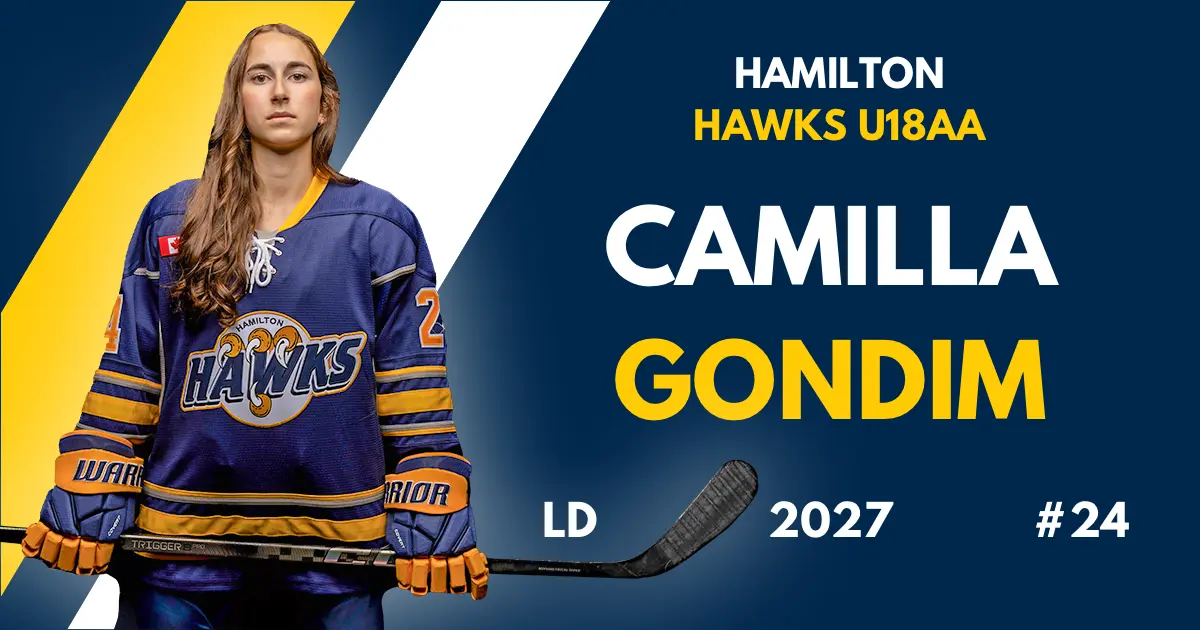
Camilla Gondim
Player Overview
Height
5’7″
Position
Defenseman
Shot
Left
Team
Hamilton Hawks U18AA
School
Holy Trinity Catholic Secondary School
Grad Class
2027
Programs of Interest
- Architecture
- Business
- Sports Management
Academic Record
Scouting Report
Defensive Zone
Key Strengths
- First-Read Foundation: Camilla Gondim shows an early ability to recognize her defensive assignment when play turns. She sets her body inside quickly, taking away hesitation and laying the groundwork for reliable defensive reads as her pace quickens with experience.
- Net-Front Awareness: She understands where she needs to be in the crease area, holding inside ice and steering attackers into less dangerous lanes. That positional starting point gives her a base to grow into a more assertive net-front anchor.
- Composure in Stretches: Even during long defensive stands, she doesn't abandon her posture. Fatigue may show, but her intent to stay inside and protect second looks is visible, which bodes well for her development as stamina and confidence grow.
- Selective Engagement: Rather than over-chasing, she holds her ground until the right threat develops. That patience complements her early reads and gives her group stability as she learns to time her disruptions against faster play.
- Settled Under Pressure: When facing higher-end opposition, she doesn't panic or unravel. She may bend, but her inclination is to hold the house together, which points to a maturity in her defensive mindset that can be built on.
Areas to Refine
- Presence to Impact: Right now Camilla occupies space around the crease but doesn't consistently disrupt plays. Turning her positioning into action with stick ties, body contact, and lane seals will help her convert awareness into active prevention.
- Faster Scramble Resets: On broken plays and rebounds, her recovery can lag. Developing quicker resets will allow her to eliminate second-chance looks and better match the tempo of higher levels.
- Vocal Growth: Camilla is naturally quiet in her role. Building a stronger voice — calling switches, steering teammates, and calming scrambles — will help her evolve from depth defender to trusted stabilizer within her group.
Key Strengths
- Measured Step Selection: Camilla adjusts her approach depending on the situation — jumps when it's clean, hesitates on 50/50s, and contains if she's a step late. That balance prevents reckless chases and gives her side stability.
- Containment First: She rarely abandons her lane to chase. By holding ground and forcing play into her area, she keeps her group's structure intact and avoids opening gaps behind her.
- Developing Angles: Some reps she comes in flat, others she leans and funnels wide. The habit is still forming, but when it becomes consistent, she'll steer more carriers into predictable, low-danger ice.
- Structure Over Gamble: If her first pressure doesn't win the puck, she doesn't lunge or overextend. Instead, she resets inside and makes sure her side isn't left exposed.
- Growing Assertiveness: Earlier in her development she faded after initial pressure. Now she stays with the play longer — leaning, tracking, and showing she can turn presence into real disruption.
Areas to Refine
- Passive Stick Use: Her stick isn't disruptive enough. Keeping it active — tying up, mirroring hands, cutting lanes — will make her pressure more than just positional.
- Recovery Tempo: When bypassed, her reset can lag. Quicker pivots and sharper recoveries would allow her to re-engage faster and deny second looks.
- From Contain to Control: Containment is her safe default, but the next step is turning those holds into wins. If she leans and seals more often, she shifts from depth defender to someone trusted to close plays.
Key Strengths
- Developing Technique: Camilla is still developing this skill, more passive than aggressive, but she positions herself with intent. That willingness to get in the lane, even without full commitment, shows a base she can grow on.
- Fronting Reliance: She prefers to stay upright and front shooters, using her stick to disrupt rather than dropping to the ice. While limited, this approach still removes clean looks and prevents her goalie from losing sightlines.
- Learning Lane Control: At times she positions squarely in the lane, other times she drifts — a mix that reflects her development stage. When she times it well, she eliminates high-danger attempts.
- Goaltender Friendly: She does not screen her goalie and makes a point of keeping the sightline open. Though she's still learning how to redirect blocked pucks with purpose, her intent is supportive rather than disruptive.
- Serviceable Recovery: After attempts, she's not lightning quick but doesn't leave herself stranded either. She gets back on her feet and re-engages without creating long gaps in coverage.
Areas to Refine
- Commitment Level: Right now she tends to stay upright. Developing comfort with dropping and sealing lanes will give her a more complete toolkit for blocking.
- Consistency in Reads: Her lane coverage is developing but inconsistent. Recognizing release points earlier will allow her to step in with greater confidence and take away shots before they reach her goalie.
- Purposeful Technique: Camilla is still learning how to angle and control where blocked shots go. Adding that skill will turn her efforts from chance deflections into controlled prevention.
Key Strengths
- First-Pass Reliability: With time and space, she makes a clean first pass — steady and repeatable. She often finds her outlet option early, which provides stability to her group on controlled breakouts.
- Simple and Effective: Without pressure she exits cleanly, leaning on straightforward puck movement rather than trying to over-handle. She knows her game is not built on flash, and keeping things simple allows her to stay dependable.
- Using the Net as a Shield: Against pressure, she has learned to use the net to put the forechecker behind her. When executed, this move creates space and allows her to move pucks safely out of the zone.
- Straight-Ahead Play: She defaults to the safe option up her strong side. While this can limit creativity, it keeps her exits predictable for teammates, especially wingers waiting on the boards.
- Supportive Outlet: Even when she's not carrying the puck, she finds space to make herself available as a release option. This adds a safeguard to her team's breakout structure, giving partners a safety valve under pressure.
Areas to Refine
- Rushed Decisions: At times she moves the puck too quickly, misreading the time and space she actually has. Developing patience under pressure will help her exits become cleaner and more controlled.
- Expanding Options: Camilla tends to play straight up her side. Learning to recognize and use the center lane or weak-side breakout options will diversify her exits and increase her team's transition success.
- Mixing Exit Tools: She relies heavily on tape-to-tape passes and hasn't yet added high flips or off-the-glass clears into her game. Building those skills will give her the ability to relieve pressure when clean plays aren't available.
Neutral Zone
Key Strengths
- Quick to Support: When her team turns play over, Camilla shifts into transition without drifting out of position. She steps quickly to move it forward, but not so aggressively that she leaves herself exposed.
- Puck Mover First: Rather than carrying pucks herself, she looks to move them up ice to her forwards. That mindset keeps her decisions simple and supports a north-south style of play.
- Situational Poise: Under backpressure, her response varies. At times she rushes her touch, other times she holds calmly and delivers a clean play — signs that she is learning to adjust based on the read.
- Rush Involvement: She will occasionally join the rush, but not at the expense of her defensive positioning. That balance shows a discipline to stay within her depth role while still finding windows to push play forward.
- Functional Transition Base: Her exits and touches through the neutral zone don't always spark offense, but they move her team up ice. She provides serviceable stability as she continues to add more range.
Areas to Refine
- Middle-Lane Vision: Right now she defaults to her own side. Developing the habit of scanning and using the middle lane will open more transition options and help her sustain possession.
- Reduce Forced Plays: When mistakes happen, they come from a rushed or forced pass. Learning to recognize when to reset instead of pushing a low-percentage option will steady her neutral-zone game.
- Neutral Zone Tools: Camilla provides steady exits and safe movement through the neutral zone. Building trust in her vision to use secondary options will help her rise beyond a depth role and become a player who drives her team's transition.
Key Strengths
- Support First: On regroups, Camilla positions herself to back her partner and keep possession moving. She may not drive the sequence yet, but she's reliably in place to connect the next touch.
- Ready Outlet: Before the puck arrives, she stays mobile and prepared as an option. That activity ensures she's available for resets, even if she's still learning to use her feet to extend plays once possession is on her stick.
- Settled Look: Her body language is calm when the puck swings her way. If she has time, she makes the easy play, giving her group stability — though quick pressure can still rush her touch.
- Straight-Line Preference: She almost always hits her strong side. That predictability helps teammates know what's coming, even if it narrows the variety of her distribution.
- Composure in Progress: Under pressure, results are mixed — sometimes rushed, sometimes clean. It's the profile of a defender still finding her timing and learning when to hold versus move the puck.
Areas to Refine
- Broaden Lane Use: Right now she relies on her strong side. Building confidence to use the middle and weak side will add unpredictability and open better transition looks.
- Escaping Pressure: Once possession is on her stick, she rarely skates to buy time or space. Adding that escape element will give her cleaner passing lanes and more control of the regroup.
- Vocal Direction: Camilla is quiet during resets. Becoming more vocal — calling for pucks, steering outlets, calming scrambles — will elevate her from support piece to a defender who directs the regroup.
Key Strengths
- Wall Disruptor: Camilla is above average at stepping up on the wall to break up regroups and disrupt wingers trying to transition. That willingness gives her team timely stops even if she isn't a high-risk gap defender.
- Stays Connected: Her presence in the neutral zone helps tighten her forwards' gaps. By holding shape and staying connected, she contributes to group stability across the middle of the ice.
- Steady Reliability: Shift to shift, her pressure habits are dependable. She doesn't wow with highlight stops, but she avoids costly mistakes — the hallmark of a depth defender.
- Contain First: She defaults to containment rather than gambling. It may limit turnovers, but it keeps her team from being exposed by missed reads.
- Stick Presence: She's applying her stick more actively, pressing into lanes and steering carriers wide. As that habit sharpens, her containment will turn into more consistent disruption.
Areas to Refine
- Close Gap Earlier: She sags back too early against carriers. Tightening her gap will reduce time and space and allow her to force plays before opponents gain the line.
- Sharpen Angles: Right now, she can signal her intentions too early with her backward skating, giving attackers room to chip and go. Sharper angling habits will steer more carriers wide and cut off easy routes.
- Composure vs. Speed: Against quicker opponents, she sometimes holds, sometimes gets caught flat. Building consistency in those moments will steady her neutral-zone game and prevent rushes from breaking clean through her side.
Key Strengths
- Angle Defender: Camilla sets her stance early at the line, showing carriers the wall and steering them away from middle ice. Even when conceding entry, her angle forces predictable routes and reduces immediate danger.
- Contain First: She values control over risk, defaulting to safe containment rather than lunging for turnovers. That patience keeps her side organized and prevents high-risk breakdowns.
- Quick Recovery: When entries slip through clean, she snaps back inside quickly. By reestablishing posture and sealing lanes, she prevents odd-man looks and denies second-wave chances.
- System Fit: Her approach links seamlessly with backcheck support. Forwards can press from behind while she seals middle ice, giving her team layers of control without scrambling.
- Puck Management: When Camilla has space, she'll carry. When pressure closes, she plays it safe — chip, glass, or dump. It doesn't extend possession, but it avoids costly turnovers and keeps her group organized.
Areas to Refine
- Tighter Gap Control: She tends to sag too much at the blue line, giving attackers room to cross with speed. Learning to hold tighter gap earlier will put her in position to stand plays up instead of absorbing them.
- Step-Up Timing: Right now, she's more comfortable conceding the line and containing. Developing the ability to step earlier — without over-committing — will raise her impact beyond a depth role.
- Entry Reads: Her timing at the line can be hit-or-miss. Building consistency in when she challenges versus contains will allow her to dictate more rushes instead of simply managing them.
Offensive Zone
Key Strengths
- Support First: Camilla doesn't force zone entries herself. Instead, she trails and positions as an outlet, ready to extend possession when teammates drive the puck in.
- Pinch Reliability: She times her pinches well, stepping down to keep wall plays alive. Even without frequent forward rotations, her effort to seal the line prevents clean clears.
- Safe Under Pressure: With the puck up top, she looks for the open outlet — back down the wall, across to her partner, or a quick reset into the corner. Those reads limit risk and keep her group in possession.
- Cycle Connector: Rather than carrying deep, she feeds the puck back low or across the line, acting as a link in the chain that keeps play rolling without stalling.
- Second Touch Availability: After a pass, she doesn't drift. She stays connected by shifting laterally, keeping her stick open, and making herself a second option.
Areas to Refine
- From Presence to Threat: Camilla supports possession well, but adding moments where she drives off the line or into seams would make her a more assertive in-zone factor.
- Quicker Triggers: At times she delays under pressure. Snapping pucks through faster — a quick shot or sharp pass — would give her touches more bite.
- Selective Inside Pushes: Her instinct is to stay wide or reset. Picking her spots to step inside would give opponents a different look and add a wrinkle to her game.
Key Strengths
- Line Holder: Camilla stays planted at the line and rarely drifts deep. Even when she plays a touch high, she's in position to close exits and keep pressure inside the zone.
- Outlet Safety: She keeps herself visible for teammates in trouble, sliding along the line to stay open. It gives them a safe release when they're jammed on the wall.
- Disciplined Rotations: When forwards rotate low, she doesn't chase. She holds her ground and lets the play come back to her, keeping her side organized.
- Early Reset: She prioritizes getting back inside ice immediately when possession flips. It cuts off some offensive pressure, but it keeps her team from giving up transition looks.
- Measured Pinches: She steps down only when sure she can win it. If it doesn't work, she reacts fast and gets back above the puck.
Areas to Refine
- Hold Pressure Longer: She exits too quickly at times. Reading when she can stay set at the line would give her group extra chances without losing structure.
- Trust Switches: When a forward rotates high, she hesitates. Trusting those exchanges would let her stay engaged in the play instead of defaulting back.
- Steady the Gap: Sometimes she sags off, sometimes she presses too tight. Finding a middle ground would make her tougher on clears.
Key Strengths
- Clean First Touch: Camilla settles pucks quickly at the line and delivers her first pass without panic. That steadiness prevents turnovers at the most dangerous spot on the rink.
- Predictable for Teammates: Her passes are direct and readable, giving forwards confidence to time their routes and stay connected to the cycle.
- Keeps the Play Moving: When the puck swings back up, she looks to continue pressure rather than force a risky shot. Her default is to feed possession back into the zone and extend time inside.
- Second-Touch Awareness: After releasing the puck, she shifts across the line to keep her stick open. That movement makes her a constant outlet for a return pass.
- Safety Valve Role: She provides a reliable release when teammates run out of options. Resetting through her keeps the group organized and avoids rushed, low-percentage plays.
Areas to Refine
- Add Deception: Her looks are straightforward. Selling a fake or walking laterally would create new passing and shooting lanes.
- Quicker Decisions: She sometimes hesitates, and by the time she moves the puck the window has closed. Sharpening her trigger would turn more touches into threats.
- Controlled Threats: She plays high and safe almost by default. Mixing in shot-passes or an inside step would give defenders something different to account for.
Key Strengths
- Emerging Shooter: Camilla isn't a volume shooter, but she's beginning to test lanes more often. Even if results vary, her willingness to pull the trigger shows growth from her earlier pass-first habits.
- Low-Danger Management: When she does shoot, her wristers trend low and controlled. They're not always consistent, but the intent to create tips and rebounds is starting to surface.
- Developing Mechanics: Her release is clean when she commits. Accuracy and timing still swing, but the foundation is there for a more repeatable shot.
- Selective Step-Ins: She doesn't force her way off the line often, but she has shown flashes of stepping into space. Those moments hint at another layer that could be unlocked with confidence.
- Secondary Option Confidence: Camilla is most comfortable when her shot is a complement to her passing game. She doesn't hunt looks, but she's settling into a role where she can keep defenders honest when the puck funnels back to her.
Areas to Refine
- Increase Shot Volume: Camilla passes up looks and limits her own impact. Building the habit to put more pucks on net — even simple wristers — would give her team more chances to generate offense.
- Shoot in Stride: Too often she sets and waits, which closes windows. Learning to release in rhythm — off the pass or while moving — would make her attempts harder to read.
- Create Second Chances: Her shots don't yet produce consistent rebounds or tips. Targeting sticks, pads, or traffic would turn more attempts into opportunities for her forwards.
Technical Skills
Key Strengths
- Stable Stride Base: Camilla's stride isn't explosive, but it's serviceable and reliable. She can cover ice without breaking down, giving her a base she can keep building into stronger mechanics.
- Functional Acceleration: While she lacks a true burst, she gets moving well enough to escape pressure and stay connected to plays. Each year her first few steps look more controlled and assertive.
- Backward Reliability: Her backward skating is steady enough to hold coverage. She mirrors well enough to stay in position, with signs that improved balance and timing are starting to show.
- Improving Pivots: Camilla is transitioning from losing speed on her turns to holding better angles through them. Where pivots once cost her position, she now uses them more smoothly to stay square to attackers.
- Serviceable Mobility: Side-to-side movement is functional and increasingly dependable. She may not erase space instantly, but her shuffle and recovery have become steadier over the past season.
Areas to Refine
- Explosive First Steps: Camilla's acceleration is currently average. Developing a more forceful first push would help her separate quicker from pressure and close gaps earlier.
- Edge Efficiency: Her edge work holds balance, but she doesn't yet generate speed through crossovers or turns. Sharpening those mechanics would smooth out her turns and let her carry momentum better.
- Top-End Speed: Over longer stretches, her stride lacks the gear to overtake faster players. Adding power to her mechanics would allow her to win more races and extend her range.
Key Strengths
- Basic Control: Camilla handles the puck cleanly in settled situations. She can keep it on her stick without unnecessary bobbles, which makes her reliable in routine touches.
- First-Touch Handling: On reception, she can bring pucks under control well enough to keep plays moving. Even when passes aren't perfect, she usually settles them and avoids breakdowns.
- Carrying at Pace: Though she isn't dynamic, she can manage the puck in stride when needed. Her control holds together well enough to skate out of her end without panic.
- Pressure Management: Under simple forecheck pressure, she keeps her touches short and compact. That security keeps her from becoming a turnover risk even if she isn't beating opponents with her hands.
- Developing Identity: Camilla's stickhandling is serviceable but not flashy. She's not going to dangle through opponents, but she is developing into a player who can manage pucks responsibly.
Areas to Refine
- Greater Carry Confidence: Too often she defaults to moving it immediately. Building comfort to skate with the puck longer would give her more options and stretch pressure before passing.
- Expand Her Range: Right now her touches are straightforward. Mixing in small pulls or quick handle changes would give her another way to protect the puck and work through pressure.
- Consistency at Speed: When the tempo rises, her handling can stiffen. Improving control at full stride would allow her to stay more composed in higher-pressure sequences.
Key Strengths
- Serviceable Accuracy: Camilla can usually connect on her breakouts. When she has time, she delivers clean looks, and she's beginning to show signs of staying accurate even with pressure closing.
- Functional Strength: Her passes have enough weight to reach targets. At times the zip fades, but her mechanics are trending stronger and give her a base to keep improving.
- Controlled Release: Instead of rushing pucks off her stick, Camilla has started to manage her tempo. That extra composure helps her deliver flatter, more reliable pucks to teammates.
- Cross-Ice Confidence: Her lateral distribution is firm and consistent. She connects on D-to-D and cross-ice feeds with composure, which keeps her group fluid and connected.
- Progressing Reads: She's beginning to look past the nearest outlet and recognize secondary passing lanes. That habit makes her puck movement more reliable without asking her to force plays.
Areas to Refine
- Passing Power: Some of her pucks lack bite. Increasing strength in her delivery would improve pace, especially on longer exits.
- Stretch Confidence: She connects on short and lateral looks, but she passes up stretch chances. Building trust in her ability to hit those longer plays would open more ice for her group.
- Consistent Delivery: Camilla's passing is becoming more repeatable, with cleaner weight and timing showing up more often. Continuing to develop that consistency would make her outlets a steady strength every shift.
Key Strengths
- Developing Mechanics: Camilla has grown out of early stiffness in her form. Her release is cleaner now, and while it isn't yet automatic, the foundation is in place for repeatable mechanics.
- Growing Power: Her shot has enough strength to reach the net consistently, and it continues to firm up. The progress shows she can already contribute with her shot while still building toward more bite.
- Emerging Accuracy: Her attempts are generally on target when she has time, and streaks of cleaner looks are appearing more often. That reliability is starting to separate her from earlier habits.
- Expanding Shot Use: Her wrist shot remains her base, but she has started mixing in different shot selections. That added variety makes her less predictable at the line and supports her group's ability to stay in possession.
- Intent Showing Up: She's beginning to aim lower and look for tips or rebounds. Even when execution isn't consistent, the awareness is there and trending upward.
Areas to Refine
- Snap Shot Development: Camilla relies heavily on her wrist shot. Developing the snap shot into a consistent option would give her a faster release to beat pressure and expand her threat from the point.
- Quicker Release: When lanes close, her release slows down. Developing the ability to fire pucks in stride or with less setup would help her avoid blocks and extend possessions.
- Purposeful Targets: Her attempts toward sticks and pads aren't consistent yet. Turning those habits into deliberate, repeatable choices would create more second chances and scoring opportunities for her team.
Situational Play
Key Strengths
- Holds Territory: Camilla holds her territory when play collapses low, keeping inside leverage on her check. While not the primary anchor, she tracks and supports her partner's coverage.
- Trap Consistency: In the neutral zone she holds her lane and seals off middle ice, forcing carriers to the wall or dumping the puck. That pressure takes away controlled entries and lets her teammates close quickly on loose pucks.
- Initiates Pinches: She initiates pinches selectively, checking support before stepping up. Even when hesitant, her reads keep her group from getting exposed in transition.
- Detail on Draws: On faceoffs she snaps into coverage with purpose, particularly in-zone where she ties up her check and denies clean looks off the draw.
- Growing Adjustments: When strategy shifts mid-game, she looks for teammate cues before reacting. It keeps her within the system even if she's not yet the one driving changes.
Areas to Refine
- Breakout Reads: When her first route is taken away, she pauses on the puck and can miss the early window. She needs to work through her built-in options—D-to-D, low support, or a carry—fast enough to keep the breakout on time before pressure arrives.
- Get Loud: Needs to add consistent voice to her game. Building comfort in calling checks and signaling coverage will make her more dependable shift to shift.
- Ownership of Adjustments: Hesitates to take control when alignment breaks down. By asserting her read and making the first move, she will earn her coach's trust — and translate that into bigger minutes.
Key Strengths
- Line Stability: At the blue line she plays safe, holding her ground and resetting pucks under pressure. It limits mistakes up top and keeps the unit organized.
- Wrist Shot Base: Her wrist shot is her first option — low, direct, and playable. While not a finisher, it puts pucks into areas where teammates can generate second chances.
- Pass-First Approach: She defaults to moving the puck rather than shooting. That predictability caps her threat level but maintains possession and keeps her group connected.
- Settled with Time: Earlier, she rushed pucks off her stick when lanes were open. She's learning to hold, assess, and deliver at the right moment.
- Developing Reads: She isn't running the PP, but she is starting to notice PK rotations. Those glimpses of awareness show progress toward earning steadier minutes in this spot.
Areas to Refine
- Step Into Responsibility: Right now she blends in. Building the confidence to call for pucks and dictating the play would elevate her role inside the unit.
- Lane Timing: She stays available but doesn't always open clean outlets. Improving her movement and spacing would give teammates better passing options under pressure.
- Re-Entry Urgency: On lost pucks she resets through the back end, but too cautiously. Turning recoveries into quicker breakouts up ice would reclaim time and pressure before the kill can set.
Key Strengths
- Steady Presence: She stays tight in the box/diamond and protects the house first. That discipline gives her unit stability even if she isn't the one pushing pressure.
- Active Stick Support: Her stick works in lanes and forces adjustments on seam attempts. It's steady disruption that helps close options without breaking shape.
- Contain-and-Close: She steps with measured pressure and forces carriers wide without overcommitting. Earlier hesitation has eased; she holds her ground, then finishes the play.
- Denying Clean Routes: She stays between puck and net, taking away direct lanes to the crease. That positioning forces attackers to circle or delay, giving her teammates time to reset.
- System Reliable: She holds her spot and rotates on time with teammates. Coaches know she won't freelance or break structure.
Areas to Refine
- Physical Edge: Net-front work is steady, not punishing. More assertive contact would push her into minutes coaches trust in critical PK spots.
- Harder Clears: With time, she can clear cleanly. Driving pucks hard and high off the glass or through seams under pressure would add authority and lift her PK value.
- Raise Intensity: Safe stays secondary. Quicker first three strides, stick-through and shoulder-through battles, and finishing contacts would move her from support piece to impact penalty killer.
Key Strengths
- Situational Growth: She is beginning to recognize how the score and clock affect her role. Still early in that development, but there are glimpses of smarter, safer choices late in periods.
- Shift Management: Her conservative style helps her manage long shifts. Even when fatigue sets in, she looks for a safe clear or change rather than risking a turnover.
- Protective Possession: In tight games she defaults to safety, holding pucks or chipping to protect possession. She's starting to see more options, moving away from the habit of dumping without recognition.
- Composed Demeanor: Her calm personality shows in late-game swings. She doesn't rattle, and while she isn't leaned on for high-leverage minutes, she puts in extra effort when situations demand it.
- Structure Awareness: She stays organized when play turns frantic. She holds position and reads cues instead of chasing, keeping coverage intact.
Areas to Refine
- Situational Engagement: Her style stays conservative regardless of game state. Matching the moment—closing quicker on pucks and finishing checks—will move her into consideration for tougher late-game minutes.
- Start the Attack: She's improving beyond default clears and chips. Finding controlled outlets off retrievals turns defensive stops into clean exits and set plays.
- Late-Game Identity: She isn't yet viewed as a closer in high-pressure minutes. Growing into a more aggressive presence in those situations would help her earn trust for tougher assignments.
Mental Game
Key Strengths
- Emerging Reads: She's beginning to recognize plays earlier, though not consistently. Flashes of anticipation show her starting to process threats before they fully form.
- Support Positioning: When teammates have the puck, she usually gives a safe option. At times that means staying behind the play, but she stays connected and available.
- Pressure Awareness: She senses pressure building, even if she doesn't always beat it. When she reads it in time, she moves the puck early and avoids the scramble.
- Calculated Decisions: Her default is conservative, but she's moving toward selective risk-taking. That shows up in moments where she holds for a better outlet or takes the available inside pass.
- Matchup Recognition: She's aware of who she's lined up against and is starting to adjust positioning accordingly. It isn't automatic yet, but the awareness is taking hold.
Areas to Refine
- Consistency in Scanning: She doesn't check her surroundings often enough. Building a repeatable habit of early scans will set her feet and first read sooner.
- Transition Quickness: Possession flips can catch her a step late. Improving how fast she flips roles will cut hesitation and close space sooner.
- Late-Play Decisions: In high-pressure moments she still defaults to safe touches. Developing the confidence to step into assertive choices will raise her value in tight games.
Key Strengths
- Engaged in Battles: She competes in 1v1s by using positioning and routes to neutralize opponents. Not a brute-force presence, but capable of leaning in and holding her ground until support arrives.
- Improving Puck Races: She's moved past late containments and is starting to win more races. Her strides now keep her in the contest instead of playing from behind.
- Compete Consistency: Her effort level is steadying. While not yet automatic every shift, the trend is upward toward dependable compete.
- Recovery Effort: When mistakes happen, she responds. Her resets are quick, though still developing toward being immediate and forceful.
- Composed Competitor: She carries herself with calm, even-keeled energy. She doesn't show flash or outward emotion, but her steadiness helps her stay collected under pressure.
Areas to Refine
- Assertive Habits: She engages but often defaults to safe stick play instead of imposing herself. Turning those contests into clear wins will raise her overall compete impact.
- Physical Imprint: She engages but often absorbs more than she delivers. Establishing contact on her terms will shift her from reactive to controlling in physical exchanges.
- Elevating in Key Moments: In special teams and late-game situations she maintains her baseline. Learning to raise intensity in those windows will build trust for higher-leverage minutes.
Key Strengths
- Emotional Balance: She doesn't ride emotional highs or sink after lows. Her poise keeps her game from swinging shift to shift.
- Controlled Demeanor: Her body language stays calm, giving opponents nothing to feed off.
- Focused Under Pressure: In tight games she stays relaxed and makes simple, reliable plays instead of forcing pucks under stress.
- Physical Composure: Contact, scrums, or chippy moments don't throw her off. She absorbs it, resets, and stays with her assignment.
- Coachable Mindset: She takes feedback without resistance. Even in heated moments, she listens, adjusts, and returns ready for the next shift.
Areas to Refine
- Expressive Confidence: Her body language can look too quiet. Showing more visible confidence would reassure her teammates and signal to opponents she won't rattle.
- Bench Presence: Camilla doesn't get animated, but adding vocal cues between shifts will keep her locked in and connected to the game.
- Big-Moment Emotion: She blends in during high-leverage moments. Stronger emotion in those situations would help her stand out as a trusted option.
Key Strengths
- Instant Bounce-Back: When a mistake happens, she re-engages quickly. Even if her route drifts slightly wide, her instinct is to jump right back into the play without pause.
- Goals Against Response: She doesn't show frustration after a goal against. Her next shift stays structured, steady, and in line with team play, preventing one breakdown from spiraling.
- Positive Momentum Feed: When her team scores or swings the game with a big moment, she raises her energy and tightens her habits, turning team momentum into sharper individual execution.
- Penalty Response: After serving a penalty, she returns with a clear head. She doesn't press or overcompensate, instead slotting back into her assignment as if nothing happened.
- Shift Rhythm: Each shift starts clean. She doesn't carry frustration from one to the next, which helps her stay present and available for the game as it unfolds.
Areas to Refine
- Reset Consistency: She clears major mistakes well, but in routine shifts her resets can fade into autopilot. Making every reset deliberate — big or small — would raise her reliability.
- Period-to-Period Settling: After tough endings, her first touches of a new period can be tentative. Owning those openings with authority will reinforce her reset consistency.
- Sequential Resets: She handles single mistakes cleanly, but when errors stack quickly, her resets can lag. Building the ability to reset through back-to-back events would strengthen her reliability.
Game Film & Highlights
| Date | Opponent | Game Type | Watch |
|---|---|---|---|
| Feb 15, 2026 | Mississauga Hurricanes | Season | ▶ Watch Film |
| Fall 2025 | Various | Highlights | ▶ Watch Film |
| Sept 6, 2025 | Honeybaked | Showcase | ▶ Watch Film |
| Sept 6, 2025 | OHA Mavericks | Showcase | ▶ Watch Film |
×
Frequently Asked Questions
- After hockey, Camilla Gondim plans to pursue a career in architecture and design.
- Outside of hockey, Camilla Gondim goes to the gym, plays field hockey, snowboards in the winter, and enjoys camping, hiking, and biking.
- Camilla Gondim trains with Cody Crichton for on-ice skills and plays under coaches Terry and Maria de Wilde during the season.
- Coaches should know Camilla is in the Construction SHSM with a co-op, made honour roll in grades 9 and 10, speaks Portuguese, and volunteers through hockey programs and community initiatives.