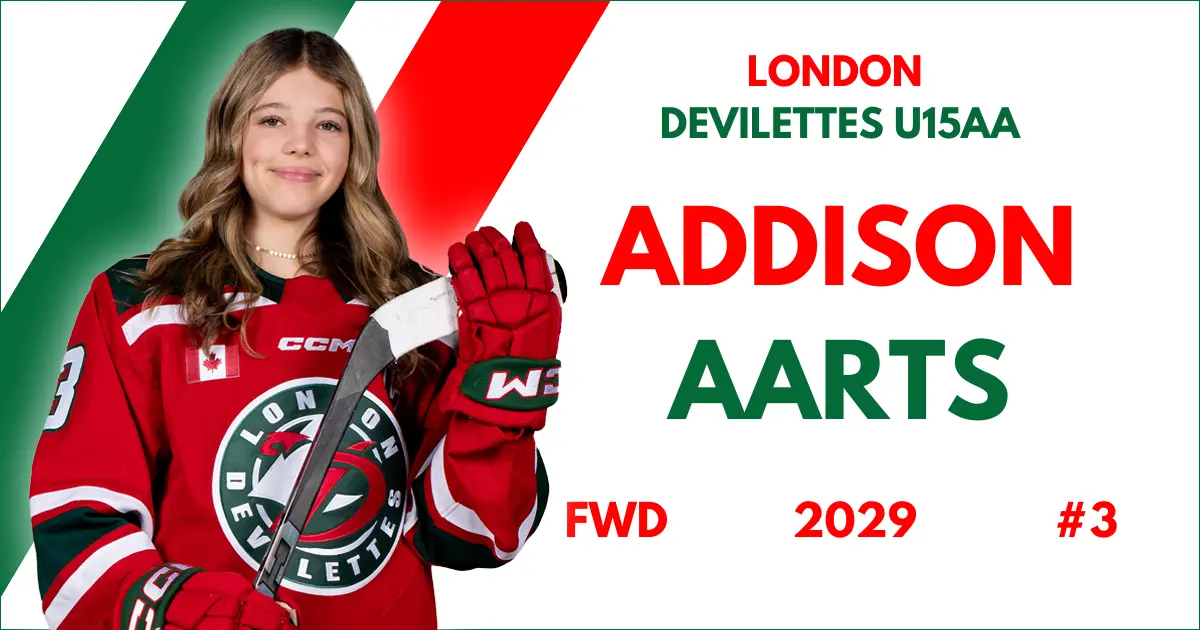
Addison Aarts
Player Overview
Height
5’3″
Position
Forward
Shot
Left
Team
London Devilettes U22AA
School
Catholic Central High School
Grad Class
2029
Programs of Interest
- Biology
- Chemistry
- Math
Academic Record
Scouting Report
Defensive Zone
Key Strengths
- Anchors the Middle: Addison Aarts begins each defensive shift by claiming the middle ice as her anchor point. She stays between the dots, shoulders square to the play, reading both flanks before the next action forms. That interior control gives her defenders confidence to battle along the wall knowing the seam is sealed. Every motion through the slot builds structure — calm, balanced, and quietly commanding.
- Waits Out Chaos: When battles break out along the boards, she resists the urge to chase. Instead, she holds just off the scrum, watching for the puck’s escape route. That pause turns disorder into calculation, allowing her to step through contact cleanly and move possession forward. Her patience isn’t hesitation — it’s a measured calm that steadies the group.
- Mirrors the Route: As the puck cycles high to low, she tracks its path through body orientation and stride control. Her eyes follow the carrier’s hips, not just the stick, so her angle of pursuit closes space before it becomes dangerous. Each shift through the slot shows purpose: she moves in rhythm with the play, never against it.
- Protects the Slot: Inside the dots, she becomes a low-centre anchor. Knees flexed, blade flat, body between man and net — she wins positioning through discipline rather than strength. Even when the puck ricochets in tight, her shape holds. That commitment to middle-ice coverage eliminates rebounds and loose threats that sink less composed players.
- Commands Defensive Shape: Without a word, she organizes those around her. Her steady routes through the middle keep her wingers stretched and her defenders compact. The line bends and recovers under her tempo, not the opponent’s. What she offers isn’t flash — it’s defensive control disguised as composure.
Areas to Refine
- Collapse Sooner Inside: Her patience sometimes gives opponents a half-step of daylight below the dots. Collapsing that fraction earlier would tighten her support window and erase secondary looks around the crease.
- Close Half-Step Earlier: There are moments when her read is right but her reaction lags by a beat. Trusting that first instinct and closing faster would turn containment into disruption, especially against quick touch plays.
- Turn Reads into Triggers: Her recognition is sharp; what’s next is translating it into assertive action. When she converts those reads into early pressure or quick outlets, her defensive calm will evolve into full control.
Key Strengths
- Times the Jump: Aarts waits for the play to expose itself before striking. Her reads on bobbled pucks, blind turns, or slow reversals show intelligence beyond her age — she jumps only when she knows she can arrive first. That restraint turns into clean takeaways instead of broken coverage, a habit built on trust in her own timing.
- Forces the Panic Pass: When she steps, she commits with purpose. Her angle and stick placement close escape lanes and push opponents into rushed decisions. The result isn’t always a steal, but often a misfire — a puck rimmed into pressure or cleared without control. Her reads make opponents nervous, and nervous players make mistakes.
- Pressures with Control: Even in pursuit, her body language stays composed. She closes with short, balanced strides and leads with her stick rather than her weight. That control keeps her routes clean and recoverable, letting her disrupt possession without leaving her coverage behind. It’s disciplined pressure — the kind coaches can trust late in games.
- Steers Play into Help: When the puck carrier turns up ice, Aarts shapes the angle of attack toward her support. She doesn’t chase through the middle; she herds the play toward her defensemen or wingers collapsing down. Each movement has intent — not just to apply pressure, but to channel it into organized recovery.
- Wins from Angles: Her success rarely comes from brute speed; it comes from route intelligence. She approaches from the inside shoulder, reading how the opponent handles pressure, and wins pucks by cutting options instead of colliding. Those subtle angles turn contested plays into controlled possessions.
Areas to Refine
- Press Earlier on Contact: There are moments where her read is right but the step comes a breath late. Engaging just as the puck touches the opponent’s stick will create more turnovers in stride and shorten the defensive shift.
- Trust the First Read: Her scanning gives her the answer early — she just needs to act on it. Trusting that first recognition instead of confirming it twice will make her pressure more decisive and disruptive.
- Attack Loose Touches: When opponents mishandle pucks, she sometimes hesitates, expecting help to recover. Taking those loose touches herself — attacking forward, not waiting back — will turn her intelligence into instant offense.
Key Strengths
- Fronts with Confidence: Aarts steps into shooting lanes with composure and trust in her positioning. She squares her body early, knees bent, stick extended, creating a full visual block between shooter and net. Her timing makes shooters hesitate — a subtle but powerful form of control that limits clean releases.
- Reads the Release: Her tracking skills show through in how she studies the puck’s movement before it leaves the blade. She picks up cues from the carrier’s hands and hips, adjusting her stance mid-lane to seal the shot line. Those micro-adjustments allow her to block shots cleanly without lunging or overcommitting.
- Takes Away Vision: When she fronts, it’s not just to block — it’s to screen the shooter’s view of the net. She keeps her shoulders square, stick in the lane, and body high enough to obscure targets. That presence forces hesitation and redirects attempts wide, neutralizing pressure before it becomes danger.
- Closes Shooting Lane: On rotations from the perimeter, she tracks the puck into the lane and times her close so the shot hits shin pads, not sticks. Her stride compresses space in one motion — glide, set, absorb. Each block looks like a natural part of the defensive rhythm rather than a desperate reaction.
- Absorbs from Inside: When she takes contact or eats a shot, she does it under control. Weight low, chest angled, rebound managed. Those moments show her commitment to team defense — she doesn’t flinch, she absorbs, and transitions immediately to retrieval or outlet.
Areas to Refine
- Drop to One-Knee Earlier: Aarts reads the release cleanly but often stays tall through the shot window. Developing confidence in dropping to one knee sooner — especially on direct-lane attempts — will allow her to seal space before the puck clears traffic. That small adjustment turns anticipation into full control of the lane.
- Commit Fully to Blocks: Once she trusts the one-knee drop, the next step is sustaining that commitment through impact. Finishing the block with full body engagement — weight forward, stick sealed, eyes on the puck — will eliminate secondary chances and give her immediate recovery options.
- Expand Form Under Fire: Her structure is already sound; now it’s about expanding presence when play tightens around the net. By broadening her stance and owning the lane under pressure, she can turn each block into a reset moment that stabilizes her team.
Key Strengths
- Supports Low Early: Aarts reads developing pressure and slides low into the zone before the puck is even won. Her early support gives her defenders an easy outlet and keeps play under control. She doesn’t drift high or wait for possession; she anchors deep enough to connect retrievals into exits.
- Creates the Outlet: When the puck frees, she positions her stick as a clear target — open blade, hips turned, vision up. Her small adjustments in depth and angle open passing lanes through pressure. It’s that detail that turns defensive recovery into clean possession.
- Turns Up Through Traffic: Once the puck touches her stick, she drives into open ice with balance and confidence. She uses shoulder fakes to slip through congestion, turning retrievals into controlled breakouts. That ability to move through traffic rather than around it keeps her team in rhythm.
- Moves Puck with Poise: Whether chipping off the wall or threading a short release, she stays composed under pursuit. Her first pass carries purpose — hard enough to escape pressure, soft enough for her teammate to handle in stride. It’s an unhurried confidence that makes her breakout decisions repeatable.
- Starts the Breakout: When the puck cycles behind the goal line, she becomes the pivot point. Her awareness of where both defensemen and wingers sit allows her to initiate the breakout cleanly, often with one touch. Every sequence she starts builds tempo for the next rush.
Areas to Refine
- Swing Lower for Retrievals: There are moments where she waits for the puck to exit instead of joining the retrieval route. Dropping a few feet lower into the corner earlier will give her more control and shorten the team’s escape path against forechecks.
- Lead the First Pass: Once she supports low, she can take greater command by dictating the first touch. Leading the breakout through her own pass — rather than deferring — would let her turn retrievals into structured exits with pace and clarity.
- Drive Transition Ownership: Her reads already control possession; the next evolution is ownership. By taking initiative to carry and connect plays herself, she can turn her defensive reliability into offensive rhythm, becoming the true engine between zones.
Neutral Zone
Key Strengths
- Controls the Flow: Aarts treats transition as a continuous thread, never a reset. She carries or releases the puck in stride, keeping her team connected through motion. Her calm decisions stabilize play through the middle and give her wingers time to build lanes. Everything she does in this phase organizes chaos into rhythm.
- Connects the Rush: When possession turns north, she becomes the bridge between recovery and attack. Her awareness of spacing allows her to hit teammates in stride or skate into open ice herself. The timing of her touches ensures the puck keeps moving forward without interruption — a signature of elite transition play.
- Reads Through Traffic: Aarts doesn’t panic under congestion. She processes lanes through the layers, using shoulder checks and edge adjustments to find safe, progressive options. Those reads let her move through pressure rather than around it, maintaining control while most players would default to chip plays.
- Moves Play Forward: Every touch she makes has direction. Whether it’s a controlled carry, a quick dish, or a short give-and-go, her intention is always to advance the puck. She rarely stalls possession; her choices reinforce the team’s collective tempo and keep opponents reacting instead of dictating.
- Leads Transition Pace: Aarts understands when to accelerate and when to delay. Her control of speed through the middle — short pushes, glide holds, quick releases — sets the rhythm for her linemates. That awareness makes her the quiet conductor of her team’s forward game.
Key Strengths
- Resets with Poise: When the rush slows, Aarts keeps her movements steady and intentional. She eases the puck back with balance, letting her defenders reorganize without losing control of tempo. Nothing about her regroup looks improvised — it’s measured, quiet control that steadies her side when space disappears.
- Supports Low Early: She has a strong sense for when to slide low in support. As soon as her defenders gather the puck, she’s already curling to the middle, stick flat, body open, ready to receive. That small timing advantage turns a recovery into a clean release and keeps her group skating forward instead of defending longer than needed.
- Scans Under Pressure: Before the puck even reaches her, her head is in motion. She checks her shoulders, tracks the forecheck, and shifts her path to stay clear of the squeeze. Those early reads give her the half-second she needs to exit with confidence — no scramble, no hesitation, just calm movement through traffic.
- Builds Out Cleanly: Each pass she makes carries purpose. The puck leaves her stick firm and flat, aimed to keep rhythm rather than simply relieve pressure. She waits for her outlet to clear the lane before delivering, ensuring possession advances on her team’s terms. It’s control born from patience.
- Turns Reset into Attack: Once the regroup stabilizes, she wastes no time. A quick shoulder glance, a single pivot, and she’s moving north with intent. What begins as a defensive reset often becomes the first spark of transition. That recognition makes her the connector between stability and strike.
Areas to Refine
- Swing Deeper: At times, she holds a bit too high during regroups, forcing defenders into stretch passes. Dropping lower through the zone will build momentum into her next touch and open shorter, safer options.
- Accelerate Out: After collecting low support, she can add thrust through her first three strides. That extra push will help her lead the rush rather than follow it, turning calm exits into true breakouts.
- Initiate the Breakout: Her reads are sound, but taking charge of the first pass will give her more control over tempo. When she becomes the one directing the release instead of waiting on it, her composure will translate into command.
Key Strengths
- Angles with Control: Aarts applies pressure through geometry, not chase. She closes from inside-out, keeping her stick active and her body centered between puck and lane. Each angle she takes removes space methodically, forcing carriers toward predictable exits.
- Closes with Purpose: When she steps, it’s deliberate. Her stride length shortens, her blade flattens, and she commits through contact just long enough to disrupt without overextending. Those controlled closes turn neutral-zone battles into recoverable plays for her line.
- Reads Passing Lanes: She processes routes as quickly as carriers move them. Shoulder checks and stick positioning let her anticipate where the puck is headed two touches early. That anticipation transforms what could be a contain into an interception chance.
- Funnels into Help: Rather than isolating the opponent, she steers them into teammates’ pressure. Her skating arc and stick angle guide play toward support, compressing the middle and forcing turnovers through collective structure. It’s selfless, system-intelligent defending.
- Creates Turnovers: When timing and route connect, she strips possession cleanly. A subtle lift, a read through traffic, a body angle that seals escape — she wins pucks without chaos. Her ability to turn defensive positioning into immediate possession is what sustains her team’s rhythm.
Areas to Refine
- Hold the Bait: She shows great anticipation, but occasionally reveals her route too early. Delaying her angle by a stride — inviting the pass before closing — will make her pressure deceptive and more punishing.
- Close Half-Step Sooner: On fast regroup transitions, she sometimes waits for confirmation before committing. Trusting her first read and closing that half-second earlier will turn containment into disruption.
- Convert Reads into Pressure: Her recognition is sharp; the next step is translating those reads into assertive pressure. When she lets instinct drive the first move, she’ll shift from reliable containment to consistent possession wins.
Key Strengths
- Enters with Control: Aarts carries the puck across the blue line with composure, reading defenders as she crosses. She adjusts her speed mid-entry, using balance and body angle to hold possession through contact. Her entries rarely feel rushed — they’re measured steps that extend offensive time.
- Times the Lane: She understands when to drive wide and when to cut middle. Her timing syncs with her linemates, allowing her to enter as the first layer or delay as the second wave. That adaptability keeps her group connected and prevents isolation plays.
- Supports as F2: When she’s the second forward in, her read of the carrier’s options is immediate. She fills open pockets, drives the net to pull coverage, or slides high to create a safety valve. Every route she takes gives her team a next play.
- Trails for Chance: As a trailer, she reads the shape of the rush and arrives into the slot as coverage collapses. Her positioning creates second-shot opportunities and quick passing outlets. She stays patient but ready, the quiet threat behind the initial wave.
- Sustains Zone Pressure: Once inside the line, she doesn’t default to safe plays. She circles, protects the puck, and connects short options to keep possession alive. Her calm under pursuit allows her team to reset and attack again without losing territory.
Areas to Refine
- Shoot Off Entry: She carries with control but often defers once inside the blue. Taking advantage of open shooting lanes early — especially off her strong-side entries — will add an immediate layer of threat to her rushes.
- Read and Release: Her reads are strong, but at times she holds a half-second too long. Recognizing when defenders are flat-footed and releasing the puck instantly will increase the unpredictability of her attacks.
- Finish the Play: Her possession habits create chances for others; now she must finish her own. Turning those poised entries into scoring attempts — using her quick release rather than defaulting to setup — will complete her evolution from facilitator to finisher.
Offensive Zone
Key Strengths
- Protects Under Pressure: Aarts holds the puck like it’s part of her — low base, shoulder shield, stick blade turned to safety. When defenders close, she twists her hips into the contact and keeps her balance through the push. That control under physical pressure buys her team time and prevents possession from dying on the wall.
- Controls the Sequence: Every touch has intention. She knows when to slow the play to let support arrive and when to push the tempo to catch defenders stretched. Her rhythm through the offensive zone dictates when the cycle breathes and when it strikes — she doesn’t just handle the puck; she orchestrates it.
- Shields with Purpose: Rather than spinning away blindly, she protects the puck to set up what comes next. Each pivot or angle change creates separation for a teammate or opens a passing lane. Her body position becomes both armor and playmaker.
- Escapes Contact Cleanly: Aarts doesn’t flinch under pressure — she absorbs, rolls off, and exits with possession still intact. Her edge control allows her to slip off checks and stay connected to the puck through traffic. It’s the calm recovery that separates players who keep plays alive from those who end them.
- Turns Patience into Power: Her strength lies in restraint. She waits out pressure until defenders overcommit, then attacks the space they leave behind. That patience transforms into leverage — the longer she holds, the more control she gains over what happens next.
Areas to Refine
- Drive Through Contact: She handles pressure well but can take it a step further by attacking through the body instead of around it. Using her strength to skate through defenders will turn protected possessions into direct scoring chances.
- Attack the Interior: Much of her control happens along the perimeter. Shifting her route toward the inside lane more often — using her balance to protect and push middle — will convert possession into danger.
- Convert Control into Threat: Her composure is elite; the next step is weaponizing it. Turning those calm, poised sequences into assertive net drives or quick releases will make her as threatening as she is reliable.
Key Strengths
- Finds Soft Ice: Aarts reads coverage early and drifts into open space before defenders can adjust. Her positioning never looks forced — she slides into seams where the puck naturally wants to go. That subtle awareness keeps her available without ever pulling structure out of balance.
- Reads Loose Pucks: She has a knack for sensing where broken plays will land. As shots deflect or battles end, she’s already in motion toward the recovery point. That anticipation gives her team extra possessions and allows sustained zone time off rebounds and scrambles.
- Times Support Routes: Her movement patterns sync with the rhythm of the puck. She arrives into lanes just as the carrier needs help — not too early to clog space, not too late to lose the chance. That timing makes her the glue piece in sustained attacks.
- Stays Available in Flow: Even when she’s not directly involved, she never disappears. She cycles low, drifts high, or mirrors the puck behind coverage to keep herself visible. Her ability to stay in motion ensures her linemates always have an outlet under stress.
- Stabilizes the Offense: When shifts risk losing shape, her positioning re-centres them. She senses when to slow the cycle, when to anchor below the hashmarks, and when to reset high. Her quiet spatial discipline keeps possessions from unravelling.
Areas to Refine
- Dive Deeper Late: When the puck settles below the goal line, she can press closer to the crease to stress defenders. Driving that extra stride deep forces rotations and creates chaos for loose-puck recoveries.
- Force Defensive Turns: She reads space well but can apply more pressure by cutting behind coverage and forcing defenders to pivot. Those turns open short-lane passing options and destabilize structure.
- Exploit Lost Coverage: Her awareness already finds soft spots — the next step is attacking them before defenders recover. Timing her cuts immediately after turnovers or rebounds will turn smart positioning into scoring opportunity.
Key Strengths
- Sees Chain Reactions: Aarts doesn’t just read the next pass — she reads the sequence it creates. She recognizes how one small movement draws coverage, then builds her next decision around it. That foresight allows her to manipulate defenders without needing flash or risk.
- Creates Space with Movement: She shifts laterally with the puck to stretch defensive shape and open seams. Her small glides and angle changes force defenders to realign, creating passing lanes others miss. The motion itself becomes her setup tool.
- Threads Clean Options: Her passes arrive flat, crisp, and perfectly timed to the receiver’s stride. She doesn’t chase highlight plays; she hits reachable targets that sustain attack flow. That precision builds trust — teammates know she’ll find them at the right moment.
- Resets Under Pressure: When the play stalls, she’s quick to pivot and feed the point or reverse low to keep control. Her sense for reset timing prevents panic dump-outs and extends zone time. It’s quiet creativity rooted in composure.
- Connects Below the Goal Line: She uses the area behind the net as a workspace — drawing defenders low, then slipping pucks into the slot or reversing for a quick give-and-go. Those small-area reads turn low possession into prime-slot threats.
Areas to Refine
- Add Deception: Her vision is sharp, but she can elevate it by disguising intent. A subtle shoulder fake or eye look-off before release would freeze defenders and open cleaner seams.
- Freeze Defenders: She often moves the puck as soon as the lane forms; waiting a heartbeat longer to hold pressure would trap coverage in place. That delayed release transforms a good pass into a dangerous one.
- Initiate Give-and-Go Threats: She reads support beautifully but can use her own pass as a springboard. Continuing into open ice after distribution will create quick two-touch sequences that stretch defenses and showcase her instincts.
Key Strengths
- Releases in Stride: Aarts doesn’t need to stop to shoot. She adjusts her weight mid-stride, keeps her hands free, and lets the puck roll clean off her blade. That motion gives goalies little time to square, turning simple zone entries into quick-strike chances.
- Shoots with Precision: Her mechanics are compact and repeatable — elbows in, follow-through tight, release quick. The puck leaves flat and accurate, even under pursuit. It’s the kind of shot that rewards patience and timing more than volume.
- Finds Lanes Off Motion: She slides into soft areas while coverage shifts, arriving unmarked as lanes open. That sense of timing allows her to shoot before defenders reset, converting subtle movement into scoring opportunity.
- Sells Pass Before Shot: Her eyes and body language often signal distribution, drawing goalies and defenders off their angle. The moment she snaps the puck instead, the net opens. It’s a small deception that creates high-percentage looks.
- Finishes from Inside Space: When she gets below the dots, she shows composure and control — no panic touches, no wasted swipes. Her hands stay quiet, and she picks her spot. Those finishes reveal a scorer’s calm, even if she doesn’t use it often enough yet.
Areas to Refine
- Trust the Release: Her shot is clean but underused. Trusting it earlier in sequences — especially when defenders sag — will make her far less predictable and more dangerous.
- Shoot in Traffic: She can improve by letting pucks go through screens instead of waiting for clear sightlines. Shooting through bodies will test goalies and create rebound chaos her line can capitalize on.
- Finish with Authority: The mechanics are there; now it’s mindset. Driving through the puck with full commitment — no half-motions or hesitations — will turn skill into confidence and production.
Technical Skills
Key Strengths
- Builds from Balance: Aarts skates from a strong base — knees flexed, chest steady, weight centered over her blades. Each stride begins from control, not reach. That balance keeps her grounded through contact and lets her recover cleanly after direction changes.
- Moves with Rhythm: Her technique flows naturally; strides connect because her edges and posture stay consistent. Every push drives through the ice with purpose, not flash. It’s smooth because it’s efficient — power delivered cleanly from lower body to edge.
- Holds Under Contact: When opponents lean, she doesn’t fold. She keeps her hips square, legs engaged, and stride form intact, skating through bumps instead of around them. That strength on her edges allows her to maintain possession and positioning under physical play.
- Controls the Tempo: She matches her stride to the situation — shortening to support breakouts, extending to drive transition. The awareness of when to accelerate or settle is instinctive, letting her stay composed while teammates adjust around her.
- Carries Speed Cleanly: Once she builds momentum, it travels with her. Turns, crossovers, and exits keep momentum because her edges stay loaded and her stride stays low. That consistency through movement lets her sustain speed over long sequences, not just flashes.
Areas to Refine
- Start Quicker Early: Her first steps are balanced but need more bite. Driving harder through the initial pushes will create faster separation off retrievals and regroups.
- Turn Control to Separation: Her technique is excellent; the next step is applying it aggressively. Using stronger edge cuts to widen routes and break free from coverage will turn steady motion into territorial gain.
- Fuse Strength and Drive: Building more lower-body power will amplify what’s already efficient. When strength catches up to her mechanics, her stride will add a second gear without losing balance.
Key Strengths
- Handles with Poise: Aarts’ hands are calm under pressure. She cushions pucks cleanly off both sides of her blade and keeps her handle compact so defenders can’t reach it. That composure lets her make tight-area plays without losing balance or vision.
- Shields with Purpose: When traffic closes, she drops her hips and widens her stance to wall off the puck. Her elbows stay tight, using leverage instead of reach to protect. Every shield has direction — buying time for support or opening a short-lane exit.
- Escapes with Control: She reads stick pressure and pivots through it, rolling the puck across her body to slip away. Her edge work and hand discipline keep movement economical; nothing is wasted. It’s escape through control, not panic.
- Subtly Deceptive: Addison’s deception lives in her timing and pace changes. She slows her handle just long enough to draw a reach, then quickens through the gap before the defender resets. That patience — knowing when to pause and when to burst — keeps defenders guessing. Her control of tempo, not flash, is what makes her unpredictable.
- Manipulates Defenders: When she senses overcommitment, she guides the puck to draw a stick out of lane, then attacks through the gap she just created. It’s quiet manipulation — patient, measured, and built on understanding defender habits.
Areas to Refine
- Develop Deceptive Creativity: She’s mastered control; now she can layer in surprise. Adding more deliberate tempo shifts and timed pauses before acceleration will make her fakes harder to read.
- Shift Weight to Fake: Her balance allows her to sell fakes through her stride. Leaning one way before cutting the other — with full body commitment — will amplify how she manipulates coverage.
- Transform Calm to Threat: Her steadiness keeps possessions alive, but she can convert that control into attack mode. Using those same controlled tempo shifts to create shooting or drive opportunities will make her calmness dangerous.
Key Strengths
- Reads in Motion: Aarts processes plays on the move. Her head stays active, scanning both pressure and outlet lanes while keeping stride. That ability to read while skating lets her distribute without breaking tempo or rhythm.
- Delivers on Time: Her passes arrive exactly when her teammates are ready to receive — not before, not after. She waits the extra beat to let space open, then releases cleanly. That sense of timing gives her line structure and reliability in transition.
- Connects in Flow: Whether it’s a short chip or a long feed through the middle, she connects plays that keep the group moving forward. There’s no interruption in movement; every pass feels like part of one continuous sequence.
- Threads Through Pressure: Under pursuit, she doesn’t rush. She holds until the defender commits, then slides the puck through the smallest lane available. Her calm execution breaks pressure and turns chaos into clean exits.
- Organizes Play Seamlessly: Aarts functions like the pivot in her team’s offensive flow. She knows where outlets sit, how coverage is shifting, and which touch will open the next lane. Each distribution is part of a larger rhythm she quietly controls.
Areas to Refine
- Develop Backhand Pass: Her forehand work is excellent; now she can add versatility by trusting her backhand more in tight. Executing quick, short backhand feeds will open options in high-traffic areas.
- Delay to Draw: She already reads well — the next step is using her vision to control defenders. Holding the puck a heartbeat longer to make them commit opens new lanes for teammates rather than for herself. That deliberate pause turns awareness into advantage.
- Unlock Creative Distribution: Her passing is efficient; now it can become unpredictable. Incorporating more slip passes, saucers, and look-offs will let her turn composure into controlled creativity.
Key Strengths
- Releases in Stride: Aarts doesn’t need to reset to shoot. She fires in motion, transferring weight seamlessly through her stride so the puck leaves before goalies can square. That ability to shoot in flow turns routine entries into immediate scoring threats.
- Shoots with Precision: Her mechanics are clean — minimal draw, tight follow-through, and consistent hand position. The puck leaves her stick flat and accurate, even off-balance. That precision makes her dangerous from angles where most players defer.
- Finds Lanes Early: She identifies shooting lanes before defenders fully form. Her head stays up through movement, reading layers and slipping pucks through narrow openings. It’s a vision-based shot selection that reflects her overall hockey sense.
- Disguises the Release: Addison’s best weapon is how little warning she gives. Her body and stick positioning look identical before every shot, and she changes release points at the last instant. That disguise catches goalies reacting late and defenders blocking empty space.
- Finishes with Confidence: When she commits to the shot, there’s no hesitation. Shoulders square, stride drives through, and the puck jumps. Those clean finishes show a scorer’s calm that grows every game she leans into it.
Areas to Refine
- Shoot More in Zone: She passes up quality looks in favor of setup plays. Trusting her shot more often inside the offensive zone will increase her direct scoring involvement and force defenders to respect her as both shooter and distributor.
- Activate Off Cycle: When the puck rotates low or swings behind the net, she can reposition into soft spots for quick releases. Using the cycle to create second-shot chances will make her more dangerous without the puck.
- Blend Power with Disguise: The mechanics are refined; now she can add force without sacrificing quickness. Driving harder through her release while maintaining her deceptive motion will make her shot unpredictable and heavy.
Situational Play
Key Strengths
- Centres the System: Aarts brings a natural calm to her team’s structure. She plants herself where the play can swing either way — close enough to pressure, close enough to help. When things get messy, she becomes the point everyone steadies around, giving her group the balance to reset and move together.
- Adjusts in Motion: Her reads are never frozen in place. As coverage drifts or lanes close, she slides to the next spot without hesitation. There’s nothing rushed about it — just small, precise movements that keep her connected to the play and make her teammates’ jobs easier.
- Resets Defensive Support: When coverage folds or the puck reverses, she’s already a step ahead. Aarts drops low, opens her body to the next option, and gives defenders a clean out. What could turn into a scramble instead becomes a simple transition because she absorbs the chaos before it spreads.
- Influences Team Flow: Addison’s timing sets the flow of the shift. She doesn’t need to call for the puck or force the play; her positioning and patience do the talking. The group moves in sync with her, and the game slows into something her team can control.
- Defines the System: She plays within the team’s framework but adds her own fingerprint to it. The way she reads, reacts, and releases pucks becomes part of how her line functions. It’s subtle, but her steadiness often decides whether the system holds or frays.
Areas to Refine
- Speak the Game Louder: Her reads are sharp; her voice just trails behind them. If she adds volume — calling for pucks, alerting pressure — her influence grows from quiet anchor to audible command.
- Direct with Presence: She already steers play through movement. Adding clear signals — a point, a shout, even eye contact — can help her guide teammates sooner and shape the next play before it starts.
- Lead from Within: Addison already settles the group when things tilt. The next evolution is ownership — using that same composure to set tone, pull energy forward, and lead not by words alone but by how she drives each shift.
Key Strengths
- Operates with Composure: Aarts never rushes the puck. Whether she’s on the half-wall, in the bumper, or net-side, her touches stay calm and measured. She reads the box before she acts, giving her unit poise and clarity under pressure.
- Freezes Pressure Early: When defenders step, she delays just long enough to make them hold. That small hesitation locks the penalty kill in place, creating passing lanes where none existed. Her patience dictates timing for everyone around her.
- Moves Defenders Apart: She uses subtle puck and body movement to stretch the box laterally. A shoulder turn, a half-glide, or a quick give-and-go pulls coverage open. That manipulation builds the foundation for clean seam passes.
- Opens Lanes Through Patience: Her greatest power-play strength is her ability to wait out structure. She lets the penalty kill show its rotation, then feeds the uncovered side. That restraint keeps rhythm intact even when the setup tightens.
- Finishes the Sequence: When the puck returns to her late in the shift, she doesn’t just reset — she completes the play. Her vision and release allow her to convert possession into a shot or a decisive feed, bringing closure to sustained pressure.
Areas to Refine
- Fire Off Motion: She controls timing beautifully, but she can add another element by shooting while in stride. Releasing off movement will surprise goalies and collapse penalty-kill spacing faster.
- Use Shot as Threat: Her passing draws defenders; her shot can hold them. Showing a scoring threat earlier in possessions will force penalty killers to respect her side, opening lanes for teammates.
- Strike Before Reset: She often waits for the full setup to re-form. Recognizing when to strike mid-cycle — before defenders settle — will turn her patient reads into sudden danger.
Key Strengths
- Defends with Poise: Aarts reads the kill the way she reads the game — calmly and without panic. Her feet stay set, stick active, and body squared, allowing her to react instead of chase. That steadiness keeps her unit composed when the puck starts to rotate.
- Guides the Play Wide: She angles from the inside out, steering carriers toward the perimeter and away from the slot. Her routes are economical — just enough pressure to contain, never enough to break shape. It’s defense through direction, not pursuit.
- Reads Lanes Early: Her anticipation is what makes her kill efficient. She identifies seams before they open and shades her stick accordingly, cutting passing options without having to lunge. Those pre-reads prevent breakdowns before they start.
- Stays Square Under Pressure: When the puck shifts sides, she resets quickly — shoulders forward, stick in the lane, head on a swivel. That body control gives her the leverage to block, deflect, or intercept without losing balance.
- Closes the Sequence: When her side of the ice breaks down, she finishes the play cleanly — tying up sticks, sealing loose rebounds, or forcing clears. Her ability to complete sequences ensures the kill resets cleanly and the group regains order.
Areas to Refine
- Commit to the Block: Her reads often prevent shots entirely, but at higher levels, the play will demand physical sacrifice. Dropping earlier and sealing lanes with full-body commitment will strengthen her reliability late in kills.
- Seal Traffic Lanes: As play funnels net-front, tightening her stance and boxing out low will deny screens and tip chances. Owning that interior space will make her presence felt even when she’s not the first pressure.
- Finish the Kill Strong: Even at the end of long shifts, Aarts keeps her form. She stays low through the final rotation, fights through screens, and clears pucks with calm precision. There’s no drop-off in detail — she closes the kill the same way she starts it, controlled and dependable.
Key Strengths
- Plays with Purpose: Aarts never floats through a shift. Every touch means something — a support route, a small read, a reset that keeps her team organized. You can see the intent in how she moves; nothing casual, nothing wasted.
- Balances Every Shift: She reads the game’s temperature and adjusts. If tempo jumps, she steadies it. When her line gets scattered, she slows things just enough to bring it back together. That sense of timing keeps her useful late in games when others start to chase.
- Simplifies Under Pressure: In the tense moments, she cuts the noise out of her game. Smart angles. Clean outlets. Short, direct touches. Her calm makes the next play possible.
- Matches Moment Tempo: Addison’s awareness isn’t just tactical — it’s musical. She knows when a shift needs a quick strike or when it needs a breath. That instinct keeps her team connected to the flow instead of fighting it.
- Shifts Momentum: Sometimes it’s not a goal; it’s a play that changes the mood. A backcheck that kills a rush. A controlled breakout when the bench is tense. Those are the moments she quietly flips in her team’s favor.
Areas to Refine
- Spark the Bench: Her calm keeps everyone grounded, but she can share that energy more outwardly. A word on the bench, a louder call after a big kill — those small sparks lift the group around her.
- Elevate Late Shifts: Addison finishes her shifts under control, but there’s another level waiting. When legs get heavy and play drifts safe, she can press once more — chase a loose puck, drive a clear, turn one last touch into momentum. It’s about finding that extra spark at the end that changes how the shift ends, not just how it’s managed.
- Command Big Moments: When the game tightens, Aarts has the calm most players lose — but there’s more she can draw from it. Those final minutes need someone who wants the puck, who isn’t afraid to be the first read and the last touch. She has that in her; you can see it in flashes. The next step is trusting it every time the ice feels heavy and the outcome is hanging.
Mental Game
Key Strengths
- Recognizes What’s Unfolding: Aarts sees the game as a living sequence. Her eyes don’t lock on the puck — they read the full pattern: spacing, body orientation, and puck route all at once. When play breaks down, she recognizes the cues that warn of collapse and positions herself before it happens. That recognition turns panic into order; she’s the stabilizer who keeps the ice readable for everyone else.
- Anticipates the Shift: Addison’s timing is what separates awareness from foresight. She reads transitions as they’re forming, sensing where a lane will open or a check will release a puck. That anticipation lets her glide into position while others are still reacting, giving her first touch the calm of someone who already knows the next option. It’s not guesswork — it’s disciplined pattern memory applied in motion.
- Processes in Motion: Even under duress, her reads keep rhythm with her stride. She doesn’t freeze to decide; she adjusts on the move, letting her feet and eyes share the same tempo. Forecheck pressure, regroup rotation, or offensive reset — each is processed in real time through quiet scanning. The result is a game that breathes smoothly; she maintains control of sequence speed rather than being controlled by it.
- Aligns Team Read: Her intelligence is connective. Aarts interprets play flow for herself and then broadcasts it through action — a subtle head turn, a repositioned stick, a shoulder angle that tells her winger when to release. Those cues bring her line into sync without words. She doesn’t just react to structure; she rebuilds it mid-sequence, ensuring teammates move with the same read she’s already made.
- Scales to System: Addison’s situational understanding extends beyond her shift. She plays within systems, not beside them — her routes complement defensive layers, her timing mirrors team breakouts, and her support patterns sustain collective rhythm. What’s seen on film isn’t individual brilliance; it’s system fluency. That scalability projects cleanly to higher levels, where structure and anticipation must coexist at full speed.
Areas to Refine
- Keep the Scan Wide: When fatigue sets in, her scan can narrow to the immediate lane. Sustaining that panoramic read — weak-side outlets, delayed trailers, secondary pressure — will keep her decisions as sharp in minute 45 as they are in minute 5.
- Act on First Look: Her intelligence sometimes waits for confirmation. Trusting her first read, especially through the middle on transition, will turn perception into proactive play and prevent hesitation from closing her best lanes.
- Simplify Ice Communication: Aarts leads through subtle cues, but higher levels demand clarity under noise. Using quicker, simpler signals — one tap, one call, one glance — will ensure her high processing speed translates into team execution at game tempo.
Key Strengths
- Battles with Intent: Aarts doesn’t waste a stride. When she leans into a battle, it’s to win something that matters — a puck, a lane, a moment of control. She fights from structure, feet under her, hands alive, reading how leverage is shifting before she commits. There’s no flinch or reach in her game. She pins, angles, and exits with clarity, turning collisions into clean recoveries instead of chaos.
- Executes the Hunt: The second possession flips, Addison’s game sharpens. She closes ground with purpose, matching stride to the puck carrier’s rhythm until the gap dissolves. Her stick disrupts before her body finishes, forcing turnovers that feel inevitable, not lucky. The pursuit looks quiet in real time, but the result is loud — a play stopped cold and redirected north.
- Converts Effort to Control: What separates her compete from noise is what happens after the contact. She wins space, resets her stance, and immediately builds the next play. A clean first pass, a short touch to safety, a calm pivot out of traffic — all flow from that same motor. Addison’s compete doesn’t burn hot and vanish; it sustains possession, giving her team order where most shifts unravel.
- Keeps Competitive Beat: Her engine never flickers. Every shift carries the same discipline — body low, stride short, mind clear. Fatigue never hijacks her form. She manages intensity through rhythm, not adrenaline, keeping the bench calm and the structure intact when games fray. Her steadiness becomes invisible leadership, the tempo her line leans on without realizing it.
- Raises Team Standard: Effort looks different when she’s on the ice. Teammates notice the precision — the stick lift timed to half a heartbeat, the clean exit after a scrum, the way she never lets chaos stay chaotic. She doesn’t yell or posture; she simply plays in a way that makes others want to match it. That’s compete as culture, and Aarts lives it shift to shift.
Areas to Refine
- Establish Body First: Addison reads leverage early but sometimes invites contact instead of defining it. Engaging sooner — shoulder firm, hips set — will let her control the collision and decide how it ends.
- Show the Physical Echo: Her intensity runs deep inside her game; the next evolution is letting it show through touch. Harder net-front seals, stronger resistance on retrievals, a few more collisions finished with intent — those moments turn internal drive into visible command.
- Push the Edge Late: When the game hangs in balance, her calm keeps her clear. Adding a final surge of assertiveness — chasing one more puck, driving through one more check — can turn control into momentum. It’s the extra push that shifts how a period closes and how a team believes.
Key Strengths
- Channels Internal Energy: Aarts doesn’t play emotionless — she channels it. The pulse is there in her stride, in the way her blade cuts and resets, but it never spills over. Missed calls, bad bounces, or heavy shifts don’t touch her posture. She stays upright, eyes level, stride controlled. That restraint isn’t suppression; it’s conversion. Every ounce of frustration becomes focus, and it shows in how sharp her reads stay under stress.
- Controls Competitive Pulse: In games that start to boil, Addison’s emotions never bend. She moves through traffic with the same confident tempo, absorbing shoves without taking the bait. Her decisions stay clean because she never lets emotion outrun reason. There’s a maturity in how she handles pressure — enough fire to compete, enough discipline to decide. That balance keeps her dangerous when others unravel.
- Stabilizes Team Emotion: The group watches her. After a rough shift or a goal against, she doesn’t need to speak. One controlled touch, one composed exit, and the whole bench exhales. Her approach isn’t passive; it’s instructive. She re-centers the pace of the team through body language alone, turning moments that could spiral into ones that settle. Coaches can feel it too — the temperature drops when she’s on the ice.
- Responds with Precision: Addison’s response to frustration is execution. Instead of reacting, she channels — backchecking with more intent, tightening her passes, or closing out with cleaner detail. Every emotional spike fuels the next smart play. That pattern — feel, process, act — separates players who burn from those who burn bright.
- Leads Through Composure: Her leadership begins with the tone she sets. When games get loud, she brings stillness that others follow. It’s not silence; it’s control. She keeps the team connected through small cues — a nod on the bench, a calm regroup, a deliberate first move. Her belief in structure never wavers, and that professionalism becomes a roadmap for everyone around her.
Areas to Refine
- Don’t Hold Back: Addison’s control is a strength, but it can hide the force that makes her unique. When she releases that inner charge — powering through contact, sealing space with intent, or pressing harder on retrievals — the whole shift changes temperature. Showing that edge doesn’t replace control; it gives it muscle.
- Find Emotional Fuse: Her reliability grounds the team, yet every game needs a surge. Letting big moments — a defensive stand, a response shift, a turning-point draw — pull that energy forward can swing the flow in her favor. It’s not emotion for show; it’s emotion that fuels execution.
- Ignite Competitive Fire: As competition rises, influence has to be felt, not just seen. Taking initiative in collisions, driving lanes with purpose, or claiming puck touches when the ice tightens transforms her poise into command. The presence stays measured, but now it carries weight — the kind that shifts momentum by example.
Key Strengths
- Clears the Moment: Aarts doesn’t carry residue from one play to the next. A mistake, a tough shift, a bad bounce — it’s gone the second her blades stop. She resets posture, breath, and focus in one smooth sequence, body language signaling the reset before the puck even drops. That habit keeps her from spiraling; she stays playable while others are still replaying the past.
- Rebuilds Her Focus: Addison has trained herself to find structure fast. You’ll see it after a misread — quick exhale, head up, eyes scanning for where she’s needed next. She doesn’t rush to erase the error; she rebuilds from it, turning composure into re-engagement. That rhythm between mistake and correction keeps her shifts productive, even when the last one stung.
- Learns in Motion: Her reflection happens while she skates. She doesn’t stew on the bench or wait for instruction; she self-corrects on the fly. One adjustment in stride angle, one smarter release under pressure, and the lesson’s already absorbed. Coaches trust her because every shift shows evidence of what she just learned.
- Restores Game Flow: Momentum swings don’t shake her tempo. When the team starts chasing, she brings the sequence back to order — clean retrieval, smart touch, a pause that resets shape. It’s not hesitation; it’s orchestration. She buys her teammates breathing room and turns panic into structure with the smallest, smartest plays.
- Owns Response Window: Addison’s reset speed is elite. She controls how long a moment lasts — never too quick to miss reflection, never too long to lose presence. That timing lets her dictate emotional pace for her line. When she steadies herself, the group follows, drawn into her rhythm of recovery and re-attack.
Areas to Refine
- Shorten Reset Cycle: Occasionally, she gives herself a full shift to settle after tough sequences. Compressing that window — flipping from reaction to readiness within seconds — will keep her touch sharper when momentum tilts.
- Re-Centre Against the Odds: In games where chaos lingers, her reset works best when she asserts it physically — strong first stride, clear stick angle, direct body posture. Those visible anchors keep her focus forward when pressure crowds her.
- Lead Bench Reset: Her on-ice resets are elite; the next step is finding her voice during them. Using clear, concise communication — a quick call after breakdowns, a word between shifts, a direct cue in tight moments — will help her influence stretch beyond her own composure. Building that vocal presence turns leadership from quiet example into audible direction, giving teammates the reassurance she already lives internally.
Game Film & Highlights
| Date | Opponent | Game Type | Watch |
|---|---|---|---|
| Mar 6, 2026 | Ontario Hockey Academy | Call-Up | ▶ Watch Film |
| Dec 5, 2025 | Cornwall Lady Royals | Showcase | ▶ Watch Film |
| Dec 5, 2025 | Kingston Ice Wolves | Showcase | ▶ Watch Film |
| Sept 20, 2025 | CN Polar Bears | Showcase | ▶ Watch Film |
| Sept 20, 2025 | Washington Pride | Showcase | ▶ Watch Film |
×
Frequently Asked Questions
- Addison Aarts plans to stay in hockey long-term and is working toward her goal of earning a professional opportunity, aiming to reach the highest level she can in the sport.
- Outside of hockey, Addison stays active through strength training, enjoys time at the lake, and spends a lot of time with her family and dogs to stay balanced and grounded.
- Addison Aarts trains with Blake McConnell-Baker for strength and conditioning, Jacob Chantler for face-offs and shooting, and Ryan Tremblay for power skating throughout the year.
- Coaches should know Addison Aarts volunteers with First Shift, works as a camp counsellor, studies in the IB program, and earned Female Athlete of the Year during the 2024–2025 school year.